
Thursday, November 21, 2013


Wednesday, November 20, 2013
"lumberjills"

A memorial to the "lumberjills" - the women who worked in forestry during World War Two - has been unveiled in North Yorkshire.The sculpture in Dalby Forest, near Pickering, is a steel fabrication of a felled tree and two lumberjills.
Some 9,000 British women were recruited to work in forestry during the war.
"bitch," "fag," "nigger" ... not OK, sort of
WASHINGTON (AP) - In a shift in attitude, most young people now say it's wrong to use racist or sexist slurs online, even if you're just kidding. But when they see them, they don't take much personal offense.
and you thought it was news
Passed along in email -- they're scrubbed and affluent, bright and beautiful, but what makes anyone think they are newscasters?
hanging out the wash

"And what church do you go to, if you don't mind my asking?" Mrs. Smith said pleasantly.
Mrs. Jones reached down into the laundry basket and began pinning a plaid shirt to the line.
"I go to the church around the corner," she replied.
"And what church is that?" Mrs Smith asked. "I thought I knew most of the churches in town."
"I won't know that until I turn the corner," Mrs. Jones said as she idly reviewed her handiwork.
* * * * * * * * * * * * * * * * * * * *
It is pleasant, supportive and warming to travel among friends. Somehow individuals are buttressed by consorting with those who are like-minded. I am more me as long as I am with you. I am at peace and at home and woe betide a world that threatens my home. Traditions of goodness and of greed equally encourage the finding of a collective resting place, a place of assurance and reassurance: Mark the spot! Raise the flag! No need to travel further. I have already traveled far. Let me rest in this reassuring sunshine.
Family, money, power, love, beer, poker, virtue, war ... I have already traveled far: Let me rest among friends who likewise choose this resting place.
And yet, no matter what serenity and assurance and comfort is gathered around the shoulders like some goose-down quilt, still there is the cold ... the places and circumstances against which this place of rest was fashioned in the first place. How can there be an assured rest without resting in the lair of that which never rests? How much real sense does "peace" make when it is merely the absence of war?
Turning up the volume of virtue, the conniving realms of bliss, hardly fills the bill. Yes, I have traveled far and could use a break. I love to be among friends. But the church around the corner will not be denied. Resting and nesting ... I can wish and proclaim to my heart's content, but the problem is that proclamations don't assure peace.
* * * * * * * * * * * * * * * * * * * * *
One of my favorite sillies -- a silly that is dead serious -- is this oldie-but-goodie ... told before, repeated again:
Once upon a time, there was a little bird who refused to fly south for the winter. His friends cajoled and coaxed and told him he was being a fool: He would freeze to death. But the little bird was adamant: He wasn't going and that was that.
The other birds took off and the little bird sat on his bough. But pretty soon, the cold winds began to blow and the little bird began to re-evaluate. Finally he decided he had made a mistake and took off, heading south. But winter had gained its footing and the snow and hail fell. It was very, very cold. The little bird exerted all of his energies, but ice began to form on his wings. It was cold and hard to see and he was running out of energy.
Finally, he was spent. He knew he was a goner ... and he plummeted to earth, where he landed in a cow pasture. There he lay, breathing what he was convinced was his last. He waited for death.
But a passing cow happened to stop where the little bird lay. And the cow took a shit ... all over the little bird. The warmth of the manure thawed the little bird's wings and suddenly he realized he was going to live. He was so happy that he began to sing. A passing cat heard the singing, dug through the manure, found the little bird, and promptly ate him.
There are three morals to this story:
1. Not everyone who shits on you is necessarily your enemy.
2. Not everyone who gets you out of the shit is necessarily your friend.
And
3. If you're happy in your own pile of shit, keep your mouth shut.
Tuesday, November 19, 2013
"all things come to him who waits"
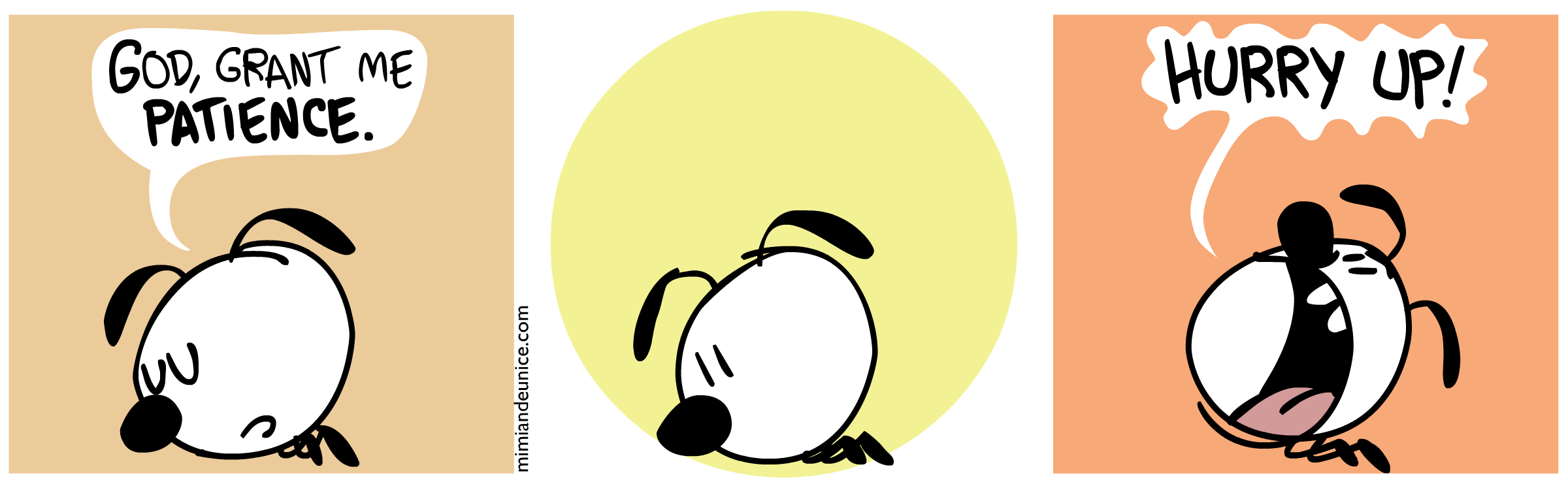
Used, but probably not originated, by Violet Fane (1843-1905) in her poem Tout vient ß qui sait attendre.
'Ah, all things come to those who wait,'
(I say these words to make me glad),
But something answers soft and sad,
'They come, but often come too late.'
Mark Oppenheimer interview

Among other things, the conversation addresses the plight of the writer who lives in an age when the hold-it-in-your-hands book slips beneath the waves of time.
Monday, November 18, 2013
enlightenment question
Outside of enlightenment, what could possibly identify delusion?
And outside of delusion, what could possibly identify enlightenment?
And outside of delusion, what could possibly identify enlightenment?

a cultural divide -- oh really?
Leaving aside Mark Oppenheimer's "The Zen Predator of the Upper East Side" for a moment, what would anyone think of a man or woman who came to a country 50 years ago and proceeded to cross the cultural and ethical boundaries of the chosen homeland? For precisely how long could those actions be excused based on the cultural mores of the land that had been left behind? Wouldn't the extended stay in the chosen land suggest that this man or woman chose to cross those boundaries, not because s/he wasn't aware of them and not because s/he was held in a genetic thrall to a land left behind, but for some other reason?
 What person spends 50 years anywhere without gaining a pretty firm grasp of his/her environment?
Eido Tai Shimano came to America in the early 1960's. He was party to the building of a Zen center in New York (Shobo Ji) and a monastery in the Catskills (Dai Bosatsu Kongo Ji). He was also -- to return to NYTimes writer Oppenheimer's recent ebook -- a man who used his position as a springboard for the sexual manipulation of a string of women students. Further, he arranged to place himself at the head of the umbrella organization that oversaw the two centers, Zen Studies Society. His wife was treasurer. Where the money went was largely a matter of his discretion. A pretty good deal.
During all of those 50 years, Shimano was not shy about claiming and reclaiming his Japanese heritage. Japan, he would sometimes say, was a country better suited to real Zen training, real Zen understanding ... and Americans, between the lines, couldn't possibly hope to match what the Japanese might achieve. More than once he underscored his American students' inferiority. And when it was opportune, he would also claim a poor command of English as a means of sidestepping topics that failed to benefit him.
And more than once, I and others wondered why, if Japan were the land of true Zen and if Shimano were a true Zen student, he didn't just catch the next flight to Tokyo. But of course he had a ready-made answer, an answer that polished his persona as a true Zen master: He stayed in America out of a deep sense of Buddhist compassion: These poor bastards really needed the help that Buddhism could provide and he remained in America, however reluctantly, because he was the gold standard of Buddhist compassion.
What ... a ... good ... guy!
With the publication of Oppenheimer's book/essay about Shimano's willingness to prey on women students, a number of reviews arose, among them, one from Jay Michaelson in The Daily Beast. Michaelson argues, with tentative asides, that there is a problem with Zen Buddhism that goes beyond Shimano. The very title of his review -- "The Shocking Scandal at the Heart of American Zen" -- genuflects to Oppenheimer's occasional New-York-Times-esque longing to assert a wider, systemic flaw -- a flaw of which Shimano was an example, though far from the only one. This argument can certainly be made, though I'm not sure if either Michaelson or Oppenheimer are the people who can make it with more than a self-referential, New-York-Times-y gloss.
Still, making the argument at all, has the net effect of mitigating Shimano's malfeasances: What the hell -- he was just part of a wider fabric. And simultaneously, the argument tends to buy into the notion that 50 years of living in a country is not enough to inform any emigrant.
Michaelson writes:
But, if in fact such projections exist, how could a man of exquisite training and sensitivity and compassion not pick up on that flaw over a period of 50 years and learn to live within their confines, however misguided and second-rate the students might be? Would his training in compassion and clear-headedness lead him to work within those confines to illuminate a more sensible outlook or would that training incline him to simply flaunt the appreciations of the 'heathens' within whose numbers he found himself? And even if such a man had nothing to do with Zen or spirituality, would the questions be any different?
The difficulty that arises when segueing into broad-brush generalizations about Zen and culture can be seen in an email sent by Roko Shinge Chayat, one of Eido Shimano's chosen Zen-teacher successors. Posted in the Shimano Archive, the note reads in part:
OK ... it's the system and the culture. After 50 years of living in another culture, a (wo)man may be excused based on cultural heritage ... or if not precisely "cultural heritage," then something sounding suspiciously like it.
But if the culture-made-him-do-it argument won't wash, and if the compassion argument is belied by the facts, why would an insistent Japanese man stay in a country full of heathens and cripples? What reason could be adduced?
Others may have their guess, but I have mine and can do no better than to regurgitate the quote misattributed to P.T. Barnum, the circus mogul:
Eido Tai Shimano came to America in the early 1960's. He was party to the building of a Zen center in New York (Shobo Ji) and a monastery in the Catskills (Dai Bosatsu Kongo Ji). He was also -- to return to NYTimes writer Oppenheimer's recent ebook -- a man who used his position as a springboard for the sexual manipulation of a string of women students. Further, he arranged to place himself at the head of the umbrella organization that oversaw the two centers, Zen Studies Society. His wife was treasurer. Where the money went was largely a matter of his discretion. A pretty good deal.
During all of those 50 years, Shimano was not shy about claiming and reclaiming his Japanese heritage. Japan, he would sometimes say, was a country better suited to real Zen training, real Zen understanding ... and Americans, between the lines, couldn't possibly hope to match what the Japanese might achieve. More than once he underscored his American students' inferiority. And when it was opportune, he would also claim a poor command of English as a means of sidestepping topics that failed to benefit him.
And more than once, I and others wondered why, if Japan were the land of true Zen and if Shimano were a true Zen student, he didn't just catch the next flight to Tokyo. But of course he had a ready-made answer, an answer that polished his persona as a true Zen master: He stayed in America out of a deep sense of Buddhist compassion: These poor bastards really needed the help that Buddhism could provide and he remained in America, however reluctantly, because he was the gold standard of Buddhist compassion.
What ... a ... good ... guy!
With the publication of Oppenheimer's book/essay about Shimano's willingness to prey on women students, a number of reviews arose, among them, one from Jay Michaelson in The Daily Beast. Michaelson argues, with tentative asides, that there is a problem with Zen Buddhism that goes beyond Shimano. The very title of his review -- "The Shocking Scandal at the Heart of American Zen" -- genuflects to Oppenheimer's occasional New-York-Times-esque longing to assert a wider, systemic flaw -- a flaw of which Shimano was an example, though far from the only one. This argument can certainly be made, though I'm not sure if either Michaelson or Oppenheimer are the people who can make it with more than a self-referential, New-York-Times-y gloss.
Still, making the argument at all, has the net effect of mitigating Shimano's malfeasances: What the hell -- he was just part of a wider fabric. And simultaneously, the argument tends to buy into the notion that 50 years of living in a country is not enough to inform any emigrant.
Michaelson writes:
Then there’s the matter of culture. Shimano’s actions are inexcusable by Japanese, American, or any other cultural standard. Yet they did take place within a system of power and patriarchy that includes male sexual philandering within it. How different was Shimano’s behavior from that of a typical Japanese businessman? This is neither to excuse his conduct nor make generalizations about other cultures – but it is to recognize that Western terms such as “sex offender” may not completely fit.
But a Zen monk? Here, too, the situation is more complex than it may first appear. We may have an image of Zen abbots as peaceful, enlightened, and sexually abstinent, but this simultaneously parochial and Orientalist image is our problem, not theirs. Actually, enlightened Zen monks are often worldly, engaged, and sexually voracious. Likewise, most Westerners may believe that sex and spiritual teaching should be kept separate. But in what non-Judeo-Christian-Muslim book is that written? Indeed, some of Shimano’s sexual partners regarded their physical intimacy with their teacher as part of their spiritual path. We should be wary before projecting our own Western sex negativity on non-Western spiritual teachers.I agree with Michaelson -- Americans are a conflicted and prurient lot when it comes to sex. And perhaps they are even more conflicted and prurient when it comes to religion and sex. "Projecting our own Western sex negativity on non-Western spiritual teachers" may be an erroneous approach.
But, if in fact such projections exist, how could a man of exquisite training and sensitivity and compassion not pick up on that flaw over a period of 50 years and learn to live within their confines, however misguided and second-rate the students might be? Would his training in compassion and clear-headedness lead him to work within those confines to illuminate a more sensible outlook or would that training incline him to simply flaunt the appreciations of the 'heathens' within whose numbers he found himself? And even if such a man had nothing to do with Zen or spirituality, would the questions be any different?
The difficulty that arises when segueing into broad-brush generalizations about Zen and culture can be seen in an email sent by Roko Shinge Chayat, one of Eido Shimano's chosen Zen-teacher successors. Posted in the Shimano Archive, the note reads in part:
Jay Michaelson really gets it, as Oppenheimer did not in his lurid pursuit of sexual titillation.By crediting Michaelson's broad-brush approach -- it's the system, dontcha know -- Chayat also is able to legitimize her standing and credibility as the latest abbot of Dai Bosatsu monastery. It's the system, she can claim, and I have not been tarred by the Shimano bill of particulars. For those old enough to remember or who have read history, it sounds suspiciously like the cavalcade of pleas made by former Nazi bigwigs during the Nuremberg Trials: "Ich bin nicht schuldig." (I am not guilty.) Or perhaps the penitent Irishman nursing a hangover: "The devil made me do it." "The system" excuses those who live within it and relieves them of personal responsibility. From the "systemic" heights, well-wishers can hold "Olive Branch" or "Samoan Circle" or "new ethical guideline" meetings that seek to 'heal' the wounds that many have suffered ... without ever really taking into account the suffering the sufferers suffered. Wouldn't it be nice if those who were part of the problem agreed to meet victims on ground that the victims chose, and there forthrightly admit and apologize for a top-lofty complicity?
OK ... it's the system and the culture. After 50 years of living in another culture, a (wo)man may be excused based on cultural heritage ... or if not precisely "cultural heritage," then something sounding suspiciously like it.
But if the culture-made-him-do-it argument won't wash, and if the compassion argument is belied by the facts, why would an insistent Japanese man stay in a country full of heathens and cripples? What reason could be adduced?
Others may have their guess, but I have mine and can do no better than to regurgitate the quote misattributed to P.T. Barnum, the circus mogul:
There's a sucker born every minute.... and let's take 'em for everything they're worth!
arrows across America
Passed along in email:
 |
| Long before Google maps and apps, there were and remain gigantic concrete arrows to point the way across America. |
first person reject
On a noodling-doodling whim, I wrote the following and can see why the "First Person" column of the local paper might not want it. But this blog is my waste basket and file box, so....
Spiritual life is such a wispy, ephemeral and yet compelling
pastime that there is something arrogant and offensive about mentioning it.
Your mother was probably right: Never discuss religion or politics at the
dinner table.
But for all the sage advice, somehow I am less worried these
days about a topic that has played a consuming -- if sometimes ridiculous --
role in my life: Spiritual adventure. Perhaps it is just advancing age: If
you're old enough (and I'm 73), being a fool is not as foolish as it once
seemed.
What interests me nowadays, after forty or more years of
sometimes enormous effort, is the fact that spiritual adventure, to the extent
that it can ever fulfill its promise, must fade away in the same way that dolls
and toy guns once took their leave. Beating a dead horse really is not the
point, however swift and wondrous that horse once was. Or anyway, that's my
view.
Chronologically, my interest in spiritual life began in
about 1970 with an interest first in Hinduism and then in Zen Buddhism. My
father, who taught at Smith College,
was understandably infuriated by religion. His father, a Presbyterian minister,
had forced him to memorize great hunks of the Bible by candle light. My mother,
a writer who was smarter than my father, was willing to consider religion as a
part of the human potential she stitched together with words. But her intellect
convinced her in a way that the surrender implied in religion could not. Both
my mother and father, in different ways, worshipped at the altar of the intellect,
an altar on which human sacrifices -- as, perhaps, their child -- might be made. I grew up smart.
But, as with all smart realms, the question was bound to
arise: "If I'm so smart, how come I'm not happy?" And when I tripped
over spiritual life in 1970, that question gained force. So I read books about
spiritual life. And I went to talks and learned philosophies and ... got smart.
Later, I would ask my Zen teacher, a fellow who ran a
monastery in Japan,
what role hope and belief played in Zen. "For the first four or five years
of practice," he replied, "belief and hope are necessary." And
after that, I wondered. "After that," he said, "they are not so
necessary."
Zen practice rests largely on seated meditation (zazen)--
the literal, physical, sit-down-shut-up-and-focus-the-mind activity that
provides an experience which trumps hope and belief. No one who knows how to
ride a bicycle does so while believing or
hoping s/he can ride. Smarts play no
very informative role. Smarts are possible, not imperative. Riding a bicycle is
just ... well, it's just riding a bicycle. This is not to say that practice
isn't necessary or that bumps and bruises and tears and failures don't mount
up.
My bumps and bruises and tears and failures mounted up until
sometimes I thought I might drown. True, there were bright openings as the days
and weeks and years passed, but by comparison to the flubs and glitches and
outright errors ... well, there was no comparison.
I practiced. I went to retreats of between three and seven
days. I entered a monastery ... and flunked out. I tried to be a 'good' Zen
student. When I moved from New York
to Northampton, I built a small
meditation hall in the backyard and called it, with a grand mysteriousness,
"Black Moon Zendo." I hoped others might join me in my noble pursuit.
Now, by contrast, I hope they will not... or rather, I won't turn them away,
but I can't imagine why they wouldn't rather exercise some common sense and
sleep in. There's no door prize in Zen -- no heaven or hell, no virtue or
misdemeanor -- there's just practice.
When my three children were growing up here, they got used
to the old man heading out to the zendo in his robes. None except the youngest
ever expressed any interest in what was going on and he came out to sit with me
just once. At home, there was never any heavy-duty discussion about Buddhism.
What I hoped for my kids was not that they become good Buddhists -- I just
wanted them to become good people, which, from my point of view, they have
indeed become.
And what I hoped for my children, I guess I am now willing
to offer myself as well. Perhaps that is why a knock-down-drag-out approach to
spiritual life has simply dwindled like campfire smoke disappearing into the
evergreens above. All that effort was good enough in its solemn times, but what
honest and peaceful good has solemnity ever wrought? The only thing separating
man from God is "God."
That was Zen, this is now.
Sunday, November 17, 2013
religious uncertainties
For those feeling conflicted or unsure of their religious footing, I received this sure-as-shootin' flowchart in email:


quid pro quo

Quid pro quo is a merchandizing approach to life's activities. In a deeply habitual format, it can take on the clothing of cause and effect, a situation of trade-offs so ingrained and so predictable that it is hard to imagine any other result.
And of course there are less tangible ways in which quid pro quo can assert itself: If I extend myself and am kind to others, they will be kind to me; if I work hard to be good, then I will get into heaven; if I follow the Yellow Brick Road, I will end up in Oz.
Quid pro quo ... this for that.
Spiritual discipline generally begins in the realm of quid pro quo, I think. Hope and expectation inspire all sorts of efforts, all sorts of prayers, all sorts of rituals, all sorts of meditation. Without hope and expectation -- without a quid pro quo -- the effort founders ... at least in the beginning.
But what is good enough in the beginning is hardly good enough in the long haul. Pascal's Wager is a pretty slick bit of philosophy, but philosophy and a couple of bucks will get you a bus ride. Quid pro quo reaches so far and no further.
Quid pro quo ... this for that. It is worth investigating, I'd say.
"This for that" means that there are two things, a "this" and a "that." There is the current state of affairs, "this," which is traded in on a new and more pleasing state of affairs -- "that." This-for-that implies a separation and differentiation.
The carrot of spiritual endeavor is that separations are resolved or dissolved, that sad-making distances are erased, and that there is some over-arching peace to be achieved or actualized. "Oneness" is the most frequent separation asserted. "Oneness" -- another quid-pro-quo bargain. It can be confounding when things are not-two and yet not-one either, and yet, since quid-pro-quo does not reach far enough, it seems to be the only game in town. It is at this juncture that I think the spiritual aspirant can be excused for exploding, "Shit! Shit! And more shit!" Can't move forward and refusing to move back to an easy-peasy quid-pro-quo ... who wouldn't be frustrated and understandably pissed?
In Sanskrit, there is an expression, "tat tvam asi." It may not be the preferred translation, but I have read that "tat tvam asi" may be translated as "thou art that." And maybe tat tvam asi is one attempt to point out that which precedes or brings life to the "quid' and the "pro" and the "quo." No more duality. No more unification that can achieve little more than embellished separation. Things aren't for other things. How could that compute when 'other' has taken its leave? How could oneness compute when the facts are clear? No big deal ... tat tvam asi.
I just checked my computer and it assures me that today is Sunday.
Who knows? Perhaps it's true.

Saturday, November 16, 2013
live discussion of "Zen Predator..."
Announcement from Buddhist Geeks: **ALERT BELOW
WEDNESDAY, NOV. 20, 1:15 PM - 2:00 PM ET
Join host Vincent Horn for an interview with New York Times journalist and author Mark Oppenheimer as they explore his investigative writing on the decades of sexual scandal–and the conditions that made it possible–surrounding Japanese Zen teacher Eido Shimano Roshi.
WEDNESDAY, NOV. 20, 1:15 PM - 2:00 PM ET
Join host Vincent Horn for an interview with New York Times journalist and author Mark Oppenheimer as they explore his investigative writing on the decades of sexual scandal–and the conditions that made it possible–surrounding Japanese Zen teacher Eido Shimano Roshi.
Check out Mark’s recent writing on the topic: “The Zen Predator of the Upper East Side“
** ALERT: The Buddhist Geeks site seems to be full of requirements in order to watch the program (your name, your willingness to do Google+, and perhaps your willingness to pay money). It may be best just to wait a day or two and see if the interview shows up on Youtube.
shalt's and shalt-not's
Written elsewhere in response to a query about the Christian shalt's and shalt-not's:
John -- I have several disaffected Catholic acquaintances -- some priests
and ex-priests -- who express similar misgivings, not always in the same
format as yours. Christianity can go pretty heavy on the rules and
regs, but if it hadn't, how could the Vatican have become the richest
corporation in the world?
Some Christians come to Buddhism with a sense of relief. Buddhism is not threat-based: You won't go to heaven if you do it and you won't go to hell if you don't. What a relief! But far from making things easier, at first this can make things worse: If there are no chiseled rules and regs, guess what -- it's your responsibility! For anyone who dares to practice, this can be pretty daunting and pretty scary stuff ... where's my back-stop?! Where's my support system?! Where's my god?! Where's my virtue?! Where's my ticket to heaven?!
Luckily, Buddhism has various formats or disciplines. And discipline largely means doing what you might otherwise not do or not-doing what you otherwise might. And it is within this realm that the thou-shalt's and thou-shalt-not's can creep in all over again. New spiritual outlook, same old gold-star or black-mark shit.
For my money, it is meditation practice that breaks this good-dog-bad-dog cycle. Not overnight, perhaps, but a bit at a time. Sit down, shut up, erect the spine, sit still and focus the mind ... day after day and week after week and year after year.
Don't say what happens, see what happens. Yes, there is discipline -- thou shalt and thou shalt not, however politely clothed they may be -- but there is also a recognition that starts to take hold in meditation: There are things to do and there are things not to do ... and that's all there is to it. It has nothing to do with holy or unholy or right or wrong or better or worse ... just things to do and things not to do. Why? Because things are more peaceful that way, more in accord with the honest life all around ... happier, I suppose. No one who's happy asks someone else whether s/he is happy or not. S/he already knows. Happy is happy, peaceful is peaceful ... though of course it may not make you the richest corporation in the world.
Some Christians come to Buddhism with a sense of relief. Buddhism is not threat-based: You won't go to heaven if you do it and you won't go to hell if you don't. What a relief! But far from making things easier, at first this can make things worse: If there are no chiseled rules and regs, guess what -- it's your responsibility! For anyone who dares to practice, this can be pretty daunting and pretty scary stuff ... where's my back-stop?! Where's my support system?! Where's my god?! Where's my virtue?! Where's my ticket to heaven?!
Luckily, Buddhism has various formats or disciplines. And discipline largely means doing what you might otherwise not do or not-doing what you otherwise might. And it is within this realm that the thou-shalt's and thou-shalt-not's can creep in all over again. New spiritual outlook, same old gold-star or black-mark shit.
For my money, it is meditation practice that breaks this good-dog-bad-dog cycle. Not overnight, perhaps, but a bit at a time. Sit down, shut up, erect the spine, sit still and focus the mind ... day after day and week after week and year after year.
Don't say what happens, see what happens. Yes, there is discipline -- thou shalt and thou shalt not, however politely clothed they may be -- but there is also a recognition that starts to take hold in meditation: There are things to do and there are things not to do ... and that's all there is to it. It has nothing to do with holy or unholy or right or wrong or better or worse ... just things to do and things not to do. Why? Because things are more peaceful that way, more in accord with the honest life all around ... happier, I suppose. No one who's happy asks someone else whether s/he is happy or not. S/he already knows. Happy is happy, peaceful is peaceful ... though of course it may not make you the richest corporation in the world.
never speak ______ of the dead

Perhaps it would make life easier if there were a prohibition against speaking of the dead. If there were such a prohibition, perhaps the facile willingness to eulogize or demonize would be held in check and the personal confusions be fewer.
Pick a hero or saint or loved one, any hero or saint or loved one.
Pick a villain or much-despised figure, any villain or much-despised figure.
The thing about the dead is that they are no longer in a position to correct the views applied to them. They can no longer -- by thought, word or deed -- bring nuance and dimension to the appreciations of the living.
The dead can't talk back and this places the living in a position where warming tableaux and righteous fulminations rise up with abandon. Often reckless abandon.
"Never speak ill of the dead" only tells half the story, I think. Speaking well of them merely compounds the errors and difficulties of the living.
I know it ain't gonna happen, but that doesn't mean I can't think about it and give myself a nudge.
communication
This morning, at a far distance, I saw a flight of Canada geese, winging eastward. At first, I could not hear their honking, but after a couple of moments there it was, weak, but audible.
It made me wonder if Canada geese could keep their wonderful, shape-shifting V's if they did not honk. I doubted it, but I wondered.
And perhaps the same is true of people and talking. In silence, there may be a deep communication, but is deep communication the only way to communicate, the only way to form and re-form the social fabric?
Never mind "better" and "worse" -- just wondering.
It made me wonder if Canada geese could keep their wonderful, shape-shifting V's if they did not honk. I doubted it, but I wondered.
And perhaps the same is true of people and talking. In silence, there may be a deep communication, but is deep communication the only way to communicate, the only way to form and re-form the social fabric?
Never mind "better" and "worse" -- just wondering.

"Zen Predator..."/The New Republic
Another salvo on behalf of New York Times writer Mark Oppenheimer's "The Zen Predator of the Upper East Side" has been fired at The New Republic magazine.
Mark's long essay/short book on the malefactions of Eido Tai Shimano has received some applause in my email box, but that's hardly surprising since I have not made a secret of my own leanings. In fact, those leanings incline me to listen to the opinions of others ... I sit too close to the fire of events to trust my own reactions.
In general, I do like it when there is some push-back, some counter-balance when a thing or thought process or philosophy or religion gains too much applauded status. Zen Buddhism may be a very good practice, but its goodness can, and often is, overstated by half. Similarly, as with Mark's efforts, its thorns and corruptions can be, and often are, overstated by half.
Either way -- and I mean that literally -- I think Zen practice comes out a winner. Not a winner by praise and not a winner by blame, but a winner as one possible choice in a life seeking to calm the waves, straighten things out, and find a little peace.
I do have to admit, though, that I cringe and growl when those who praise and 'protect' it use Zen as a means of elevating -- in oh-so-wise-and-compassionate ways -- their own oleaginous and drooling stock.
But that's just my schtick.
Mark's long essay/short book on the malefactions of Eido Tai Shimano has received some applause in my email box, but that's hardly surprising since I have not made a secret of my own leanings. In fact, those leanings incline me to listen to the opinions of others ... I sit too close to the fire of events to trust my own reactions.
In general, I do like it when there is some push-back, some counter-balance when a thing or thought process or philosophy or religion gains too much applauded status. Zen Buddhism may be a very good practice, but its goodness can, and often is, overstated by half. Similarly, as with Mark's efforts, its thorns and corruptions can be, and often are, overstated by half.
Either way -- and I mean that literally -- I think Zen practice comes out a winner. Not a winner by praise and not a winner by blame, but a winner as one possible choice in a life seeking to calm the waves, straighten things out, and find a little peace.
I do have to admit, though, that I cringe and growl when those who praise and 'protect' it use Zen as a means of elevating -- in oh-so-wise-and-compassionate ways -- their own oleaginous and drooling stock.
But that's just my schtick.
what is Zen?
In the sing-song realms before sleep last night, it crossed my mind:
I suppose everyone has an acceptable version of what "Zen practice" might be. The one that popped up on my staff was...
Zen is the ability to stop controlling the sky.
I suppose everyone has an acceptable version of what "Zen practice" might be. The one that popped up on my staff was...
Zen is the ability to stop controlling the sky.
Friday, November 15, 2013
news of suspected importance

And, in the realm of things I don't understand, but somehow suspect are important:
-- A fragile quantum memory state has been held stable at room temperature for a "world record" 39 minutes - overcoming a key barrier to ultrafast computers....
In conventional computers, "bits" of data are stored as a string of 1s and 0s.
But in a quantum system, "qubits" are stored in a so-called "superposition state" in which they can be both 1s and 0 at the same time - enabling them to perform multiple calculations simultaneously.
Sounds sort of like the U.S. government with its button men in JSOC (Joint Special Operations Command) -- the guys whose largely unsupervised mission is to take out ... well, whomever the president designates as 'terrorists' ... and occasionally -- what can you expect? -- there is an error or two. Everything is moving so fast that there is little time for the ooops factor. Al-Qaeda had the good (if belated) grace to apologize. I wonder if the president has that kind of courage or political savvy.-- An al-Qaeda affiliated rebel group in Syria is reported to have asked for forgiveness after beheading a fellow rebel in a case of mistaken identity.A video recently posted online showed members of the Islamic State of Iraq and the Levant (ISIS) brandishing the severed, bearded head of a man.
They said was an Iraqi Shia caught fighting on the government side.
But other rebel fighters watching the video recognised the man and said he was one of their commanders.
-- A naked performance artist who nailed his scrotum to Red Square as a political protest may face up to five years in prison, Russian media report.Let me see if I've got this straight: A guy nails his balls to the sidewalk and is then charged with "hooliganism."
-- A BBC investigation has revealed concerns that young girls are being brought to Scotland to undergo female genital mutilation (FGM) because the country is seen as a "soft touch".... The cutting is carried out for a number of reasons but in many areas girls are cut to improve their marriage prospects. ...Crying out for help and no one, not even the most trusted and beloved, hears: What a human experience.
Fatou Baldeh, of the Dignity Alert and Research Forum (DARF) in Edinburgh, is originally from The Gambia and underwent the procedure at the age of seven.
"I was blindfolded," she said. "Some people held my hands, other people held my legs.
"I remember I was screaming for my mum and grandmother, to help me. But no-one did."
"I forgot"
My younger son, who admires military life, can drive me around the bend when it comes to completing chores around the house. "I forgot," he will say, as if, having forgotten, the matter is somehow out of his hands and he is absolved. What the hell -- forgetting is human, right? So if anyone forgets, they are simply expressing their humanity and hence forgivable and ... well, we can forget about it.
 How true, how complete, how kind ... and how lazy.
I forgot.
When it comes to the military, I wonder how well "I forgot" might play in a fire fight. I forgot the ammo. I forgot the grenades. I forgot to relay some vital piece of intelligence. "I forgot" and as a result, some of my dearest friends may be lying dead at my feet. And in such a scenario, is it too much to suggest that "I just killed the people I love?"
In such extreme circumstances, I would not like to be around anyone who hung his hat on "I forgot." Such people are unreliable in a time when relying on others is crucial. Unreliable people are dangerous. They are careless about what they claim to love.
I can remember standing in a military formation once and a lieutenant cussed me up one side and down the other because I had neglected to button one pocket on my fatigue blouse. He gave me what's-for in no uncertain terms and then assigned me to some shitty detail so that, perhaps, in future I would not forget. At the time, I thought it was pretty unfair ... hell, it was just a button, right? No big deal. I just forgot. Forgetting is human ... so let's forget it.
But the lieutenant was right. If you can't be responsible in small stuff, how can you be relied on when the serious shit hits the fan? It is in the little stuff that anyone earns their spurs, their right to be trusted and welcomed into the local community.
I forgot.
The little stuff -- the stuff that does not include life-and-death scenarios -- is important. Every "I forgot" has a way of creating difficulty for someone else -- a someone else who may be near and dear or maybe is just an acquaintance with whom a bargain has been struck. "I forgot" ... and whatever it is that constitutes "my word" is diminished.
At my age, I have little right to climb on my high horse about those who rely on "I forgot" as a means of evading responsibility while maintaining a good impression of themselves. My capacity to forget is gaining on my capacity to remember. But what I forget has not yet overtaken my promises to others. If someone asks me to pick up a bottle of Coke, the odds favor my remembering and then doing it. But on Wednesday, I was convinced for a couple of hours that it was Thursday until my daughter corrected me. It's no big deal, on the one hand: Old farts are known for forgetting. On the other hand, sometimes I hate forgetting: Who knows what damage, willful or otherwise, might be done? I dislike doing damage. I dislike becoming untrustworthy.
The realm of "I forgot" has a hundred tendrils but in general I think it's a good practice: Every time the words "I forgot" threaten to provide a haven for escape or ease ... well, forgetaboutit! Own it. Things work better that way. If you want to think well of yourself, then learn not to rely on exculpatory salves like "I forgot."
I forgot.
When it comes to the military, I wonder how well "I forgot" might play in a fire fight. I forgot the ammo. I forgot the grenades. I forgot to relay some vital piece of intelligence. "I forgot" and as a result, some of my dearest friends may be lying dead at my feet. And in such a scenario, is it too much to suggest that "I just killed the people I love?"
In such extreme circumstances, I would not like to be around anyone who hung his hat on "I forgot." Such people are unreliable in a time when relying on others is crucial. Unreliable people are dangerous. They are careless about what they claim to love.
I can remember standing in a military formation once and a lieutenant cussed me up one side and down the other because I had neglected to button one pocket on my fatigue blouse. He gave me what's-for in no uncertain terms and then assigned me to some shitty detail so that, perhaps, in future I would not forget. At the time, I thought it was pretty unfair ... hell, it was just a button, right? No big deal. I just forgot. Forgetting is human ... so let's forget it.
But the lieutenant was right. If you can't be responsible in small stuff, how can you be relied on when the serious shit hits the fan? It is in the little stuff that anyone earns their spurs, their right to be trusted and welcomed into the local community.
I forgot.
The little stuff -- the stuff that does not include life-and-death scenarios -- is important. Every "I forgot" has a way of creating difficulty for someone else -- a someone else who may be near and dear or maybe is just an acquaintance with whom a bargain has been struck. "I forgot" ... and whatever it is that constitutes "my word" is diminished.
At my age, I have little right to climb on my high horse about those who rely on "I forgot" as a means of evading responsibility while maintaining a good impression of themselves. My capacity to forget is gaining on my capacity to remember. But what I forget has not yet overtaken my promises to others. If someone asks me to pick up a bottle of Coke, the odds favor my remembering and then doing it. But on Wednesday, I was convinced for a couple of hours that it was Thursday until my daughter corrected me. It's no big deal, on the one hand: Old farts are known for forgetting. On the other hand, sometimes I hate forgetting: Who knows what damage, willful or otherwise, might be done? I dislike doing damage. I dislike becoming untrustworthy.
The realm of "I forgot" has a hundred tendrils but in general I think it's a good practice: Every time the words "I forgot" threaten to provide a haven for escape or ease ... well, forgetaboutit! Own it. Things work better that way. If you want to think well of yourself, then learn not to rely on exculpatory salves like "I forgot."
the new-normal drought

As long as there is lettuce in the produce aisle and pork chops in the meat section, I can imagine dismissing/ignoring the threat of drought as "the other guy's problem ... I don't really understand all that science stuff."
Nor, if the truth be told, would anything be likely to improve just because anyone did understand it: If there is not enough water, there is not enough water ... period. White-whining and knicker-twisting and astute analyses can hardly improve the facts.
Still, the matter is spooky enough and has enough of an economic impact so that the government is ... uhhh... taking action to plan for intensified periods of drought and their fallout.
The "new normal" -- drip, drip, dripping towards starvation and battles for sustenance and social decline...and all because there is not enough rain and the smart money is out there buying up 'water rights.'
"We were very aggressive in responding to the drought but all of it was after the fact," Agriculture Secretary Tom Vilsack said in an interview with The Associated Press. "We made money available for technical assistance after the fact. We provided disaster loan assistance and extended grazing aid after the fact. We purchased surplus product after the fact."
With droughts likely to become more frequent and widespread as the climate warms, "we have to adjust to this new normal and we have to understand what it means to be proactive instead of just reacting," he said.
Thursday, November 14, 2013
review of "The Zen Predator..."
Here is a review of NYTimes writer Mark Oppenheimer's "The Zen Predator of the Upper East Side" from The Daily Beast.
And here is a follow-up article by Oppenheimer that appears in the Atlantic. This article states what has needed stating for some time: If there was one person who made the revelations about Eido Shimano possible, if there was one person who did this favor for Zen Buddhism in America (whatever that may turn out to be), it was the Rev. Kobutsu Malone and the 6,000-plus-page Shimano Archive he tended beginning in 2008.
For years, Kobutsu endured the taunts and insults and sometimes outright threats that went with his collecting of documents relating to Eido Shimano's malfeasance. And worse, sometimes, than his enemies, were his 'friends' who would dole out an oleaginous good will (often dubbed "compassion") that effectively let Shimano off the hook.
Whether, as Oppenheimer writes, Malone's energies were the result of a simple "grudge" hardly matters in light of the fact that no one else was willing to say and prove that the emperor was not wearing clothes. Was he a saint in all matters? I doubt it. Did he get it right? I think he did.
Whether praised or blamed, Kobutsu Malone did the heavy lifting and I, for one, am grateful.
Make-nice is not make-Zen-Buddhism in any meaningful way.
PS. And just to set the record straight, since the suggested editing has not been done:
1. I am not now, nor ever have been nor have any future desire to become a monk. Twice in Oppenheimer's book, I am referred to as a monk. This simply is not and never was true.
2. Oppenheimer wrote "Yet Fisher remained at Dai Bosatsu. 'I stayed,' he wrote, 'because I was afraid to leave.'" I did stay a couple of months at Dai Bosatsu. I did quit. And I did say "I stayed because I was afraid to leave." But the quotation referred to being afraid to leave the only Zen Buddhist practice I knew at the time. The quote refers to my continued attendance at the Manhattan Zen center, Shobo Ji, which was under the aegis of Zen Studies Society/Eido Shimano. Staying at Dai Bosatsu never entered my mind once I decided to quit. That I kept practicing under the Shimano umbrella was a testament to my ignorance and weakness.
And here is a follow-up article by Oppenheimer that appears in the Atlantic. This article states what has needed stating for some time: If there was one person who made the revelations about Eido Shimano possible, if there was one person who did this favor for Zen Buddhism in America (whatever that may turn out to be), it was the Rev. Kobutsu Malone and the 6,000-plus-page Shimano Archive he tended beginning in 2008.
For years, Kobutsu endured the taunts and insults and sometimes outright threats that went with his collecting of documents relating to Eido Shimano's malfeasance. And worse, sometimes, than his enemies, were his 'friends' who would dole out an oleaginous good will (often dubbed "compassion") that effectively let Shimano off the hook.
Whether, as Oppenheimer writes, Malone's energies were the result of a simple "grudge" hardly matters in light of the fact that no one else was willing to say and prove that the emperor was not wearing clothes. Was he a saint in all matters? I doubt it. Did he get it right? I think he did.
Whether praised or blamed, Kobutsu Malone did the heavy lifting and I, for one, am grateful.
Make-nice is not make-Zen-Buddhism in any meaningful way.
PS. And just to set the record straight, since the suggested editing has not been done:
1. I am not now, nor ever have been nor have any future desire to become a monk. Twice in Oppenheimer's book, I am referred to as a monk. This simply is not and never was true.
2. Oppenheimer wrote "Yet Fisher remained at Dai Bosatsu. 'I stayed,' he wrote, 'because I was afraid to leave.'" I did stay a couple of months at Dai Bosatsu. I did quit. And I did say "I stayed because I was afraid to leave." But the quotation referred to being afraid to leave the only Zen Buddhist practice I knew at the time. The quote refers to my continued attendance at the Manhattan Zen center, Shobo Ji, which was under the aegis of Zen Studies Society/Eido Shimano. Staying at Dai Bosatsu never entered my mind once I decided to quit. That I kept practicing under the Shimano umbrella was a testament to my ignorance and weakness.
indigenous games
| A member of a Brazilian indigenous ethnic group
competes in the spear throwing competition during the XII Games of the
Indigenous People in Cuiaba November 11, 2013. REUTERS/Paulo Whitaker |
| Members of the Brazilian Assurini indigenous
ethnic group compete in a tug-of-war competition during the XII Games of
the Indigenous People, in Cuiaba November 12, 2013. REUTERS/Paulo Whitaker |
| Indigenous people compete in the bow-and-arrow
competition at the XII Games of the Indigenous People in Cuiaba November
10, 2013. REUTERS/Paulo Whitaker |
| Brazilian indigenous people use computers inside
a tent during the XII Games of the Indigenous People in Cuiaba November
13, 2013. REUTERS/Paulo Whitaker |
| Brazilian indigenous people attend the opening ceremony of the XII Games of the Indigenous People in Cuiaba November 9, 2013. REUTERS/Paulo Whitaker |
an immobile work force

Those who created the economic meltdown of 2008 and walked away with a pocketful of cash (and continue to do so) may be pleased as punch that "I got mine."
But since wealth has a way of instilling a desire for still more wealth, it might behoove the well-heeled to reflect on the effect of previous 'successful' activities. What will the vampire do when the latest corpse runs out of blood and there is a shortage of juicy victims?
U.S. mobility for young adults has fallen to the lowest level in more than 50 years as cash-strapped 20-somethings shun home-buying and refrain from major moves in a weak job market....Living on a diet of humming birds' tongues requires a well-fed and agile constituency to actually catch the humming birds.
"Young adulthood has grown much more complex and protracted, with a huge number struggling to reach financial independence," said Mark Mather, an associate vice president at the private Population Reference Bureau. "Many will get there, but at much later ages than we've seen in the past. More and more we're seeing many young adults routinely wait until their 30s to leave the parental nest."
Subscribe to:
Posts (Atom)