.
Look! This world is vast and wide. Why do you put on your priest's robe at the sound of the bell?
-- Ummon
.
Saturday, July 3, 2010


changes
.
Received in email under the question, "And what happens when the next solar flare wipes out the satellites?"
Received in email under the question, "And what happens when the next solar flare wipes out the satellites?"
1984 has arrived!
This is awesome reading especially those of us who have seen the
changes in our life time. Whether these changes are good or bad
depends in part on how we adapt to them. But, ready or not, here
they come!
1. The Post Office. Get ready to imagine a world without the post
office. They are so deeply in financial trouble that there is
probably no way to sustain it long term. Email, Fed Ex, and UPS have
just about wiped out the minimum revenue needed to keep the post
office alive. Most of your mail every day is junk mail and bills.
2. The Check. Britain is already laying the groundwork to do away
with checks by 2018. It costs the financial system billions of
dollars a year to process checks. Plastic cards and online
transactions will lead to the eventual demise of the check. This
plays right into the death of the post office. If you never paid
your bills by mail and never received them by mail, the post office
would absolutely go out of business.
3. The Newspaper. The younger generation simply doesn't read the
newspaper. They certainly don't subscribe to a daily delivered print
edition. That may go the way of the milkman and the laundry man. As
for reading the paper online, get ready to pay for it. The rise in
mobile Internet devices and e-readers has caused all the newspaper
and magazine publishers to form an alliance. They have met with
Apple, Amazon, and the major cell phone companies to develop a model
for paid subscription services.
4. The Book. You say you will never give up the physical book
that you hold in your hand and turn the literal pages. I said the
same thing about downloading music from iTunes. I wanted my hard
copy CD. But I quickly changed my mind when I discovered that I
could get albums for half the price without ever leaving home to get
the latest music. The same thing will happen with books. You can
browse a bookstore online and even read a preview chapter before you
buy. And the price is less than half that of a real book. And think
of the convenience! Once you start flicking your fingers on the
screen instead of the book, you find that you are lost in the story,
can't wait to see what happens next, and you forget that you're
holding a gadget instead of a book.
5. The Land Line Telephone. Unless you have a large family and
make a lot of local calls, you don't need it anymore. Most people
keep it simply because they're always had it. But you are paying
double charges for that extra service. All the cell phone companies
will let you call customers using the same cell provider for no
charge against your minutes.
6. Music. This is one of the saddest parts of the change story. The music industry is dying a slow death. Not just because of
illegal downloading. It's the lack of innovative new music being
given a chance to get to the people who would like to hear it. Greed
and corruption is the problem. The record labels and the radio
conglomerates simply self-destruction. Over 40% of the music
purchased today is "catalog items," meaning traditional music that
the public is familiar with. Older established artists. This is
also true on the live concert circuit. To explore this fascinating
and disturbing topic further, check out the book, "Appetite for
Self-Destruction" by Steve Knopper, and the video documentary,
"Before the Music Dies."
7. Television. Revenues to the networks are down dramatically. Not just because of the economy. People are watching TV and movies
streamed from their computers. And they're playing games and doing
all lots of other things that take up the time that used to be spent
watching TV. Prime time shows have degenerated down to lower than
the lowest common denominator. Cable rates are skyrocketing and
commercials run about every 4 minutes and 30 seconds. I say good
riddance to most of it It's time for the cable companies to be put
out of our misery. Let the people choose what they want to watch
online and through Netflix.
7. The "Things" That You Own. Many of the very possessions that
we used to own are still in our lives, but we may not actually own
them in the future. They may simply reside in "the cloud." Today
your computer has a hard drive and you store your pictures, music,
movies, and documents. Your software is on a CD or DVD, and you can
always re-install it if need be. But all of that is changing. Apple,
Microsoft, and Google are all finishing up their latest "cloud
services." That means that when you turn on a computer, the Internet
will be built into the operating system. So, Windows, Google, and
the Mac OS will be tied straight into the Internet. If you click an
icon, it will open something in the Internet cloud. If you save
something, it will be saved to the cloud. And you may pay a monthly
subscription fee to the cloud provider.
In this virtual world, you can access your music or your books, or
your whatever from any laptop or handheld device. That's the good
news. But, will you actually own any of this "stuff" or will it all
be able to disappear at any moment in a big "Poof?" Will most of the
things in our lives be disposable and whimsical? It makes you want
to run to the closet and pull out that photo album, grab a book from
the shelf, or open up a CD case and pull out the insert.
8. Privacy. If there ever was a concept that we can look back on
nostalgically, it would be privacy. That's gone. It's been gone for
a long time anyway. There are cameras on the street, in most of the
buildings, and even built into your computer and cell phone. But you
can be sure that 24/7 "They" know who you are and where you are,
right down to the GPS coordinates, and the Google Street View. If
you buy something, your habit is put into a zillion profiles, and
your ads will change to reflect those habits. And "They" will try to
get you to buy something else. Again and again.
All we will have that can't be changed are Memories.
flags
.
It's the Fourth of July weekend here in the United States -- Independence Day. As usual on flag-waving holidays, I put the flag out in front of the house. Several of my neighbors are similarly inclined, but most are not.
And after all the years of putting out the flag, I honestly cannot say why I do it other than that I think it is nice to find little ways to take stock of where you are and where you might have been. Just reflect -- not wave the flag necessarily.
Flags stand for ... well, they stand for whatever you want them to stand for. Heroism, patriotism, vulgarity, victory, greed, kindness, honor, skulduggery. There may be those who insist on a single glowing meaning, but people like that give me the collywobbles. Flags are just people, dressed differently ... being who they want to be and, with luck, considering whether being that way really assures any peace.
I still don't know why I put the flag out, but it's a sunny day and there is a gay color in the breeze.
.
It's the Fourth of July weekend here in the United States -- Independence Day. As usual on flag-waving holidays, I put the flag out in front of the house. Several of my neighbors are similarly inclined, but most are not.
And after all the years of putting out the flag, I honestly cannot say why I do it other than that I think it is nice to find little ways to take stock of where you are and where you might have been. Just reflect -- not wave the flag necessarily.
Flags stand for ... well, they stand for whatever you want them to stand for. Heroism, patriotism,
vulgarity, victory, greed, kindness, honor, skulduggery. There may be those who insist on a single glowing meaning, but people like that give me the collywobbles. Flags are just people, dressed differently ... being who they want to be and, with luck, considering whether being that way really assures any peace.I still don't know why I put the flag out, but it's a sunny day and there is a gay color in the breeze.
.
Igor's optimism
.
Although I am not much of a fan of the "organ recital," still, when the music's playing, there's not much to do but hum along.
Last night, I went to a sleep-medicine clinic, was wired up like Frankenstein's monster, and left to sleep under the long-distance watchful eye of some minders. The object of the exercise was to determine if sleep patterns had anything to do with some current heart irregularities.
And after the TV had worn me out enough and I turned off the lights, it occurred to me that many of the steps taken to date had been aimed at assuring I would not feel worse -- that whatever was ailing would be held in check.
But at what point, I wondered, could I expect to stop feeling "not worse" and actually start feeling better? Was this an actual possibility or, given my age and condition, was "not worse" the best that could be expected?
Medical Jesuits might say that "not worse" IS better, but that's a little too facile for me ... too convenient for them and their need to feel effective.
It all makes me remember the comedy "Young Frankenstein" in which Igor says brightly, "Could be worse. Could be raining."
.
Although I am not much of a fan of the "organ recital," still, when the music's playing, there's not much to do but hum along.
Last night, I went to a sleep-medicine clinic, was wired up like Frankenstein's monster, and left to sleep under the long-distance watchful eye of some minders. The object of the exercise was to determine if sleep patterns had anything to do with some current heart irregularities.
And after the TV had worn me out enough and I turned off the lights, it occurred to me that many of the steps taken to date had been aimed at assuring I would not feel worse -- that whatever was ailing would be held in check.
But at what point, I wondered, could I expect to stop feeling "not worse" and actually start feeling better? Was this an actual possibility or, given my age and condition, was "not worse" the best that could be expected?
Medical Jesuits might say that "not worse" IS better, but that's a little too facile for me ... too convenient for them and their need to feel effective.
It all makes me remember the comedy "Young Frankenstein" in which Igor says brightly, "Could be worse. Could be raining."
.
Friday, July 2, 2010
group-think, lone wolf
.
Funny in spiritual endeavors: On the one hand, you are encouraged -- even implored -- to find-out-for-yourself. On the other hand, the rebellious child within bristles at the idea of anyone's telling them what to do ... I can do it my-SELF!
Group-think religion vs. the lone wolf! Happy-happy-happy vs. growling within. Gnashing of teeth vs. saccharine prostrations. Certainties from every corner.

The other day, a woman asked me what the physical set-up of her home altar might be, how should it be laid out. She wasn't being cranky, just curious.
Since she was serious, I tried to be serious too. Keep it neat, I said; keep it simple, I said; keep it clean, I said; if you can afford it, make sure this space is not used for something else, I said. Maybe a picture, maybe a statue, maybe some water, maybe a candle, maybe a fresh flower, maybe an incense bowl ... whatever it was, this was a space in which to keep your promises.
My group-think was ladled out for her lone wolf.
I wonder how long it takes for practicing students to get the drift: there is no group-think and there is no lone wolf.
But there is this.
Grrrrrrrrrrrrrrrrrrrrrrrrrrrrrrrrrrrrrrrrrrrrrrrrrrrrrrrrrrrrrrrrrrrrrrrrrrrrrrrrrrrrrrrrrrrrrrrrrrrrrrrrrrrrrrrrrrrrrrrrrrrrrrrrrrrrrrrrrrrrrrrrrrrrrrrrrrrrrrrrrrrrrrrrrrrrrrrrrrrrrrrrrrrrrrrrrrrrrrrrrrrrrrrrrrrrrrrrrrrrrrrrrrrrrrrrrrrrrrrrrrrrrrrrrrrrrrrrrrrrrrrrrrrrrrrrrrrrrrrrrrrrrrrrrrrrrrrrrrrrrrrrrrrrrrrrrrrrrrrrrrrrrrrrrrrrrrrrrrrrrrrrrrrrrrrrrrrrrrrrrrrrrrrrrrrrrrrrrrrrrrrrrrrrrrrrrrrrrrrrrrrrrrrrrrrrrrrrrrrrrrrrrrrrrrrrrrrrrrrrrrrrrrrrrrrrrrrrrrrrrrrrrrrrrrrrrrrrrrrrrrrr
.
Funny in spiritual endeavors: On the one hand, you are encouraged -- even implored -- to find-out-for-yourself. On the other hand, the rebellious child within bristles at the idea of anyone's telling them what to do ... I can do it my-SELF!
Group-think religion vs. the lone wolf! Happy-happy-happy vs. growling within. Gnashing of teeth vs. saccharine prostrations. Certainties from every corner.
The other day, a woman asked me what the physical set-up of her home altar might be, how should it be laid out. She wasn't being cranky, just curious.
Since she was serious, I tried to be serious too. Keep it neat, I said; keep it simple, I said; keep it clean, I said; if you can afford it, make sure this space is not used for something else, I said. Maybe a picture, maybe a statue, maybe some water, maybe a candle, maybe a fresh flower, maybe an incense bowl ... whatever it was, this was a space in which to keep your promises.
My group-think was ladled out for her lone wolf.
I wonder how long it takes for practicing students to get the drift: there is no group-think and there is no lone wolf.
But there is this.
Grrrrrrrrrrrrrrrrrrrrrrrrrrrrrrrrrrrrrrrrrrrrrrrrrrrrrrrrrrrrrrrrrrrrrrrrrrrrrrrrrrrrrrrrrrrrrrrrrrrrrrrrrrrrrrrrrrrrrrrrrrrrrrrrrrrrrrrrrrrrrrrrrrrrrrrrrrrrrrrrrrrrrrrrrrrrrrrrrrrrrrrrrrrrrrrrrrrrrrrrrrrrrrrrrrrrrrrrrrrrrrrrrrrrrrrrrrrrrrrrrrrrrrrrrrrrrrrrrrrrrrrrrrrrrrrrrrrrrrrrrrrrrrrrrrrrrrrrrrrrrrrrrrrrrrrrrrrrrrrrrrrrrrrrrrrrrrrrrrrrrrrrrrrrrrrrrrrrrrrrrrrrrrrrrrrrrrrrrrrrrrrrrrrrrrrrrrrrrrrrrrrrrrrrrrrrrrrrrrrrrrrrrrrrrrrrrrrrrrrrrrrrrrrrrrrrrrrrrrrrrrrrrrrrrrrrrrrrrrrrrrrr
.
Thursday, July 1, 2010
dress-up Jesus
.
Once upon a time, the Los Angeles Times, a fairly-influential west coast newspaper in a time when newspapers were more or less serious, ran an article speculating about what the Christian personality Jesus might have looked like.
It wasn't some smarmy, blog-bolstered bit of speculation, but rather relied on the results of archaeologists and other scientists familiar with the time and place. In other words, it was fairly-well-founded guesswork.
In the article as I recall it, Jesus turned out be roughly five-feet-six-inches tall, nut brown and sinewy. This image contrasted sharply with the Hallmark calendar/Easter card depictions of a pink man with a snowy beard and doe-like, caring eyes.
At the time, I read the article from end to end -- not because I was especially curious about what Jesus might look like but because it made me wonder what happens in spiritual life after anyone dresses up their heroes. Is anyone better off or more convinced because they know what someone looks like? Does it support them in some important way?
And of course clothing is not the only way to dress up our chosen dolls. Ideas and precepts and bits of wisdom twinkle along the boughs of imagination or 'proof.' There are stories to be told, some more credible, some more miraculous, than others. So even those who forbid images, like Muslims, are not exempt.
Having dressed our heroes, is there a next-step -- some effort to disrobe what has been so carefully robed or are the dress-up versions really enough to sustain and support what is clung to?
Just noodling here, trying to see how and why our advisers might gain a greater force according to what they looked like.
.
Once upon a time, the Los Angeles Times, a fairly-influential west coast newspaper in a time when newspapers were more or less serious, ran an article speculating about what the Christian personality Jesus might have looked like.
It wasn't some smarmy, blog-bolstered bit of speculation, but rather relied on the results of archaeologists and other scientists familiar with the time and place. In other words, it was fairly-well-founded guesswork.
In the article as I recall it, Jesus turned out be roughly five-feet-six-inches tall, nut brown and sinewy. This image contrasted sharply with the Hallmark calendar/Easter card depictions of a pink man with a snowy beard and doe-like, caring eyes.
At the time, I read the article from end to end -- not because I was especially curious about what Jesus might look like but because it made me wonder what happens in spiritual life after anyone dresses up their heroes.
Is anyone better off or more convinced because they know what someone looks like? Does it support them in some important way?And of course clothing is not the only way to dress up our chosen dolls. Ideas and precepts and bits of wisdom twinkle along the boughs of imagination or 'proof.' There are stories to be told, some more credible, some more miraculous, than others. So even those who forbid images, like Muslims, are not exempt.
Having dressed our heroes, is there a next-step -- some effort to disrobe what has been so carefully robed or are the dress-up versions really enough to sustain and support what is clung to?
Just noodling here, trying to see how and why our advisers might gain a greater force according to what they looked like.
.
Wednesday, June 30, 2010
zazen weather
.
Woke this morning with the babbling delight of a teenager in love: I had slept, really slept, eight hours. After five or six previous nights of sleep deprivation based on various body aches and pains, it was like dying and going to heaven. The key seemed to be a sleeping pill the doctor was willing to give me in the face of my complaints. And, while I have come to hate pills and their implications, still I woke this morning and basked in it all, not caring the source, just basking in the result.
A brisk and beautiful day and a woman I had been forced (aches and pains) to put off on Sunday for zazen is coming this morning for a little meditation sitting.
Good zazen weather.
.
Woke this morning with the babbling delight of a teenager in love: I had slept, really slept, eight hours. After five or six previous nights of sleep deprivation based on various body aches and pains, it was like dying and going to heaven. The key seemed to be a sleeping pill the doctor was willing to give me in the face of my complaints. And, while I have come to hate pills and their implications, still I woke this morning and basked in it all, not caring the source, just basking in the result.
A brisk and beautiful day and a woman I had been forced (aches and pains) to put off on Sunday for zazen is coming this morning for a little meditation sitting.
Good zazen weather.
.
Tuesday, June 29, 2010
distinctions
.
In Zen Buddhism, there is an encouragement to "make no distinctions." No distinctions between this and that. No distinctions between beautiful and ugly. No distinctions between happy and sad.
It's a good encouragement, but I think it is useful to the serious student not to jump the gun: The fact is that we do make distinctions and that it is only through such distinctions that we come to some actualized sense of what it means to "make no distinctions."
So, with our distinctions well in hand, we make our choices. Chocolate is good. Anchovies suck. Zen Buddhism is for me. Christianity is a false god. Little and large, we make our distinctions.
But with some investigation and a little luck, pointing out what was bad about something tends to wane. Having made my choice, well, isn't that enough? Isn't it time to act? Of course, the gossip potential of distinctions may cloy and clutch, but really doesn't there come a point where what others do and think is not so much what counts? Sure, I can go on picking my nose about anchovies or Christianity and point out a lot of reasons they are seriously wrong. But now comes the time when I might be better advised to point out what is right about what I do ... and then prove it.
Setting aside my observations of others, I have a lot more energy to devote to investigating my own terrain, to tilling my own field, to growing what I hope will be some half-decent crops.
A little at a time, when the fruit begins to ripen, distinctions lose their sex appeal. It's enough to care for the fruit and watch out for the weeds.
Distinctions aren't that bad when you don't make distinctions.
.
In Zen Buddhism, there is an encouragement to "make no distinctions." No distinctions between this and that. No distinctions between beautiful and ugly. No distinctions between happy and sad.
It's a good encouragement, but I think it is useful to the serious student not to jump the gun: The fact is that we do make distinctions and that it is only through such distinctions that we come to some actualized sense of what it means to "make no distinctions."
So, with our distinctions well in hand, we make our choices. Chocolate is good. Anchovies suck. Zen Buddhism is for me. Christianity is a false god. Little and large, we make our distinctions.
But with some investigation and a little luck, pointing out what was bad about something tends to wane. Having made my choice, well, isn't that enough? Isn't it time to act? Of course, the gossip potential of distinctions may cloy and clutch, but really doesn't there come a point where what others do and think is not so much what counts? Sure, I can go on picking my nose about anchovies or Christianity and point out a lot of reasons they are seriously wrong. But now comes the time when I might be better advised to point out what is right about what I do ... and then prove it.
Setting aside my observations of others, I have a lot more energy to devote to investigating my own terrain, to tilling my own field, to growing what I hope will be some half-decent crops.
A little at a time, when the fruit begins to ripen, distinctions lose their sex appeal. It's enough to care for the fruit and watch out for the weeds.
Distinctions aren't that bad when you don't make distinctions.
.
Monday, June 28, 2010
talking the talk
.
If you make it too complicated, no one will understand you.
If you make it too simple, no one will listen.
I guess the only option is to know what you're talking about.
.
If you make it too complicated, no one will understand you.
If you make it too simple, no one will listen.
I guess the only option is to know what you're talking about.
.
anniversary
.
Tomorrow will mark the first anniversary of my 'retirement' from 20-plus years of newspaper work. What, if anything, have I learned?
-- I've learned that the retirement stories that appear in newspapers are largely eyewash that don't even begin to scratch the surface of the human adventure ... but then that's true of a lot of other stories that pass as news.
-- I've seen more doctors in a year than I had in the previous ten.
-- I've learned, like all aging people, that things tend to slip away. Only it doesn't feel that way to me. To me it feels more like a surprise at how much I imagined and assumed I could be attached to with any concrete foundation. Work, for example, took up eight hours a day and was implicitly important. "Important" just means I think I am important. But in any case, work was a long-term habit, just as remembering the days of the week was a long-term habit. Long-term habits don't stop overnight, but they do demand some attention and revision.
-- More bad news is less astounding.
-- Relying on others, while odd, is possible.
-- Although they don't say so, I think my aging bores and frightens my children, much as I suppose it once bored and frightened me. I have become, in some sense, what I feared and it's not that interesting.
-- The innocence that once marked youth is as much in evidence when aging: What the hell, you've never done this before either. What was shattered in youth is likely to be shattered with age.
-- The Hindus -- somewhere or other -- have a timeline that marks a life: In youth, we play and learn; in our twenties-plus, we work and raise the children; and in old age, we devote ourselves to spiritual life. As generalizations go, I suppose it's OK. But the same slip-sliding effect that has marked other aspects of aging and retirement has also affected spiritual fervor as well.
-- When someone says "keep busy," my question is, "why?"
-- I do miss people of a similar fabric ... people to whom you can tell the punch line of a dirty joke without telling the whole joke. Or people who have the timeline for the Revolutionary and the Civil wars straight in their minds.
-- Convincing others becomes less and less convincing, no matter how loud the volume or how sincere the effort.
-- I also miss people who can reflect on their own arguments and try to see that what is right can also be terribly wrong ... and vice versa.
-- As Mark Twain once remarked on how much smarter his father became as Twain grew from 14 to 21, so it sometimes seems that I am on the opposite trajectory when it comes to younger souls. Still, I do try to keep my mouth shut about it.
.... and there is probably other stuff as well, but I can't think of it just now.
.
Tomorrow will mark the first anniversary of my 'retirement' from 20-plus years of newspaper work. What, if anything, have I learned?
-- I've learned that the retirement stories that appear in newspapers are largely eyewash that don't even begin to scratch the surface of the human adventure ... but then that's true of a lot of other stories that pass as news.
-- I've seen more doctors in a year than I had in the previous ten.
-- I've learned, like all aging people, that things tend to slip away. Only it doesn't feel that way to me. To me it feels more like a surprise at how much I imagined and assumed I could be attached to with any concrete foundation. Work, for example, took up eight hours a day and was implicitly important. "Important" just means I think I am important. But in any case, work was a long-term habit, just as remembering the days of the week was a long-term habit. Long-term habits don't stop overnight, but they do demand some attention and revision.
-- More bad news is less astounding.
-- Relying on others, while odd, is possible.
-- Although they don't say so, I think my aging bores and frightens my children, much as I suppose it once bored and frightened me. I have become, in some sense, what I feared and it's not that interesting.
-- The innocence that once marked youth is as much in evidence when aging: What the hell, you've never done this before either. What was shattered in youth is likely to be shattered with age.
-- The Hindus -- somewhere or other -- have a timeline that marks a life: In youth, we play and learn; in our twenties-plus, we work and raise the children; and in old age, we devote ourselves to spiritual life. As generalizations go, I suppose it's OK. But the same slip-sliding effect that has marked other aspects of aging and retirement has also affected spiritual fervor as well.
-- When someone says "keep busy," my question is, "why?"
-- I do miss people of a similar fabric ... people to whom you can tell the punch line of a dirty joke without telling the whole joke. Or people who have the timeline for the Revolutionary and the Civil wars straight in their minds.
-- Convincing others becomes less and less convincing, no matter how loud the volume or how sincere the effort.
-- I also miss people who can reflect on their own arguments and try to see that what is right can also be terribly wrong ... and vice versa.
-- As Mark Twain once remarked on how much smarter his father became as Twain grew from 14 to 21, so it sometimes seems that I am on the opposite trajectory when it comes to younger souls. Still, I do try to keep my mouth shut about it.
.... and there is probably other stuff as well, but I can't think of it just now.
.
Sunday, June 27, 2010
among the shrinks
.
I was thinking about my sister the other day and it occurred to me that once of the reasons I liked her company probably came from the fact that she is a social worker. Yes, Revan is funny and bright and kind and a lot of other laudable things in my mind, but the social-worker aspect suddenly hit me as something that shed light.
If, fairy-tale fashion, I had to pick one profession whose members I might prefer to hang out with, the shrink-oriented would probably be it. Not because they are necessarily saner than any other group (they can sometimes be even more devious than the more recognizably troubled), but because they are in a profession that cannot so easily sidestep the panoply of human life -- the real wowsers and the dull-as-dishwater details that influence people. Secrets are often their business ... and then the secrets beyond the secrets. Their pomposities can be wearing, but still, the framework, when healthy, makes for good conversation.
The other night, when I was talking to a funeral home employee, I found myself right at home, talking turkey, no holds barred ... about a profession he admitted he didn't often expound on in social settings. Death is one of the secrets that do not generally make up 'polite' conversation, but one of my failings is to wonder endlessly, why not? If it's true and if it's human and even if it's scary ... well, all that is natural, don't you think?
But of course many people do not think so. But when among the psychologically employed, there is a chance to rest easy and talk free and wide ... death, the Red Sox, serial killers, raising roses ... and, assuming some pomposity of cool distance doesn't ooze in, it can be a delightful thing. Anything is fair game. Anything is interesting. Anything goes. Sure, there can be pauses for one bias/meaning/explanation or another, but in general, the world is your conversational oyster.
Yes, I like getting into a ranging conversation like that with my sister or anyone else. But sometimes I think that my delight in what is delightful stands in the way of fully enjoying what is not so delightful. I feel constrained not to say what I might have said to my sister or any other enjoyable interlocutor. Perhaps this is one reason I can find less and less to say for spiritual life.
"It's important," the Zen teacher Shunryu Suzuki once said of spiritual practice, "but it's not that important."
.
I was thinking about my sister the other day and it occurred to me that once of the reasons I liked her company probably came from the fact that she is a social worker. Yes, Revan is funny and bright and kind and a lot of other laudable things in my mind, but the social-worker aspect suddenly hit me as something that shed light.
If, fairy-tale fashion, I had to pick one profession whose members I might prefer to hang out with, the shrink-oriented would probably be it. Not because they are necessarily saner than any other group (they can sometimes be even more devious than the more recognizably troubled), but because they are in a profession that cannot so easily sidestep the panoply of human life -- the real wowsers and the dull-as-dishwater details that influence people. Secrets are often their business ... and then the secrets beyond the secrets. Their pomposities can be wearing, but still, the framework, when healthy, makes for good conversation.
The other night, when I was talking to a funeral home employee, I found myself right at home, talking turkey, no holds barred ... about a profession he admitted he didn't often expound on in social settings. Death is one of the secrets that do not generally make up 'polite' conversation, but one of my failings is to wonder endlessly, why not? If it's true and if it's human and even if it's scary ... well, all that is natural, don't you think?
But of course many people do not think so. But when among the psychologically employed, there is a chance to rest easy and talk free and wide ... death, the Red Sox, serial killers, raising roses ... and, assuming some pomposity of cool distance doesn't ooze in, it can be a delightful thing. Anything is fair game. Anything is interesting. Anything goes. Sure, there can be pauses for one bias/meaning/explanation or another, but in general, the world is your conversational oyster.
Yes, I like getting into a ranging conversation like that with my sister or anyone else. But sometimes I think that my delight in what is delightful stands in the way of fully enjoying what is not so delightful. I feel constrained not to say what I might have said to my sister or any other enjoyable interlocutor. Perhaps this is one reason I can find less and less to say for spiritual life.
"It's important," the Zen teacher Shunryu Suzuki once said of spiritual practice, "but it's not that important."
.
dithering
.
Not much sleep last night.
Not much energy.
But skimming over various internet threads, it occurs to me how easy it is to get caught up in dithering along the edges of spiritual life. Let's change things. Let's make improvements. Let's uncover deep meanings. Ain't it awful? Ain't it corrupt? Ain't it shamefully wasteful and cruel? Let's hold out hope for a brighter tomorrow.
It's all pretty good encouragement, perhaps, but it's also a grand way of sidestepping the effort that might assure a more peaceful time. If virtue is allowed to gain some brilliant seat, how could this ever do much more than perpetuate what people seek to improve? Of course it sounds good ... but does it work? Does it reveal or is it simply a feel-good way of concealing?
No sense trying to talk someone out of their fondest hopes, but that doesn't mean we need to join the chorus.
.
Not much sleep last night.
Not much energy.
But skimming over various internet threads, it occurs to me how easy it is to get caught up in dithering along the edges of spiritual life. Let's change things. Let's make improvements. Let's uncover deep meanings. Ain't it awful? Ain't it corrupt? Ain't it shamefully wasteful and cruel? Let's hold out hope for a brighter tomorrow.
It's all pretty good encouragement, perhaps, but it's also a grand way of sidestepping the effort that might assure a more peaceful time. If virtue is allowed to gain some brilliant seat, how could this ever do much more than perpetuate what people seek to improve? Of course it sounds good ... but does it work? Does it reveal or is it simply a feel-good way of concealing?
No sense trying to talk someone out of their fondest hopes, but that doesn't mean we need to join the chorus.
.
Saturday, June 26, 2010
memorial service
.
Afterwards, I stood on the funeral home porch with one of the home's employees, Chris. We chatted about this and that, mostly the fact that in his business, which he enjoyed after 18 or so years, he often had a hard time discussing his 'work' in social settings.
Stock-brokering, teaching, nursing, long-haul trucking, parenting, and fixing alternators might enter the conversation as easily as a rivulet flows off a mountain in into the greater stream. But a funeral home employee???!!! Socially, that was too edgy, too scary, too icky, too eeeeeuuuuuw, too in-your face.
I said to him that I imagined he might enjoy holding the hands of those who, after all, were likely to beat a path to his door -- easing, consoling, comforting and not making such a big deal out of it. No one may want to talk to the likes of Chris, but death passes in and out of focus in everyone's life like a cat in the mist. Hints, whispers, secrets ... and tell me about the hard time you had changing the brake pads or the obstreperous third-grader or the latest philosophical conundrum that has come calling.
It was all easy conversation on the funeral home porch. One of the other employees commented softly that "people hate having to come to a place like this and yet they like it when they do." It struck me as a good comment -- facing facts when the facts really weren't all that bad.
And it also struck me how much like spiritual endeavor the environment was...people tip-toeing around facts that were as plain as the nose on your face and yet, when they stopped tip-toeing and simply met the facts that could not be gussied up ... hell, it wasn't that bad and, in fact, it was a relief.
No more nonsense -- you're enlightened, that's all. Manipulators might try to scare people into religious or philosophical agreements, but what the hell -- there are snake-oil salesmen in any line of work.
Funny how so many -- and I am certainly not exempt -- may make a great noise unto the lord about being concerned with birth and death and god and enlightenment and whatever all else ... and all the time they are keeping at bay what they may take with great seriousness. Oh well, out of the lies (sometimes artfully passing as the truth) comes the truth ... maybe. Either the truth comes out or there is another spire on Main Street.
PS. The memorial service went fine ... or anyway no one kicked me in the ass for saying something egregiously stupid. Before the talk, one of the funeral-home people handed me a translation of The Heart Sutra and suggested I might read it during my talk since the deceased, Fran, had loved it a lot. The Heart Sutra is wonderful stuff, but it is a bit long and, perhaps, a bit confusing without much purpose. Anyway, I declined to read it, but left it on the make-shift altar and called attention to it as something people might like to read for themselves.
Anyway, things went OK.
.
Afterwards, I stood on the funeral home porch with one of the home's employees, Chris. We chatted about this and that, mostly the fact that in his business, which he enjoyed after 18 or so years, he often had a hard time discussing his 'work' in social settings.
Stock-brokering, teaching, nursing, long-haul trucking, parenting, and fixing alternators might enter the conversation as easily as a rivulet flows off a mountain in into the greater stream. But a funeral home employee???!!! Socially, that was too edgy, too scary, too icky, too eeeeeuuuuuw, too in-your face.
I said to him that I imagined he might enjoy holding the hands of those who, after all, were likely to beat a path to his door -- easing, consoling, comforting and not making such a big deal out of it. No one may want to talk to the likes of Chris, but death passes in and out of focus in everyone's life like a cat in the mist. Hints, whispers, secrets ... and tell me about the hard time you had changing the brake pads or the obstreperous third-grader or the latest philosophical conundrum that has come calling.
It was all easy conversation on the funeral home porch. One of the other employees commented softly that "people hate having to come to a place like this and yet they like it when they do." It struck me as a good comment -- facing facts when the facts really weren't all that bad.
And it also struck me how much like spiritual endeavor the environment was...people tip-toeing around facts that were as plain as the nose on your face and yet, when they stopped tip-toeing and simply met the facts that could not be gussied up ... hell, it wasn't that bad and, in fact, it was a relief.
No more nonsense -- you're enlightened, that's all. Manipulators might try to scare people into religious or philosophical agreements, but what the hell -- there are snake-oil salesmen in any line of work.
Funny how so many -- and I am certainly not exempt -- may make a great noise unto the lord about being concerned with birth and death and god and enlightenment and whatever all else ... and all the time they are keeping at bay what they may take with great seriousness. Oh well, out of the lies (sometimes artfully passing as the truth) comes the truth ... maybe. Either the truth comes out or there is another spire on Main Street.
PS. The memorial service went fine ... or anyway no one kicked me in the ass for saying something egregiously stupid. Before the talk, one of the funeral-home people handed me a translation of The Heart Sutra and suggested I might read it during my talk since the deceased, Fran, had loved it a lot. The Heart Sutra is wonderful stuff, but it is a bit long and, perhaps, a bit confusing without much purpose. Anyway, I declined to read it, but left it on the make-shift altar and called attention to it as something people might like to read for themselves.
Anyway, things went OK.
.
awake
.
Last night I dreamed of something that did not exist. I didn't know what it was, but I dreamed of it anyway.
Since dreams relate to longings and fears, I looked around to see what I longed for or what I feared. I couldn't find it because I was dreaming of something that did not exist.
Last night I dreamed of something that did not exist.
But when I woke up, it was gone.
All in all, I imagine it's better to be awake.
.
Last night I dreamed of something that did not exist. I didn't know what it was, but I dreamed of it anyway.
Since dreams relate to longings and fears, I looked around to see what I longed for or what I feared. I couldn't find it because I was dreaming of something that did not exist.
Last night I dreamed of something that did not exist.
But when I woke up, it was gone.
All in all, I imagine it's better to be awake.
.
Friday, June 25, 2010
assured assumptions
.
Like some shameless politician who votes to send other men's children off to war and then praises those children as "heroes" when they return in flag-draped coffins, I am sometimes free-wheeling and assured and too glib by half in my assumptions.
What made me think of this was the funeral at which I will say a few words about the deceased this evening. Fran was a Zen Buddhist for twenty or more years, so it is within that framework that the family expects me to say something -- something for Fran.
And as I thought of what I might say, it occurred to me that although I had never met Fran and that the biographical information I had was sketchy and second-hand at best, still, when someone said he was a Zen Buddhist for 20 years, I knew a hell of a lot about Fran ... more, perhaps, than even the friends and family members who plan to assemble.
Really, I felt utterly assured and cozy as a well-washed shirt.
But what was I assured about? Where did I get off being comfortable about another human being? Wasn't I just ascribing to Fran experiences and comforts and leanings that I had experienced? As I picked at it, the assumption struck me more and more as presumption ... and yet...
There is a clubbiness about Zen Buddhism -- at least on the surface. Those who practice have gotten beyond the Alan Watts stage and know what it is to squirm and yowl and laugh. To speak of a right knee on fire is to evoke an instant camaraderie.
But what really fried my presumptuous grits was this: Without any fear of contradiction or controversy, I would say that a practicing Zen Buddhist is a person of courage, of determination, and of kindness. And I'm not trying to polish halos here -- any practicing student is an amalgam of capacities ... and yet, even so, courage and determination and kindness are bright.
I would say all this of others with the same slick-willy ease that a politician might use the word "hero." But when I turn the mirror around and consider my own version of Zen Buddhism, I would never say that I was a person of courage or determination or kindness. It's not some toe-in-the-sand modesty that seals my lips. It's more the fact the in some strange way, courage and determination and kindness are utterly irrelevant to the practice of Zen Buddhism.
Sure, for assured conversational purposes, courage, determination and kindness.
But for real time usefulness ... cut the bullshit!
.
Like some shameless politician who votes to send other men's children off to war and then praises those children as "heroes" when they return in flag-draped coffins, I am sometimes free-wheeling and assured and too glib by half in my assumptions.
What made me think of this was the funeral at which I will say a few words about the deceased this evening. Fran was a Zen Buddhist for twenty or more years, so it is within that framework that the family expects me to say something -- something for Fran.
And as I thought of what I might say, it occurred to me that although I had never met Fran and that the biographical information I had was sketchy and second-hand at best, still, when someone said he was a Zen Buddhist for 20 years, I knew a hell of a lot about Fran ... more, perhaps, than even the friends and family members who plan to assemble.
Really, I felt utterly assured and cozy as a well-washed shirt.
But what was I assured about? Where did I get off being comfortable about another human being? Wasn't I just ascribing to Fran experiences and comforts and leanings that I had experienced? As I picked at it, the assumption struck me more and more as presumption ... and yet...
There is a clubbiness about Zen Buddhism -- at least on the surface. Those who practice have gotten beyond the Alan Watts stage and know what it is to squirm and yowl and laugh. To speak of a right knee on fire is to evoke an instant camaraderie.
But what really fried my presumptuous grits was this: Without any fear of contradiction or controversy, I would say that a practicing Zen Buddhist is a person of courage, of determination, and of kindness. And I'm not trying to polish halos here -- any practicing student is an amalgam of capacities ... and yet, even so, courage and determination and kindness are bright.
I would say all this of others with the same slick-willy ease that a politician might use the word "hero." But when I turn the mirror around and consider my own version of Zen Buddhism, I would never say that I was a person of courage or determination or kindness. It's not some toe-in-the-sand modesty that seals my lips. It's more the fact the in some strange way, courage and determination and kindness are utterly irrelevant to the practice of Zen Buddhism.
Sure, for assured conversational purposes, courage, determination and kindness.
But for real time usefulness ... cut the bullshit!
.
.
A BBC report suggests:
When I was a kid, there used to be an expression that went, "don't stick beans up your nose." It was a joke based on the mother who had to leave home to run an errand, but before she went, she left her children with several instructions for acceptable behavior, one of which was, "and don't stick beans up your nose." The kids, who had never entertained the idea of sticking beans up their noses ... well, you get the drift.
All you have to do to make something alluring is to say, "don't do that!" The advice may be very good, but the question and scent remains ... what would that be like? Don't think of a purple cow!
As a result, there are 'underground' comedy clubs in Saudi Arabia -- places the religious police (I do have a hard time getting my head around that one) will not exercise their restrictive viewpoint.
All of this made me wonder idly if there were any correlation between the youth of a spiritual endeavor and its propensity for rigid strictures. Christianity, Judaism and Islam are relative new-comers. Hinduism and Buddhism are pretty old. The moment the thought is out of my mind's mouth, I can think of exceptions. Each religion will have its strict and playful streams, but I am over-generalizing here ... and wondering:
The younger the player, the more inclined towards spit-shined rigidities?
More interesting and important than the social possibilities of this speculation are the internal potentials. I wonder if, when we find ourselves in some hardened position as regards spiritual practice, we cannot rightly infer that we are exercising an immature approach ... not naughty or bad, just immature and worth examination. To the extent that anyone exercises and interest in spiritual endeavor, don't we all build some pretty sturdy police stations, write some pretty fiery rule books, and drive the comedy acts 'underground?'
I suppose we could chalk all this righteousness all up to "youthful indiscretions" except for the fact that the Peter Pan syndrome is afoot and there are those who are well and truly determined not to grow up: If they're going to be miserable -- brimming with virtues to inflict on others -- you can be sure they will try to make you miserable too.
I'm probably making too much out of all of this. Everyone is young at one time or another and everyone grows up (with luck) at some point. There is no talking someone out of stupidity, so the best any of us can do is to try to talk ourselves out of it.
As American humorist Will Rogers put it:
.
A BBC report suggests:
Stand-up comedy is drawing appreciative audiences in Saudi Arabia, where cinemas and many forms of public entertainment are still banned and men and women prohibited from socialising in public.Article/film clip
Some people are managing to put shows on at secret locations, away from the religious police.
When I was a kid, there used to be an expression that went, "don't stick beans up your nose." It was a joke based on the mother who had to leave home to run an errand, but before she went, she left her children with several instructions for acceptable behavior, one of which was, "and don't stick beans up your nose." The kids, who had never entertained the idea of sticking beans up their noses ... well, you get the drift.
All you have to do to make something alluring is to say, "don't do that!" The advice may be very good, but the question and scent remains ... what would that be like? Don't think of a purple cow!
As a result, there are 'underground' comedy clubs in Saudi Arabia -- places the religious police (I do have a hard time getting my head around that one) will not exercise their restrictive viewpoint.
All of this made me wonder idly if there were any correlation between the youth of a spiritual endeavor and its propensity for rigid strictures. Christianity, Judaism and Islam are relative new-comers. Hinduism and Buddhism are pretty old. The moment the thought is out of my mind's mouth, I can think of exceptions. Each religion will have its strict and playful streams, but I am over-generalizing here ... and wondering:
The younger the player, the more inclined towards spit-shined rigidities?
More interesting and important than the social possibilities of this speculation are the internal potentials. I wonder if, when we find ourselves in some hardened position as regards spiritual practice, we cannot rightly infer that we are exercising an immature approach ... not naughty or bad, just immature and worth examination. To the extent that anyone exercises and interest in spiritual endeavor, don't we all build some pretty sturdy police stations, write some pretty fiery rule books, and drive the comedy acts 'underground?'
I suppose we could chalk all this righteousness all up to "youthful indiscretions" except for the fact that the Peter Pan syndrome is afoot and there are those who are well and truly determined not to grow up: If they're going to be miserable -- brimming with virtues to inflict on others -- you can be sure they will try to make you miserable too.
I'm probably making too much out of all of this. Everyone is young at one time or another and everyone grows up (with luck) at some point. There is no talking someone out of stupidity, so the best any of us can do is to try to talk ourselves out of it.
As American humorist Will Rogers put it:
There are three kinds of men. The one that learns by reading. The few who learn by observation. The rest of them have to pee on the electric fence for themselves.
.
Wednesday, June 23, 2010
funeral preparations
.
Sometimes I really am afraid -- not just humble-pie, toe-in-the-sand afraid -- that I won't remember why anyone might want to practice zazen, the seated meditation that is a focal point in Zen Buddhism. The meanings and importance and particulars are all around, but it's like looking at a lily -- it's beautiful ... what else is there to say?
And then along comes someone like Pat, with whom I spent an hour or more this afternoon going over what it was she might like me to say or do at the memorial gathering for her brother Francis (Fran) who died June 3. Pat and I met at an obscenely immaculate funeral home and were attended by the owner of the home -- a man groomed as tight and clean as his carpets.
Fran had been into Zen Buddhism and Pat wanted someone to say something in line with what Fran cared about. Fran had been a student for 20 or 30 years. And Pat asked me about what Fran did at the Zen center where he lived.
As soon as Pat asked, it didn't seem so complicated. But the nature of Friday's gathering -- mostly members of the large Polish-American, Catholic family Fran haled from -- were likely, if Pat was any yardstick, to be nice people who loved Fran to varying degrees and would remember him in their own ways ... all of them good. In my mind, although I didn't know that family, I imagined they wouldn't give much of a shit about Zen or Buddhism ... what they would care about was Fran and the fact that he was dead.
Anyway, Pat and I had a nice conversation and we agreed that whatever I would say might run about 15 minutes -- a time frame in which I might get one foot in my mouth, but would probably have difficulty inserting both feet. I will do what I can to suggest the family find comfort in family and friends ... and perhaps (without too much emphasis) investigate some of the silence that crashes like thunder after someone dies.
So ... I'll do a little chanting, light a little incense, talk a little ... and keep an eye on the clock.
.
Sometimes I really am afraid -- not just humble-pie, toe-in-the-sand afraid -- that I won't remember why anyone might want to practice zazen, the seated meditation that is a focal point in Zen Buddhism. The meanings and importance and particulars are all around, but it's like looking at a lily -- it's beautiful ... what else is there to say?
And then along comes someone like Pat, with whom I spent an hour or more this afternoon going over what it was she might like me to say or do at the memorial gathering for her brother Francis (Fran) who died June 3. Pat and I met at an obscenely immaculate funeral home and were attended by the owner of the home -- a man groomed as tight and clean as his carpets.
Fran had been into Zen Buddhism and Pat wanted someone to say something in line with what Fran cared about. Fran had been a student for 20 or 30 years. And Pat asked me about what Fran did at the Zen center where he lived.
As soon as Pat asked, it didn't seem so complicated. But the nature of Friday's gathering -- mostly members of the large Polish-American, Catholic family Fran haled from -- were likely, if Pat was any yardstick, to be nice people who loved Fran to varying degrees and would remember him in their own ways ... all of them good. In my mind, although I didn't know that family, I imagined they wouldn't give much of a shit about Zen or Buddhism ... what they would care about was Fran and the fact that he was dead.
Anyway, Pat and I had a nice conversation and we agreed that whatever I would say might run about 15 minutes -- a time frame in which I might get one foot in my mouth, but would probably have difficulty inserting both feet. I will do what I can to suggest the family find comfort in family and friends ... and perhaps (without too much emphasis) investigate some of the silence that crashes like thunder after someone dies.
So ... I'll do a little chanting, light a little incense, talk a little ... and keep an eye on the clock.
.
the blandishments of ego
.
How is materialism (that's materialism, not acquisitiveness) possible when all things change all the time?
And how is nihilism possible when, if nothing exists, still there is someone to notice that nothing exists ... which means something exists that notices nothing exists?
All I can think is that ego is a miraculous and wily customer.
.
How is materialism (that's materialism, not acquisitiveness) possible when all things change all the time?
And how is nihilism possible when, if nothing exists, still there is someone to notice that nothing exists ... which means something exists that notices nothing exists?
All I can think is that ego is a miraculous and wily customer.
.
ascending to mediocre heights
.
Across the street, in the rising sun, brilliant drops of water light up along the Japanese maple leaves. The bright perfection of the scene is enough to stop any mouth, and yet here I sit, writing.
I guess if anyone hangs around long enough they are bound to feel the cloying hug of mediocrity. Like the Supreme Court justice's assessment of pornography, mediocrity is hard to pin down: "I may not know what it is, but I know it when I see it," the judge remarked about the habits of the scantily clad.
And it is tiring and cranky-making...the swell of conforming voices speaking of virtue or excellence or ... well, whatever is not supposed to be mediocre and yet slips inevitably and inescapably into some saccharine, group-hug pool. From spiritual endeavor to scrambled eggs, where is the bright twinkle hanging from a Japanese maple leaf?
Maybe it's just something everyone needs and deserves -- a chance to ascend to mediocre heights. But lord it can be tiring, whether within or without, as, one after another, the latest sequined bit of philosophy or food or clothing or position takes to the stage like some inept fifth-grader who is much loved by his or her parents.
And the question has to be asked: If this be judged mediocre, with what certainty do we clothe the next item in excellence? And with that question, we're off to the races anew, parsing with mediocre insistence the sentences of an excellent life. You can sort of see why people long for a 'simple life,' one full of serene water and silence and comforting pines, and yet there will always be the odd cigarette butt floating down some distant gutter or some 12th Avenue hooker leaning through the window of the businessman's car and asking, "Goin' out, honey?"
Somehow, there is an imperative to break free of our own mediocrities, our own shiny excellence.
For my purposes, the twinkling of the droplets among the Japanese maple leaves is a start.
.
Across the street, in the rising sun, brilliant drops of water light up along the Japanese maple leaves. The bright perfection of the scene is enough to stop any mouth, and yet here I sit, writing.
I guess if anyone hangs around long enough they are bound to feel the cloying hug of mediocrity. Like the Supreme Court justice's assessment of pornography, mediocrity is hard to pin down: "I may not know what it is, but I know it when I see it," the judge remarked about the habits of the scantily clad.
And it is tiring and cranky-making...the swell of conforming voices speaking of virtue or excellence or ... well, whatever is not supposed to be mediocre and yet slips inevitably and inescapably into some saccharine, group-hug pool. From spiritual endeavor to scrambled eggs, where is the bright twinkle hanging from a Japanese maple leaf?
Maybe it's just something everyone needs and deserves -- a chance to ascend to mediocre heights. But lord it can be tiring, whether within or without, as, one after another, the latest sequined bit of philosophy or food or clothing or position takes to the stage like some inept fifth-grader who is much loved by his or her parents.
And the question has to be asked: If this be judged mediocre, with what certainty do we clothe the next item in excellence? And with that question, we're off to the races anew, parsing with mediocre insistence the sentences of an excellent life. You can sort of see why people long for a 'simple life,' one full of serene water and silence and comforting pines, and yet there will always be the odd cigarette butt floating down some distant gutter or some 12th Avenue hooker leaning through the window of the businessman's car and asking, "Goin' out, honey?"
Somehow, there is an imperative to break free of our own mediocrities, our own shiny excellence.
For my purposes, the twinkling of the droplets among the Japanese maple leaves is a start.
.
Tuesday, June 22, 2010

growing importance
.
My daughter took the call while I was out yesterday -- a local funeral home looking for a "Zen master" to conduct a funeral on Friday. Someone had died in North Carolina and a ceremony was planned here as well. My daughter took the phone number and, when the polite young man asked in what way he should address the person he was seeking, my daughter said, "'Adam' will do."
I tried to call back but had no immediate luck, so perhaps I will get a call today or maybe the funeral home found a "Zen master" elsewhere. I was calling back as a matter of courtesy, thinking maybe I could help find the person the funeral home wanted. I don't know any particular funeral format and so, unless the family wants me for personal reasons, I'm afraid I wouldn't really fill the bill.
Funny how things that were once light and airy and hopeful without much substance turn into established fact.
Kurt Vonnegut, in "Slaughterhouse Five," tells the tale of a man who works as a propagandist for the Nazis during World War II. The man is convinced that he can remain aloof from the politics he finds both ridiculous and repugnant and yet, over time, becomes the very thing he was convinced he could avoid.
Once upon a time, I thought to build a small zendo or meditation hall out behind the house here. For a year or better, I was up to my ears in lumber and cement and how to build a roof. I never had it in my mind that this would be something established and recognized ... that would somehow be ridiculous.
I did hope that A. I would have a place in which to practice zazen B. Others might like to do the same. C. Those who came might help me even as I might help them. And being a "Zen master" was something better left to those with over-active imaginations.
But here it is so many years later and someone is calling up as if Black Moon Zendo were something more than a twinkle in its daddy's eye -- some established entity, some shaped and solid monolith ... sort of like Microsoft or something. True, there is a web site I keep meaning to take down, and there are various contact points along the Internet, but for someone to take it seriously -- C'mon man! They're just Nazis! -- strikes me as peculiar. Suddenly I too am a Nazi.
How did things get from idea to idee fixe, from hammer and nails to a funeral home's looking for a stand-up act at a pretty serious event ... a funeral?
Luckily, there are a couple of people I can think of around town who have the requisite thin lips and formal know-how to conduct a funeral. So it's not as if I can't lend a hand if called upon.
But in the meantime, it is interesting how what began as a pretty simple idea -- something without any real borders or claim to fame -- suddenly is seen in some corner of the world as an established Blarney Stone it might be useful to kiss. What was important in some small way has suddenly taken on a life of its own and is leaden in its weight.
I suppose the same is true for individuals in their lives -- finding acknowledgment in what once lacked or even needed acknowledgment at all. But still ...
Weird stuff.
.
My daughter took the call while I was out yesterday -- a local funeral home looking for a "Zen master" to conduct a funeral on Friday. Someone had died in North Carolina and a ceremony was planned here as well. My daughter took the phone number and, when the polite young man asked in what way he should address the person he was seeking, my daughter said, "'Adam' will do."
I tried to call back but had no immediate luck, so perhaps I will get a call today or maybe the funeral home found a "Zen master" elsewhere. I was calling back as a matter of courtesy, thinking maybe I could help find the person the funeral home wanted. I don't know any particular funeral format and so, unless the family wants me for personal reasons, I'm afraid I wouldn't really fill the bill.
Funny how things that were once light and airy and hopeful without much substance turn into established fact.
Kurt Vonnegut, in "Slaughterhouse Five," tells the tale of a man who works as a propagandist for the Nazis during World War II. The man is convinced that he can remain aloof from the politics he finds both ridiculous and repugnant and yet, over time, becomes the very thing he was convinced he could avoid.
Once upon a time, I thought to build a small zendo or meditation hall out behind the house here. For a year or better, I was up to my ears in lumber and cement and how to build a roof. I never had it in my mind that this would be something established and recognized ... that would somehow be ridiculous.
I did hope that A. I would have a place in which to practice zazen B. Others might like to do the same. C. Those who came might help me even as I might help them. And being a "Zen master" was something better left to those with over-active imaginations.
But here it is so many years later and someone is calling up as if Black Moon Zendo were something more than a twinkle in its daddy's eye -- some established entity, some shaped and solid monolith ... sort of like Microsoft or something. True, there is a web site I keep meaning to take down, and there are various contact points along the Internet, but for someone to take it seriously -- C'mon man! They're just Nazis! -- strikes me as peculiar. Suddenly I too am a Nazi.
How did things get from idea to idee fixe, from hammer and nails to a funeral home's looking for a stand-up act at a pretty serious event ... a funeral?
Luckily, there are a couple of people I can think of around town who have the requisite thin lips and formal know-how to conduct a funeral. So it's not as if I can't lend a hand if called upon.
But in the meantime, it is interesting how what began as a pretty simple idea -- something without any real borders or claim to fame -- suddenly is seen in some corner of the world as an established Blarney Stone it might be useful to kiss. What was important in some small way has suddenly taken on a life of its own and is leaden in its weight.
I suppose the same is true for individuals in their lives -- finding acknowledgment in what once lacked or even needed acknowledgment at all. But still ...
Weird stuff.
.
the best
.
The doctor I visited yesterday was pristine in carriage and raiment -- a man who knew his stuff and dressed in the easy-going comfort of the well-to-do. And as he outlined various courses of action as related to an irregular heart, it occurred to me that he was probably one of the best local cardiologists.
Which made me think about seeking out the 'best' of things and people. Who wouldn't like to find the best auto mechanic or the best educator or the best partner or the best ... pick a noun? By picking the best, we stand to gain more, so we set out looking for the best.
But the 'best' carries with it a real danger, one that is demonstrated over and over again in life, I think. People who are the best at something may actually be the best, but if they think they are the best, then they have no clue about what being the best might mean. "The best?" -- isn't there only what anyone does?
So seeking out the best invariably turns back in on itself, demanding the best from that which, if it were the best, could have no inkling of anything as mundane as 'the best.'
When it came to the particular cardiologist I was seeing, I thought how good he might be at his job and yet sensed in his presence that it might be better to find another doctor, someone less 'best' and more committed.
You can learn a lot from the 'best.'
Or maybe I was all wet.
.
The doctor I visited yesterday was pristine in carriage and raiment -- a man who knew his stuff and dressed in the easy-going comfort of the well-to-do. And as he outlined various courses of action as related to an irregular heart, it occurred to me that he was probably one of the best local cardiologists.
Which made me think about seeking out the 'best' of things and people. Who wouldn't like to find the best auto mechanic or the best educator or the best partner or the best ... pick a noun? By picking the best, we stand to gain more, so we set out looking for the best.
But the 'best' carries with it a real danger, one that is demonstrated over and over again in life, I think. People who are the best at something may actually be the best, but if they think they are the best, then they have no clue about what being the best might mean. "The best?" -- isn't there only what anyone does?
So seeking out the best invariably turns back in on itself, demanding the best from that which, if it were the best, could have no inkling of anything as mundane as 'the best.'
When it came to the particular cardiologist I was seeing, I thought how good he might be at his job and yet sensed in his presence that it might be better to find another doctor, someone less 'best' and more committed.
You can learn a lot from the 'best.'
Or maybe I was all wet.
.
Monday, June 21, 2010
the fat lady
.
If you've been to the opera or read a comic book or fairy tale, you know what it means to "suspend disbelief." I don't know about you, but I have never walked down a crowded city street and heard a bulldog-proportioned woman discussing politics with a friend in High C. But in the opera house or fairy tale, anything goes. It is the onlooker who is asked to "suspend disbelief," to imagine that this is the way things actually do occur.
But which is it that we do when we go to the opera or read a comic book: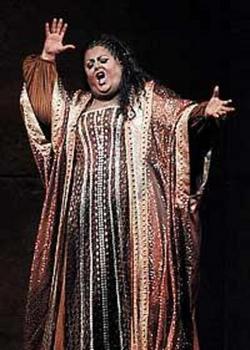 Do we suspend disbelief or do we suspend belief? I was brought up saying the former, but I have heard people say the latter and it makes perfectly good sense too... to suspend a belief that people do not generally converse in High C.
Unless I am completely off-base, this suggests that the distance between belief and disbelief is ... what? ... non-existent? -- same stuff, different spelling? But how can belief and disbelief be the same when they might be offered as antonyms -- pure opposites in which chasms of difference reside?
I guess none of it matters much, but it whispered in my ear this morning and I wondered again about all the fervor that can go into belief and disbelief.
PS. And yes, I put the picture in there to forestall any comments about "it ain't over till the fat lady sings." :)
.
If you've been to the opera or read a comic book or fairy tale, you know what it means to "suspend disbelief." I don't know about you, but I have never walked down a crowded city street and heard a bulldog-proportioned woman discussing politics with a friend in High C. But in the opera house or fairy tale, anything goes. It is the onlooker who is asked to "suspend disbelief," to imagine that this is the way things actually do occur.
But which is it that we do when we go to the opera or read a comic book:
Do we suspend disbelief or do we suspend belief? I was brought up saying the former, but I have heard people say the latter and it makes perfectly good sense too... to suspend a belief that people do not generally converse in High C.Unless I am completely off-base, this suggests that the distance between belief and disbelief is ... what? ... non-existent? -- same stuff, different spelling? But how can belief and disbelief be the same when they might be offered as antonyms -- pure opposites in which chasms of difference reside?
I guess none of it matters much, but it whispered in my ear this morning and I wondered again about all the fervor that can go into belief and disbelief.
PS. And yes, I put the picture in there to forestall any comments about "it ain't over till the fat lady sings." :)
.
World Cup
.
Lately, as a means of entertainment, I have taken to watching the World Cup soccer tournament. I am not a sports aficionado, but I enjoy the fact that the people shown on the screen are actually doing something that they are willing to pour their hearts into. Those guys can do things with their feet that most people I know couldn't do with their hands.
The rest of television seems to be populated either by women with breasts who own or are about to purchase something and whose vocabulary consists entirely of the variously-accented phrase, "Oh ... my ... God!" or by men with glistening teeth, spiked hair, a vast sense of their own magnetism, and an advanced degree in how not to shave. And then, of course, there is the canned laughter to flavor the mix. I can understand that someone might take such people seriously. I just don't happen to be one of them...and do wonder what such people see when they look in the mirror.
On the soccer field, there is life, however slow the game. With the exception of some garish falls designed to penalize the other team, there is no time for faking. These are not actors or pretenders. Based on some of the close-up's of players' faces, there also seem to be as many ways to say "Shit!" as there are languages in the tournament. And in the run-up to the tournament, I heard a radio show in which someone was saying that scoring a goal was orgasmic -- in line with the ineffable woo-hoo that goes with sex -- and that players had to be warned not to kiss eachother in delight. This is no-screwin'-around stuff.
How nice it is to see something serious, even if I am not serious about it. It is like watching a child trying to draw a picture of a car -- that sense of complete concentration and a devotion that is willing to stake the farm on things. In Japan, I have heard, there are celebrations of great military adventures that failed and I imagine, but don't know, that it is because success and failure, while interesting, cannot hold a candle to a complete effort.
All-in.
No holding back.
Win, lose or draw ... go for it!
Thought, word and deed ... nothing in reserve. No more canned-laughter safety nets. No more posing.
Just this once....
.
Lately, as a means of entertainment, I have taken to watching the World Cup soccer tournament. I am not a sports aficionado, but I enjoy the fact that the people shown on the screen are actually doing something that they are willing to pour their hearts into. Those guys can do things with their feet that most people I know couldn't do with their hands.
The rest of television seems to be populated either by women with breasts who own or are about to purchase something and whose vocabulary consists entirely of the variously-accented phrase, "Oh ... my ... God!" or by men with glistening teeth, spiked hair, a vast sense of their own magnetism, and an advanced degree in how not to shave. And then, of course, there is the canned laughter to flavor the mix. I can understand that someone might take such people seriously. I just don't happen to be one of them...and do wonder what such people see when they look in the mirror.
On the soccer field, there is life, however slow the game. With the exception of some garish falls designed to penalize the other team, there is no time for faking. These are not actors or pretenders. Based on some of the close-up's of players' faces, there also seem to be as many ways to say "Shit!" as there are languages in the tournament. And in the run-up to the tournament, I heard a radio show in which someone was saying that scoring a goal was orgasmic -- in line with the ineffable woo-hoo that goes with sex -- and that players had to be warned not to kiss eachother in delight. This is no-screwin'-around stuff.
How nice it is to see something serious, even if I am not serious about it. It is like watching a child trying to draw a picture of a car -- that sense of complete concentration and a devotion that is willing to stake the farm on things. In Japan, I have heard, there are celebrations of great military adventures that failed and I imagine, but don't know, that it is because success and failure, while interesting, cannot hold a candle to a complete effort.
All-in.
No holding back.
Win, lose or draw ... go for it!
Thought, word and deed ... nothing in reserve. No more canned-laughter safety nets. No more posing.
Just this once....
.
Sunday, June 20, 2010
no more mooching
.
I'm not a big fan of mooching off someone else's adventure, but I suppose it's par for the course, especially since, as this morning, there is no particular theme-bird chirping in my mind.
Today, I guess I'll mooch off the news report that a British doctor is in hot water for "shortening the lives" of some 20 patients, one of whom was his son.
It's not a story anyone hasn't read before, debated before, found sane or insane before, inveighed against or lifted up as enlightened at last. Death is one of the biggies, so it's always good for another journalistic ride.
Gautama Buddha was alleged in The Dhammapada to have said,
All fear death. Christianity and the like can use the notion to keep their constituencies in line. It's good leverage since death has a nearly-universal currency. And I'm sure the Buddha got people's attention with such a topic even if a glistening spire was not his intention.
When you fear something, eventually you have to turn around and face the fear, if for no other reason than that the alternative grows threadbare and boring over time. So, if I fear death and yet grow I-don't-know tongue-tied when asked, "What is death?" something is out of whack. It's not possible to fear what you do not know. You can only fear what you know. So ... what do you fear about death? If I'm so all-fired sure of myself about my fear of death, well, what is it I fear?
These are not questions for round-table discussions. They are personal and deserve personal and unfettered attention. If you cannot answer and yet you go on being afraid, then fear is an answer. But fear of WHAT? Isn't it worth your curiosity? Isn't it worth your effort? Isn't it worth setting aside the imaginative tapestries that others have and continue to weave?
Maybe that's a good way to describe spiritual endeavor: No more mooching. On the other hand, I probably mooched that from someone and don't even know it.
Mooch and smooch -- the way of the world.
.
I'm not a big fan of mooching off someone else's adventure, but I suppose it's par for the course, especially since, as this morning, there is no particular theme-bird chirping in my mind.
Today, I guess I'll mooch off the news report that a British doctor is in hot water for "shortening the lives" of some 20 patients, one of whom was his son.
It's not a story anyone hasn't read before, debated before, found sane or insane before, inveighed against or lifted up as enlightened at last. Death is one of the biggies, so it's always good for another journalistic ride.
Gautama Buddha was alleged in The Dhammapada to have said,
All fear dyingIt's hard to imagine that his was an original thought. Everyone mooches and the Buddha was no different. Of course, what anyone does with their mooching is another question. Some mooch in order to raise their own status. Some mooch as a means of asserting their power. Some mooch as a means of instruction... and that's what I think the Buddha did -- mooch from common knowledge to encourage an uncommon understanding.
All fear death.
All fear death. Christianity and the like can use the notion to keep their constituencies in line. It's good leverage since death has a nearly-universal currency. And I'm sure the Buddha got people's attention with such a topic even if a glistening spire was not his intention.
When you fear something, eventually you have to turn around and face the fear, if for no other reason than that the alternative grows threadbare and boring over time. So, if I fear death and yet grow I-don't-know tongue-tied when asked, "What is death?" something is out of whack. It's not possible to fear what you do not know. You can only fear what you know. So ... what do you fear about death? If I'm so all-fired sure of myself about my fear of death, well, what is it I fear?
These are not questions for round-table discussions. They are personal and deserve personal and unfettered attention. If you cannot answer and yet you go on being afraid, then fear is an answer. But fear of WHAT? Isn't it worth your curiosity? Isn't it worth your effort? Isn't it worth setting aside the imaginative tapestries that others have and continue to weave?
Maybe that's a good way to describe spiritual endeavor: No more mooching. On the other hand, I probably mooched that from someone and don't even know it.
Mooch and smooch -- the way of the world.
.
Saturday, June 19, 2010
artifacts
.
Artifacts -- the repository of memory; the fuel of present warming fires; that which is redolent and suggestive and glowing with ... with ... with....
Some of Mother Teresa's artifacts went on display recently here in Massachusetts.
From the article, it is clear that onlookers were moved in a variety of ways -- truly moved.
A piece of the "true cross;" one of Buddha's bones; an artillery shell dug out of a French farmer's field so many years later ... artifacts excite reactions. Very touching reactions, very human, very moving.
But I also find it interesting that artifacts that are truly moving do not always create in those who are moved a reflection on what it is that moves. What door is it that opens onto some new and touching plateau? Why is it enough simply to be moved -- sometimes to tears -- by a bit of wood or a bit of bone or a bit of steel? How could the onlooker be moved if what moved them were not already embedded in their lives ... goodness, evil, sorrow, laughter, joy. Where does that come from?
Too often the wondrous effect of artifacts stops short. It just strikes me as a pity.
.
Artifacts -- the repository of memory; the fuel of present warming fires; that which is redolent and suggestive and glowing with ... with ... with....
Some of Mother Teresa's artifacts went on display recently here in Massachusetts.
From the article, it is clear that onlookers were moved in a variety of ways -- truly moved.
A piece of the "true cross;" one of Buddha's bones; an artillery shell dug out of a French farmer's field so many years later ... artifacts excite reactions. Very touching reactions, very human, very moving.
But I also find it interesting that artifacts that are truly moving do not always create in those who are moved a reflection on what it is that moves. What door is it that opens onto some new and touching plateau? Why is it enough simply to be moved -- sometimes to tears -- by a bit of wood or a bit of bone or a bit of steel? How could the onlooker be moved if what moved them were not already embedded in their lives ... goodness, evil, sorrow, laughter, joy. Where does that come from?
Too often the wondrous effect of artifacts stops short. It just strikes me as a pity.
.
"who died and left you in charge?"
.
Yesterday, the nurse who insisted I go to the hospital emergency room (now!) made a nice observation. After she had done her routine blood test and was considering my pulse rate (which was through the roof), she said evenly, "Sometimes you are your own worst enemy."
And as I thought it over, I realized she was right. I was not brought up to think that being hurt or having an ailment was something I might complain about. True, I might have to get it fixed, but when regarding what needed fixing, I did my best to stand at a distance, assessing and addressing the issue together with those who might likewise be considering what to do and how to do it. This stance formed a kind of camouflage for those doing the repair work ... if I seemed so even-tempered, it must not be that bad. But sometimes it was that bad ... or worse.
Besides my upbringing -- a bit of stiff-upper-lip or you-don't-deserve-it or something like that -- there was also, on my part, a desire to assert control of the ailment that was, in fact, in control: I could remain cool, calm and collected and place the ailment at some distance from myself.
It's ludicrous when you write it down, but I also don't think it's uncommon ... holding things at a safe distance when all the time they are in your face, plain and simple. Being in control is the habit, but what's wrong with not being in control -- what's the matter with things as they are, plain and simple?
The whole situation also made me wonder why it should be necessary to use up 40 years on something called Zen practice when there was Ann, the nurse, acting as a straightforward and no-bones-about-it teacher: "Sometimes you are your own worst enemy." Plain as salt ... ain't it the truth? What would convince me that there was some other approach -- something other than daily events -- that could somehow out-teach, out-inform, out-clarify what was in front of my nose?
Well, the short answer is, I love Hollywood ... the flash and glitter, the stunning scenes, the wise, wise wisdoms of something I'm magnetized by ... something that will get my attention and awe and determination. And who knows: Without Zen practice, perhaps my ears would have remained deaf to Ann's good teaching.
I'm not criticizing. Just noticing. All that time fussing about one kind of brass ring or another, when all the time ... well, I'm just sick. Or, sometimes I am my worst enemy. Or laughter is a delight. Or ... sunshine.
It all feels a bit as if the universe were smothering a guffaw: "Who died and left you in charge, nitwit?"
Well, no one died and even so, you are in charge. Not in control, perhaps, but in charge.
.
Yesterday, the nurse who insisted I go to the hospital emergency room (now!) made a nice observation. After she had done her routine blood test and was considering my pulse rate (which was through the roof), she said evenly, "Sometimes you are your own worst enemy."
And as I thought it over, I realized she was right.
I was not brought up to think that being hurt or having an ailment was something I might complain about. True, I might have to get it fixed, but when regarding what needed fixing, I did my best to stand at a distance, assessing and addressing the issue together with those who might likewise be considering what to do and how to do it. This stance formed a kind of camouflage for those doing the repair work ... if I seemed so even-tempered, it must not be that bad. But sometimes it was that bad ... or worse.Besides my upbringing -- a bit of stiff-upper-lip or you-don't-deserve-it or something like that -- there was also, on my part, a desire to assert control of the ailment that was, in fact, in control: I could remain cool, calm and collected and place the ailment at some distance from myself.
It's ludicrous when you write it down, but I also don't think it's uncommon ... holding things at a safe distance when all the time they are in your face, plain and simple. Being in control is the habit, but what's wrong with not being in control -- what's the matter with things as they are, plain and simple?
The whole situation also made me wonder why it should be necessary to use up 40 years on something called Zen practice when there was Ann, the nurse, acting as a straightforward and no-bones-about-it teacher: "Sometimes you are your own worst enemy." Plain as salt ... ain't it the truth? What would convince me that there was some other approach -- something other than daily events -- that could somehow out-teach, out-inform, out-clarify what was in front of my nose?
Well, the short answer is, I love Hollywood ... the flash and glitter, the stunning scenes, the wise, wise wisdoms of something I'm magnetized by ... something that will get my attention and awe and determination. And who knows: Without Zen practice, perhaps my ears would have remained deaf to Ann's good teaching.
I'm not criticizing. Just noticing. All that time fussing about one kind of brass ring or another, when all the time ... well, I'm just sick. Or, sometimes I am my worst enemy. Or laughter is a delight. Or ... sunshine.
It all feels a bit as if the universe were smothering a guffaw: "Who died and left you in charge, nitwit?"
Well, no one died and even so, you are in charge. Not in control, perhaps, but in charge.
.
Friday, June 18, 2010
truth to tell
.
In one of his novels, author Earl Thompson ("Tattoo," "A Garden of Sand," etc.) puts words in what I took to be his quasi-autobiographical central character's mouth. The character, a writer, says that all he ever wanted to do was to write something true. Judging by his novels as I remember them, Thompson did a pretty good job of writing something true.
And yet the wishful words linger in the mind ... to write something true. On the one hand, all words are liars from the get-go -- approximations or indicators of some vastly luscious whole. Often, when reading, you can sense the author's darting eyes, full of creative and contriving effort, scanning the heavens for just the right lie. Yes, it may be good, but still you feel what is missing ... the truth being coaxed from the lies.
On the other hand there are moments among the words and among the lies, that all artifice seems to fall away and there is a sudden unveiling ... this, fershur, is the truth and you know it. It is naked and you are naked with it.
Maybe spiritual endeavor is like that, rolling around in the coziness of the lies in a heart-felt effort to winkle out some truth, only to find, in a rare moment, that this, by God, is the truth ... the truth you had swooned for and begged for and were afraid of and coaxed until -- surprise, surprise -- it appeared without effort or contrivance ... sticking it's nose out from behind some closet door like a mischievous kid saying a delighted, "Boo!"
There's no more fakin' it when the truth comes calling -- the 'fershur' kind. No more prattling about truthful novels or spiritual whirligigs ... it's just "boo!" And just about the time you recognize it and are stripped delightfully bare and plead "pleasepleaseplease don't go!" it trots back into the fabricated bushes, delicate and powerful and shy as a unicorn.
.
In one of his novels, author Earl Thompson ("Tattoo," "A Garden of Sand," etc.) puts words in what I took to be his quasi-autobiographical central character's mouth. The character, a writer, says that all he ever wanted to do was to write something true. Judging by his novels as I remember them, Thompson did a pretty good job of writing something true.
And yet the wishful words linger in the mind ... to write something true. On the one hand, all words are liars from the get-go -- approximations or indicators of some vastly luscious whole. Often, when reading, you can sense the author's darting eyes, full of creative and contriving effort, scanning the heavens for just the right lie. Yes, it may be good, but still you feel what is missing ... the truth being coaxed from the lies.
On the other hand there are moments among the words and among the lies, that all artifice seems to fall away and there is a sudden unveiling ... this, fershur, is the truth and you know it. It is naked and you are naked with it.
Maybe spiritual endeavor is like that, rolling around in the coziness of the lies in a heart-felt effort to winkle out some truth, only to find, in a rare moment, that this, by God, is the truth ... the truth you had swooned for and begged for and were afraid of and coaxed until -- surprise, surprise -- it appeared without effort or contrivance ... sticking it's nose out from behind some closet door like a mischievous kid saying a delighted, "Boo!"
There's no more fakin' it
when the truth comes calling -- the 'fershur' kind. No more prattling about truthful novels or spiritual whirligigs ... it's just "boo!" And just about the time you recognize it and are stripped delightfully bare and plead "pleasepleaseplease don't go!" it trots back into the fabricated bushes, delicate and powerful and shy as a unicorn..
precious worlds
.
Tenderness strikes me as a component in that which is called "precious," but there are other competing dictionary components as well:
So what is precious can truly touch the heart or cloy like a self-help missal.
In spiritual endeavor, people sometimes seek protection in the preciousness of their observances and outlook: Because this endeavor is truly touching to an uncertain heart or mind, adherents can build up adamant excuses for not really looking into things. "God is good. End of story."
But where is the line between what is truly precious, truly touching, truly consoling and sensible ... and the defensive spires that can grow up out of that uncertainty or sorrow or suffering? I don't know.
Lately, I seem to have been surrounded by a lot of sad stories, a lot of confusion, a lot of very touching stuff. So I was thinking about what might be precious and what might be excused because it was called precious.
Just an idea that got caught between my teeth.
.
Tenderness strikes me as a component in that which is called "precious," but there are other competing dictionary components as well:
▸ adjective: of high worth or cost ("Diamonds, sapphires, rubies, and emeralds are precious stones")
▸ adjective: characterized by feeling or showing fond affection for ("Children are precious")
▸ adjective: obviously contrived to charm ("An insufferably precious performance")
▸ adverb: extremely ("There is precious little time left")
So what is precious can truly touch the heart or cloy like a self-help missal.
In spiritual endeavor, people sometimes seek protection in the preciousness of their observances and outlook: Because this endeavor is truly touching to an uncertain heart or mind, adherents can build up adamant excuses for not really looking into things. "God is good. End of story."
But where is the line between what is truly precious, truly touching, truly consoling and sensible ... and the defensive spires that can grow up out of that uncertainty or sorrow or suffering? I don't know.
Lately, I seem to have been surrounded by a lot of sad stories, a lot of confusion, a lot of very touching stuff. So I was thinking about what might be precious and what might be excused because it was called precious.
Just an idea that got caught between my teeth.
.
Subscribe to:
Posts (Atom)