
Monday, February 18, 2013
advancing ignorance


the middle way ... not
A Zen teacher whose name and era my mind refuses to cough up was once asked what "the middle way" meant. Without hesitation he replied, "It means the extremes."
In one sense, it's the kind of response that these old dodgers might be expected to give ... "paradoxical" or "whimsical" or "challenging" or simply "kool." It's the kind of response that listeners might set off to understand, gnawing on the response like a dog on a beef bone.
Intellectually, when gnawing on the beef bone, it is comprehensible ... nothing too personal, just comprehensible and non-threatening. The middle way would have no meaning without the extremes to intellectually define it. And in a safe-sex sort of way, it can be applied personally: The extremes in my life have generally led to one kind of blood-letting or another so ... chill your jets, simmer down, be more circumspect and ... 'follow the middle way' between joy and sorrow, love and anger, need and greed.
 In the fairy tale that came to be known as "Goldilocks and the Three Bears," a little girl, lost and hungry, comes to a cabin inhabited by three bears. The bears are out when Goldilocks arrives, but on their table are three bowls of porridge, one each for Mama, Papa and Baby Bear. Goldilocks is so hungry that she attacks the food without a second thought. But the first bowl is "too hot." The second bowl is "too cold." But the third bowl is "just right" ... and Goldilocks eats her fill.
And intellectually, "just right" becomes a big-boy version of the middle way ... something that doesn't hurt too bad or feel too good, but seems to fill the bill. A compromise, a place of ethics and enforced serenity, a place well-modulated and even-tempered and, most important, meaningful and in control.
With this appreciation, anyone might be inclined to wonder no longer about the middle way. What the hell -- I've got it nailed: The meaning is in hand. I'm in control. I can explain it to all and sundry and also remain content within. I may not always be able to act in accordance with what I know and find meaningful and believe, but, well, I've got a handle on it. I'm kool ... thanks for asking.
But life is full of pesky extremes and this mediocre interpretation of the middle way takes a licking as days and weeks and years pass. "Just right" can't seem to hold the extremes at a safe and smarmy distance. And if this is the case, then perhaps instead of kowtowing to an intellectual fantasy -- looks good, sounds good, wins applause from others -- it is worth looking more closely at the pesky visitors.
Two aspects of what the ethical, Goldilocks version of the middle way might call extreme are a loss of control and a loss of meaning. Ever been enraged? Ever kissed a beloved friend? Ever eaten chocolate? Ever been consumed by grief? Ever sneezed?
In such moments there is neither control nor meaning. Later the formats of control and meaning may be brought to bear ... but for the moment -- this moment -- meaning and control can go suck an egg: This is this ... period. There is no precipice to fall off, nor anyone falling ... this this is all there is -- complete, uncompromising, ineffable. This moment is proof-positive ... minus any proof or anyone to say so.
Sometimes such complete moments have some very painful results. Sometimes they seem to serve up wondrous results. And sometimes the results are impact-neutral. But whatever their impact, there is nothing second-rate or contrived about them. It's only later that Goldilocks can go to work, that well-modulated assessments can attempt to sand off what may feel like very rough edges ... OK, I'll try to be good, talk sweet, go along to get along, play the middle way concerto.
Friends are interesting. No one became a good friend overnight. It took time and small incidents and mutual enjoyments that included disagreement ... drip, drip, dripping until one day, somehow, the bucket called friendship seemed to be full.
And maybe it's the same for the extremes and the middle way -- drip, drip, dripping with time and experience and practice until, somehow, the bucket called friendship is full. No longer are there two aspects. No longer is there even one aspect. The middle way is the extremes, the extremes are the middle way and prattling about it is left to the Goldilocks faction of this life.
To call it friendship would be too much.
Friends just go out for a burger without a backward glance. It's time for lunch and everyone gets hungry around lunchtime so ... eat your burger. Accompanied or unaccompanied ... eat your burger.
In one sense, it's the kind of response that these old dodgers might be expected to give ... "paradoxical" or "whimsical" or "challenging" or simply "kool." It's the kind of response that listeners might set off to understand, gnawing on the response like a dog on a beef bone.
Intellectually, when gnawing on the beef bone, it is comprehensible ... nothing too personal, just comprehensible and non-threatening. The middle way would have no meaning without the extremes to intellectually define it. And in a safe-sex sort of way, it can be applied personally: The extremes in my life have generally led to one kind of blood-letting or another so ... chill your jets, simmer down, be more circumspect and ... 'follow the middle way' between joy and sorrow, love and anger, need and greed.
And intellectually, "just right" becomes a big-boy version of the middle way ... something that doesn't hurt too bad or feel too good, but seems to fill the bill. A compromise, a place of ethics and enforced serenity, a place well-modulated and even-tempered and, most important, meaningful and in control.
With this appreciation, anyone might be inclined to wonder no longer about the middle way. What the hell -- I've got it nailed: The meaning is in hand. I'm in control. I can explain it to all and sundry and also remain content within. I may not always be able to act in accordance with what I know and find meaningful and believe, but, well, I've got a handle on it. I'm kool ... thanks for asking.
But life is full of pesky extremes and this mediocre interpretation of the middle way takes a licking as days and weeks and years pass. "Just right" can't seem to hold the extremes at a safe and smarmy distance. And if this is the case, then perhaps instead of kowtowing to an intellectual fantasy -- looks good, sounds good, wins applause from others -- it is worth looking more closely at the pesky visitors.
Two aspects of what the ethical, Goldilocks version of the middle way might call extreme are a loss of control and a loss of meaning. Ever been enraged? Ever kissed a beloved friend? Ever eaten chocolate? Ever been consumed by grief? Ever sneezed?
In such moments there is neither control nor meaning. Later the formats of control and meaning may be brought to bear ... but for the moment -- this moment -- meaning and control can go suck an egg: This is this ... period. There is no precipice to fall off, nor anyone falling ... this this is all there is -- complete, uncompromising, ineffable. This moment is proof-positive ... minus any proof or anyone to say so.
Sometimes such complete moments have some very painful results. Sometimes they seem to serve up wondrous results. And sometimes the results are impact-neutral. But whatever their impact, there is nothing second-rate or contrived about them. It's only later that Goldilocks can go to work, that well-modulated assessments can attempt to sand off what may feel like very rough edges ... OK, I'll try to be good, talk sweet, go along to get along, play the middle way concerto.
Friends are interesting. No one became a good friend overnight. It took time and small incidents and mutual enjoyments that included disagreement ... drip, drip, dripping until one day, somehow, the bucket called friendship seemed to be full.
And maybe it's the same for the extremes and the middle way -- drip, drip, dripping with time and experience and practice until, somehow, the bucket called friendship is full. No longer are there two aspects. No longer is there even one aspect. The middle way is the extremes, the extremes are the middle way and prattling about it is left to the Goldilocks faction of this life.
To call it friendship would be too much.
Friends just go out for a burger without a backward glance. It's time for lunch and everyone gets hungry around lunchtime so ... eat your burger. Accompanied or unaccompanied ... eat your burger.
Sunday, February 17, 2013
"slow but noble television"

Twelve hours of television featuring nothing but the burning of fire wood?
The head of programming at NRK, Rune Moeklebust, described it as "slow but noble television." ...
"People in Norway have a spiritual relationship with fire," Mr. Moeklebust was quoted as telling Reuters.
hypocrite! liar! ... say what???
Is it a conundrum or am I just confused again ... I can live with either assessment...
An old Zennie chum and I were batting things back and forth in email. He suggested that there was a bedrock social supposition that people who led spiritual gatherings had their shit together and for that reason it was enormously dispiriting when such leaders were caught stealing funds or literally screwing members of their flock.
My question was: If anyone actually did have their shit together, what need would there be for anything akin to a spiritual persuasion?
And if that question holds any water, then the generalized social appreciation of spiritual leaders seems to have been turned on its head and the axiom/presupposition might better be stated as, "Leaders of spiritual persuasions may be assumed NOT to have their shit together."
And if that is so, what does it say about any widespread social willingness to anoint or proclaim or follow spiritual leaders? If anyone were to seek the truth and yet anoint an ipso-facto hypocrite, what right could anyone claim to wail, "Hypocrite!" or "Charlatan!" or "Liar!?"
OK, OK ... before anyone sends a couple of well-armed true-believers to my house in order to set me straight, I will state for the record that the above qualifies merely as some whimsical noodling....
Unless, of course, anyone might like to think it over.
An old Zennie chum and I were batting things back and forth in email. He suggested that there was a bedrock social supposition that people who led spiritual gatherings had their shit together and for that reason it was enormously dispiriting when such leaders were caught stealing funds or literally screwing members of their flock.
My question was: If anyone actually did have their shit together, what need would there be for anything akin to a spiritual persuasion?
And if that question holds any water, then the generalized social appreciation of spiritual leaders seems to have been turned on its head and the axiom/presupposition might better be stated as, "Leaders of spiritual persuasions may be assumed NOT to have their shit together."
And if that is so, what does it say about any widespread social willingness to anoint or proclaim or follow spiritual leaders? If anyone were to seek the truth and yet anoint an ipso-facto hypocrite, what right could anyone claim to wail, "Hypocrite!" or "Charlatan!" or "Liar!?"
OK, OK ... before anyone sends a couple of well-armed true-believers to my house in order to set me straight, I will state for the record that the above qualifies merely as some whimsical noodling....
Unless, of course, anyone might like to think it over.
"I do" ... big time

Some of the couples, married by the widow of the Rev. Sun Myung Moon, had their mates chosen for them by Hak Ja-han as a symbol of their faith in the Unification Church Moon founded. Some couples were immediately confronted by the fact that neither spouse spoke the other's language.
It was the first mass wedding since Moon died at 92 in September. The church has been accused of brainwashing its 'Moonie' followers and of embezzlement.
practice
In spiritual endeavor ...
Good practice.
Bad practice.
Intense practice.
Deluded practice.
Beginner's practice.
Advanced practice.
Clear practice.
Failed practice....
Will someone please tell me what is not practice? How does that compute? Literally.
Of course it's nice to expatiate and expound -- to have something to talk about.
But when anyone decides to cut the bullshit, what is not practice?
Seriously.
Good practice.
Bad practice.
Intense practice.
Deluded practice.
Beginner's practice.
Advanced practice.
Clear practice.
Failed practice....
Will someone please tell me what is not practice? How does that compute? Literally.
Of course it's nice to expatiate and expound -- to have something to talk about.
But when anyone decides to cut the bullshit, what is not practice?
Seriously.
exorcists and wizards
A friend passed along a Telegraph article about the world's leading exorcist praising Pope Benedict XVI.
Reading it gave me the shivers. I felt as if I were being drawn into the clutches of some giant sea squid ... tentacles embracing and squeezing the life out of some unwatchful and credulous and unfortunate prey. I suppose all spiritual persuasions have their unremitting undergrowth ... the wispy adventures in 'mystical' realms that are then codified and applied ... and woe betide the unfortunate prey.
 There is a wonderful scene in the 1981 movie "Dragonslayer" -- a better-than-average movie about a young wizard who sets out to defeat a marauding dragon -- after the dragon is at last defeated.
The dragon's blood and guts and bones lie scattered on the earth as wonder-struck peasants gather around and gawk. Their nemesis is at last destroyed. And as the wonder-struck gawk, the king of the realm is the first to step forward and claim credit for killing the beast. He proclaims his own heroism and thus elevates his power. Next in line to take credit is a Christian monk with a cross-topped staff: It was his God and his prayers that defeated this mighty evil.
On the sidelines of the crowd, the young wizard whose actions were largely responsible for the dragon's demise stands with his girlfriend and watches silently before, without comment, he and his girlfriend walk slowly away.
Everyone wants the credit, the power and the glory.
Few are willing to don the mantle of the wizard they already are.
Reading it gave me the shivers. I felt as if I were being drawn into the clutches of some giant sea squid ... tentacles embracing and squeezing the life out of some unwatchful and credulous and unfortunate prey. I suppose all spiritual persuasions have their unremitting undergrowth ... the wispy adventures in 'mystical' realms that are then codified and applied ... and woe betide the unfortunate prey.
The dragon's blood and guts and bones lie scattered on the earth as wonder-struck peasants gather around and gawk. Their nemesis is at last destroyed. And as the wonder-struck gawk, the king of the realm is the first to step forward and claim credit for killing the beast. He proclaims his own heroism and thus elevates his power. Next in line to take credit is a Christian monk with a cross-topped staff: It was his God and his prayers that defeated this mighty evil.
On the sidelines of the crowd, the young wizard whose actions were largely responsible for the dragon's demise stands with his girlfriend and watches silently before, without comment, he and his girlfriend walk slowly away.
Everyone wants the credit, the power and the glory.
Few are willing to don the mantle of the wizard they already are.
meditation is....
Yesterday I wrote:
I'm getting a bit long in the tooth to be sucking on pacifiers like "the truth."
Meditation is the art of not escaping.Today I wonder if it's true ... and have to laugh:
I'm getting a bit long in the tooth to be sucking on pacifiers like "the truth."
Saturday, February 16, 2013
path to the zendo
Like the fat kid in the third grade, a wet snow descended on the neighborhood this morning ... gloppy, heavy and innocent.
An email informs me that someone wants to come to the zendo tomorrow ... which means I will have to go out and shovel a path through the fat-kid accumulation.
A path to the zendo. Once, a line like that might have had resonating and metaphorical magic to it.
Now, it's just snow.
An email informs me that someone wants to come to the zendo tomorrow ... which means I will have to go out and shovel a path through the fat-kid accumulation.
A path to the zendo. Once, a line like that might have had resonating and metaphorical magic to it.
Now, it's just snow.
dirty and clean
During eight weeks of basic training in the army, there was a period of five or six days of bivouac -- living in a two-man tent by night and doing field exercises by day. There were no showers and by the end of the bivouac period, everyone was filthy. I stood in the shower for a good half an hour when we returned to the barracks ... a half an hour that included washing my entire body at least three times with scouring powder ... simple soap was not enough for how dirty I felt.
Bivouac was not something I was ever forced to endure again ... or at least not in the army. Still, other situations have come along in life that felt very much the same -- situations that required a willingness to get down-and-dirty because an unwillingness to get dirty meant there was simply no chance to be honestly clean.
That doesn't mean I like getting dirty. It's sticky, itching, slimy and I really don't like it. But the only thing worse than getting dirty is the unwillingness to get dirty. An honest spiritual life is precisely as former President Harry S. Truman described politics: "If you can't stand the heat, get out of the kitchen."
 I thought of all this because a friend sent along a news article about newly-released Catholic Church papers that painted a yet-again disgusting picture of an institution that worked and works very hard to lay claim to cleanliness. Sexual and financial shenanigans and raw abuse were put on display in the story. The particulars of the story were new to me, but the gritchy format was not.
Same ol' same ol'. Do I really need to read or heed or purvey this shit again? Do I really need to pass the grime along, let alone dip myself in the cesspool? (There are squeaky-clean and righteous people who will tell me that going on bivouac is my own damned fault ... that there is a way to be squeaky clean without ever becoming soiled. As far as I'm concerned, when it comes to spiritual life, they are cowards and can go fuck themselves. With age, my patience dwindles.)
But it all hangs in my mind like a pervasive case of body odor ... grey, smelly, freighted, gloomy. Isn't there some good news? And of course there is good news, the kind of good news you get from people who never went on bivouac, the people who will tell you over and over again how squeaky clean everything is, the people who will despair of those who take a look and then cry out for scouring soap.
And still, I hate it: Buddhism, Catholic Church, or any other institution or supposition that offers up good news and then seeks to obscure or bury the bad. If you can't stand the smell of shit, don't feed on filet mignon.
What's the matter with bad news? Is there some reason that bad news can't be just that -- bad news? Is there some reason to suppose that an institution composed of human beings won't spew out bad news with every good-news pronouncement they make ... and vice versa?
But the kid in me hates it all. Just give me the good news. Just give me the shower without the dirt. Just don't force me to think and acknowledge and then think and acknowledge some more.
Oh well ... just a little white-whine festival.
PS. A Reuters article points out that Pope Benedict XVI's plan to retire at the Vatican will insure his security ... and simultaneously offer immunity from any future pedophile-scandal accusations.
PPS. And, whoever the next pope turns out to be, it's nice to know that there are some trickle-down economics involved as a small tailor's shop prepares the sumptuous vestments for the next pontiff ... in small, medium and large.
Bivouac was not something I was ever forced to endure again ... or at least not in the army. Still, other situations have come along in life that felt very much the same -- situations that required a willingness to get down-and-dirty because an unwillingness to get dirty meant there was simply no chance to be honestly clean.
That doesn't mean I like getting dirty. It's sticky, itching, slimy and I really don't like it. But the only thing worse than getting dirty is the unwillingness to get dirty. An honest spiritual life is precisely as former President Harry S. Truman described politics: "If you can't stand the heat, get out of the kitchen."

Same ol' same ol'. Do I really need to read or heed or purvey this shit again? Do I really need to pass the grime along, let alone dip myself in the cesspool? (There are squeaky-clean and righteous people who will tell me that going on bivouac is my own damned fault ... that there is a way to be squeaky clean without ever becoming soiled. As far as I'm concerned, when it comes to spiritual life, they are cowards and can go fuck themselves. With age, my patience dwindles.)
But it all hangs in my mind like a pervasive case of body odor ... grey, smelly, freighted, gloomy. Isn't there some good news? And of course there is good news, the kind of good news you get from people who never went on bivouac, the people who will tell you over and over again how squeaky clean everything is, the people who will despair of those who take a look and then cry out for scouring soap.
And still, I hate it: Buddhism, Catholic Church, or any other institution or supposition that offers up good news and then seeks to obscure or bury the bad. If you can't stand the smell of shit, don't feed on filet mignon.
What's the matter with bad news? Is there some reason that bad news can't be just that -- bad news? Is there some reason to suppose that an institution composed of human beings won't spew out bad news with every good-news pronouncement they make ... and vice versa?
But the kid in me hates it all. Just give me the good news. Just give me the shower without the dirt. Just don't force me to think and acknowledge and then think and acknowledge some more.
Oh well ... just a little white-whine festival.
PS. A Reuters article points out that Pope Benedict XVI's plan to retire at the Vatican will insure his security ... and simultaneously offer immunity from any future pedophile-scandal accusations.
PPS. And, whoever the next pope turns out to be, it's nice to know that there are some trickle-down economics involved as a small tailor's shop prepares the sumptuous vestments for the next pontiff ... in small, medium and large.
where once, where now, where then
It must have been in the late 1960's that my friend William B. McKechnie III had a girlfriend named Kathy. Bill and I had become friends during a couple of years serving as army linguists in Berlin. He always insisted that the middle initial "B" in his name did not stand for anything: Somewhere in his lineage, someone had decided that if rich folks could have middle initials and/or middle names, life could appear richer if he had one too.
Kathy worked for the New York Historical Society and somehow arranged for Bill and me to accompany a Parks Service photographer on a trip to Ellis Island, the installation where millions of immigrants had been processed at the turn of the century. Bill and I were more enthusiastic than skilled photographers and we jumped at the chance to be granted access to a then-restricted venue ... one with so much history.
But of course there was no one there. Rooms with vastly high ceilings led to hallways with single rooms or offices left and right. Everywhere, the once-strong paint was peeling and the floors were littered with bits and pieces of neglect. Whatever discoveries Bill and I might have expected quickly slipped away. There was light and a seemingly-endless choir of shadows, but the littered emptiness was entirely up to us. We both shot a lot of pictures, most of which were as uninspiring as the tattered mattresses that lay here and there. Ellis Island was chock-ablock with something, but whatever that something was lay invisible and silent no matter how many corners we turned in search of some iconic discovery.
Ellis Island then was just a tattered has-been in the same way that the sparkly island museum of today is just another sort of has-been. Memory and expectation built vast mind-castles for Bill and me. Memory and expectation play a role in today's refurbished halls at Ellis Island. History is so delicious in the mind ... the where-once colliding with the where-now and looking forward to the where-then.
How many things are like Ellis Island, I wonder? Honestly, I think a lot ... if not all.
When I was younger, I used to dream of going to Tierra del Fuego, the southernmost tip of South America where the Atlantic and Pacific oceans meet and crash and dance. And to Afghanistan where Silk Route traders once flowed together from a hundred lands to the east and left bits and pieces of a hundred delicious cultures behind. And to the Orkney Islands in the far north of England because ... well, because the name, like Scapa Flow, was music in my mind, magical ... and because it was magical in my mind, it must be magical in itself, mustn't it?
How many things are like that ... dreamed of and yet, upon arrival, there is nothing there ... or not exactly nothing, but certainly not the something that had been dreamed of.
Marriage, employment, friendship or enmity, wealth and possessions, wisdom or ignorance ... the dreams teem and titillate and inspire, but upon arrival ... well, things may be wonderful indeed, but you've got to admit they are not exactly what was expected. The castle was beautiful and worth the trip, but the problem that arises is that the castle does not exist. There are just the particulars on which, like as not, to construct yet another castle.
Where once ...
Where now ...
Where then....
 None of this is meant to disparage or dismiss the yummy-yummies that crop up in the mind. Just think how boring life might be without them. But it is to suggest that noticing may be worth the price of admission. The castles rise up, the adventure begins, and upon arrival, well, what is that like? There are the particulars of an old mattress or a new lollipop ... just the particulars of what was then, what is now and what will be, all of them rolled together in a single breath ... this particular breath ... which, when you think about it, is pretty neat.
As an Internet buddy of mine used to say, "Wherever you go, there you are."
It's not exactly something, but it's not exactly nothing either. But whatever it is, I don't imagine it's something anyone could photograph or write or know.
Where once...
Where now ...
Where then...
Over and over, easy as an exhalation.
| Coming to America |
But of course there was no one there. Rooms with vastly high ceilings led to hallways with single rooms or offices left and right. Everywhere, the once-strong paint was peeling and the floors were littered with bits and pieces of neglect. Whatever discoveries Bill and I might have expected quickly slipped away. There was light and a seemingly-endless choir of shadows, but the littered emptiness was entirely up to us. We both shot a lot of pictures, most of which were as uninspiring as the tattered mattresses that lay here and there. Ellis Island was chock-ablock with something, but whatever that something was lay invisible and silent no matter how many corners we turned in search of some iconic discovery.
 |
| Ellis Island |
How many things are like Ellis Island, I wonder? Honestly, I think a lot ... if not all.
When I was younger, I used to dream of going to Tierra del Fuego, the southernmost tip of South America where the Atlantic and Pacific oceans meet and crash and dance. And to Afghanistan where Silk Route traders once flowed together from a hundred lands to the east and left bits and pieces of a hundred delicious cultures behind. And to the Orkney Islands in the far north of England because ... well, because the name, like Scapa Flow, was music in my mind, magical ... and because it was magical in my mind, it must be magical in itself, mustn't it?
How many things are like that ... dreamed of and yet, upon arrival, there is nothing there ... or not exactly nothing, but certainly not the something that had been dreamed of.
Marriage, employment, friendship or enmity, wealth and possessions, wisdom or ignorance ... the dreams teem and titillate and inspire, but upon arrival ... well, things may be wonderful indeed, but you've got to admit they are not exactly what was expected. The castle was beautiful and worth the trip, but the problem that arises is that the castle does not exist. There are just the particulars on which, like as not, to construct yet another castle.
Where once ...
Where now ...
Where then....
As an Internet buddy of mine used to say, "Wherever you go, there you are."
It's not exactly something, but it's not exactly nothing either. But whatever it is, I don't imagine it's something anyone could photograph or write or know.
Where once...
Where now ...
Where then...
Over and over, easy as an exhalation.
Friday, February 15, 2013
a believer's crown of thorns
An Indiana community of 4,200 is doing what it can to recover from an onslaught of criticism after suggestions were made that an upcoming prom ban gay participants.
 The furor erupted when a teacher said she supported a "'traditional' prom for Sullivan High School [and] said she believes people choose to be gay and that gays have no purpose in life."
"We are conservative around here. That's just the way of this town," said Nancy Woodard, 60, who owns the Hidden Treasure Exchange store. "In any town in this county, you'll find four or five churches no matter how small the town. ... The Bible is a big belief system here."
"We are conservative around here. That's just the way of this town," said Nancy Woodard, 60, who owns the Hidden Treasure Exchange store. "In any town in this county, you'll find four or five churches no matter how small the town. ... The Bible is a big belief system here."
Is there a belief system anywhere, however benevolent, that does not exclude something else? And if not, how appropriate and useful are beliefs as regards the wide-ranging life that surrounds and infuses anyone's existence? On the face of it, beliefs carry with them an inspiration to act, but it is in the action that anyone might 'prove' the validity of any belief. And once having ingested the experiential truth, what lasting function or decency would any belief include?
Without investigation and left to its own devices, belief remains a cruisin'-for-a-bruisin' DNA strand, a destructive tendency that is bound to do harm both within and without.
Maybe there is room somewhere in academia for a course in how to set belief aside, how to get it through our heads that as good and useful as belief may be at the start, still, over the long haul, it becomes a real crown of thorns.
the disposable penis

Sometimes you gotta wonder ... is it a good thing (something to be desired) or a bad one?
For males in the audience, the sea slug seems to underline the question with its disposable penis.
On the one hand, everything is disposable these days, so why not?
On the other hand, maybe a bird-in-the-hand, so to speak....
the faithless servant
A number of years ago, I received notice that I had been selected for "jury duty." Here in the United States, many Americans do their best to avoid this periodic order that may disrupt jobs and family life ... sitting on a jury for who-knows-how-long, missing workplace pay, and suffering other inconveniences that they imagine someone else should do.
 My view was different: I looked forward to taking part in one of the few American institutions that, however flawed, gives meaning to what's left of a 'free United States' ... the legal system. I'm no my-country-right-or-wrong flag-waver, but when I look at the social and financial and personal instabilities created in, say, Russia or the Middle East or China due to a lack of enforced legal formats, I think the U.S. is reasonably lucky. Anyway, I looked forward to serving, of doing my little bit so that everyone might do a little less.
I did go to the courthouse with reservations. Most of the cases heard are borrrrrrring ... insurance company dust-ups or other bookkeeping disagreements. Luckily, after being filtered from several groups and finally seated in the jury box, I discovered that the case involved age-bias ... a woman who claimed she had been fired from her restaurant job because of her age. Once the jury was selected, the judge sent everyone home with the instruction that the case would begin the next day. I was a happy camper: What is palpably human always interests me.
My enthusiasm was brought up short when the next day arrived and the jury was excused: The case had been settled overnight by the two parties so there was no need for a trial. Thinking it over, I could see why: Age-bias is enormously hard to prove. Had the employer fired this person because she couldn't or wouldn't do her job or had the employee been fired because her age and longevity made her services too expensive? Or some nuanced version of both propositions? The situation, together with the legal fees it entailed, made dragging the case out a pretty expensive proposition. A part of me understood the difficulties. A part of me said, "Well, shit!" -- I wanted to do my job as a juror.
What brought this all to mind was an email I received from a friend yesterday. Without remark, the email linked me to a blog that addressed "The Faithless Servant Doctrine." And within that blog post, the following words attracted my interest:
The words struck a chord in regard to the current $2 million lawsuit brought by Eido Tai Shimano (roshi) against the Zen Studies Society he had once headed and perhaps manipulated. Shimano seeks the money owed him under a retirement package signed by ZSS. He further seeks $2 million-plus. ZSS has filed a brief denying Shimano's allegations and seeking its own $2 million-plus in damages.
In the midst of it all, from the ZSS point of view, lies the question of whether Eido Shimano breached his fiduciary and ethical responsibilities thorough sexual manipulation of a variety of his 'students' and other maneuvers over decades as director of ZSS.
The Faithless Servant Doctrine struck me as a reasonable application that might be made in the ZSS case. There are ample examples of 'faithlessness' stored in the Shimano Archive. And yet too, as in age bias, one man's faithlessness is another man's faithful rendering.
As a biased (call it age-biased if you like) party in the Shimano-ZSS confrontation, I do hope that the decades of sorrow and pain will not be swept under the carpet of some overnight mediation process ... a settlement behind closed doors that fails once again to openly address the confusion and hurt suffered by those who belonged to a Buddhist "sangha" ... sangha, one of the life-blood touchstones of Buddhism.
Sorry to be repetitive and long about this situation, but it is what is on my mind at the moment ... the faithless servant.
I did go to the courthouse with reservations. Most of the cases heard are borrrrrrring ... insurance company dust-ups or other bookkeeping disagreements. Luckily, after being filtered from several groups and finally seated in the jury box, I discovered that the case involved age-bias ... a woman who claimed she had been fired from her restaurant job because of her age. Once the jury was selected, the judge sent everyone home with the instruction that the case would begin the next day. I was a happy camper: What is palpably human always interests me.
My enthusiasm was brought up short when the next day arrived and the jury was excused: The case had been settled overnight by the two parties so there was no need for a trial. Thinking it over, I could see why: Age-bias is enormously hard to prove. Had the employer fired this person because she couldn't or wouldn't do her job or had the employee been fired because her age and longevity made her services too expensive? Or some nuanced version of both propositions? The situation, together with the legal fees it entailed, made dragging the case out a pretty expensive proposition. A part of me understood the difficulties. A part of me said, "Well, shit!" -- I wanted to do my job as a juror.
What brought this all to mind was an email I received from a friend yesterday. Without remark, the email linked me to a blog that addressed "The Faithless Servant Doctrine." And within that blog post, the following words attracted my interest:
“One who owes a duty of fidelity to a principal and who is faithless in the performance of his services is generally disentitled to recover his compensation, whether commissions or salary . . . Nor does it make any difference that the services were beneficial to the principal, or that the principal suffered no provable damage as a result of the breach of fidelity by the agent.”
The words struck a chord in regard to the current $2 million lawsuit brought by Eido Tai Shimano (roshi) against the Zen Studies Society he had once headed and perhaps manipulated. Shimano seeks the money owed him under a retirement package signed by ZSS. He further seeks $2 million-plus. ZSS has filed a brief denying Shimano's allegations and seeking its own $2 million-plus in damages.
In the midst of it all, from the ZSS point of view, lies the question of whether Eido Shimano breached his fiduciary and ethical responsibilities thorough sexual manipulation of a variety of his 'students' and other maneuvers over decades as director of ZSS.
The Faithless Servant Doctrine struck me as a reasonable application that might be made in the ZSS case. There are ample examples of 'faithlessness' stored in the Shimano Archive. And yet too, as in age bias, one man's faithlessness is another man's faithful rendering.
As a biased (call it age-biased if you like) party in the Shimano-ZSS confrontation, I do hope that the decades of sorrow and pain will not be swept under the carpet of some overnight mediation process ... a settlement behind closed doors that fails once again to openly address the confusion and hurt suffered by those who belonged to a Buddhist "sangha" ... sangha, one of the life-blood touchstones of Buddhism.
Sorry to be repetitive and long about this situation, but it is what is on my mind at the moment ... the faithless servant.
meteoric change of perspective

An exploding meteor fell to earth over the Russian region of Chelyabinsk today, injuring at least 1,000 and scaring the crap out of countless others.
Strange how what was once serious becomes less serious when something more serious comes along.
Thursday, February 14, 2013
Kobutsu Malone and Eido Shimano
 |
| Truman displays post-election newspaper |
After Truman returned victorious to Washington in the wake of a grueling whistle-stop campaign, The Washington Post, in an adult acknowledgment of how wrong it had been, posted a sign outside it's offices: "Mr. President, we are ready to eat crow whenever you are ready to serve it."
These days, of course, it is more common to camouflage or 'spin' mistakes in public. Straight out admissions that might clear the air are tucked away in self-serving closets as if being wrong were not acceptable or even conceivable in human affairs. It's as ludicrous and callous as it is common.
Today -- Valentine's Day -- the Shimano Archive published the response by Zen Studies Society to a $2 million-plus lawsuit filed by Eido Shimano, the one-time director of the society and former abbot of Dai Bosatsu Monastery and the Shobo Ji Zen temple in New York. ZSS is the umbrella agency for both centers. The response, on the face of it, is a powerful repudiation of the exalted status both claimed by Eido Shimano and acceded to by many supporters in the past.
And whatever may come of the suit, still I think it is a good time for reflection by those who have been embroiled in Shimano's longtime sociopathy. There have been arguments and vilifications and panderings and threats and tears and coverups and citings of holy texts and namby-pamby analyses galore ... for years and years and years. Not least since the Shimano Archive got off the ground in 2008. And now, at last, the matter seems to be out in the open, in the New York State Supreme Court.
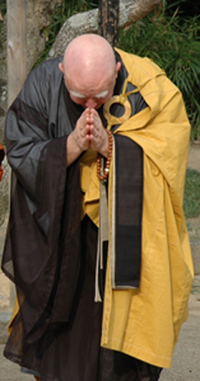 |
| Kobutsu Malone |
The very same archive from which ZSS today draws its legal strength. ZSS ... the institution that once discounted and derided Kobutsu's efforts... with a lot of help from other organizations and individuals who had a position and status and livelihood to defend. "Let's not throw the baby out with the bath water," they wheedled winningly. "Let's keep our eyes on the unfathomable wonders of Zen Buddhism," "Let's not be distracted by attachments and other delusions." Implicitly and explicitly Kobutsu Malone was demonized as too extreme, too uncaring, too broad-brush, too willing to bring the house of elevated cards down.
And now his work is the very work on which his detractors are legally forced to rely in the New York Supreme Court.
Kobutsu did not do his work in a vacuum. He could not have done what he has done without the help of a lot of other people. Some of them were ashamed and did not want to admit their shame. Some were looking to address the decades of abuse without conceding their own complicity. Some were maneuvering to keep their good name. Robert Aitken Roshi, a man who was likewise sullied in the Shimano affairm, summoned up his courage before he died and released hundreds of documents that had previously been kept under lock and key. But there were less-visible players as well, each with a small and sometimes painful story to tell ... a story kept hidden, as often as not, for decades.
Kobutsu did not do his work alone, but he served as a lightning rod and as a collector of data. Had he not done so, would something called Zen Buddhism be better off? I sincerely doubt it. Kobutsu is my friend so I will not demean him by calling him a hero -- that namby-pamby word used by those who have never seen action -- but I see no reason not to suggest that without him, the shame that is being brought to light would be excruciatingly and exquisitely more painful.
After his election victory, Harry Truman "was invited to a banquet of political reporters, editors, pollsters, radio commentators and columnists. The main course was to consist of breast of crow glace. The Democratic National Committee offered to furnish the tooth picks."
But of course that was an earlier -- and more adult -- time.
Kobutsu is unlikely to ask anyone to eat crow. But those who deserve such a banquet could do worse than eating what's on the plate in front of them.
Given his generosity and his love of wood, Kobutsu might be willing to supply the toothpicks.
straight lines
Shambling through my mind with the cavalier attitude of an unexamined bias....
Isn't it strange that human beings whose composition both physically and mentally is anything but a straight line should nonetheless invest their world with straight lines? Is there any other creature or phenomenon in nature that does such a thing? I don't think so, but I don't know.

My shambling and unexamined bias: Only man makes straight lines; nature is far less foolish.
I first noticed this when walking through the woods: Any time a straight line appeared in foliage or along a ridge line, the odds were astronomically high that I was looking at something man-made. 'Astronomically high' leaves room for the natural anomaly that might occur here and there ... the odd moment when nature accidentally seemed to create a straight line of its own. But if such a thing did or does occur, I think it lacks the deliberation or assertiveness or insistence that human beings bring to their straight lines. Instead, in the rest of nature, it's as if by light-hearted accident, a possibility among myriad other possibilities... a bit of laughter as if some child were chortling with delight at the possibilities of finger-painting.
Roof-tops, flag poles, yardsticks ... the array of straight lines goes on and on. And the same insistence seems to invest the mind ... the meanings and conclusions and judgments. Straight lines lead from "here" to "there" ... or so the insistent mind proclaims. Straight lines are easier and quicker and, most important, assert sovereignty over the higglety-pigglety, playful nature of the near-by world.
If-then is such sweet reason.
Reason, reasoning, reasonable ... but is it true?
Just because a thing is false does not mean it lacks truth or usefulness. Straight lines, if-then's, meanings and conclusions are certainly possible, but a grasping insistence on them leads to unhappiness, I think. The usefulness of what is 'true' or what is 'false' lies in the fact that such insistence doesn't work. Limitation alone doesn't work. The chortling child with the finger paints laughs because everything and anything is possible. Straight lines offer the oh-shit possibility that straight lines are not true ... they're just possible.
Straight lines lead from "here" to "there."
Or, more probably, from "here" to "here."
At which point the question might be asked, "What nitwit ever imagined a 'here'?"
Isn't it strange that human beings whose composition both physically and mentally is anything but a straight line should nonetheless invest their world with straight lines? Is there any other creature or phenomenon in nature that does such a thing? I don't think so, but I don't know.
My shambling and unexamined bias: Only man makes straight lines; nature is far less foolish.
I first noticed this when walking through the woods: Any time a straight line appeared in foliage or along a ridge line, the odds were astronomically high that I was looking at something man-made. 'Astronomically high' leaves room for the natural anomaly that might occur here and there ... the odd moment when nature accidentally seemed to create a straight line of its own. But if such a thing did or does occur, I think it lacks the deliberation or assertiveness or insistence that human beings bring to their straight lines. Instead, in the rest of nature, it's as if by light-hearted accident, a possibility among myriad other possibilities... a bit of laughter as if some child were chortling with delight at the possibilities of finger-painting.
Roof-tops, flag poles, yardsticks ... the array of straight lines goes on and on. And the same insistence seems to invest the mind ... the meanings and conclusions and judgments. Straight lines lead from "here" to "there" ... or so the insistent mind proclaims. Straight lines are easier and quicker and, most important, assert sovereignty over the higglety-pigglety, playful nature of the near-by world.
If-then is such sweet reason.
Reason, reasoning, reasonable ... but is it true?
Just because a thing is false does not mean it lacks truth or usefulness. Straight lines, if-then's, meanings and conclusions are certainly possible, but a grasping insistence on them leads to unhappiness, I think. The usefulness of what is 'true' or what is 'false' lies in the fact that such insistence doesn't work. Limitation alone doesn't work. The chortling child with the finger paints laughs because everything and anything is possible. Straight lines offer the oh-shit possibility that straight lines are not true ... they're just possible.
Straight lines lead from "here" to "there."
Or, more probably, from "here" to "here."
At which point the question might be asked, "What nitwit ever imagined a 'here'?"
'Shimano' letter; ZSS court response
The Shimano Archive has added a purported letter from Eido Shimano to the Zen Studies Society he is suing for $2 million-plus.
The letter reads (in my view) like a lawyer-generated effort to pressure ZSS ... and make sure the suit is settled out of court so that "scurrilous" accusations do not have to be addressed or assessed in the light of day.
To the best of my knowledge, ZSS has made no formal (in court) response to the Shimano lawsuit, although that suit demanded a response within 20-30 days. The question that hangs in the air is, will ZSS choose FIGHT or FLIGHT by way of response?
Here is the letter allegedly penned by Shimano:
http://www.shimanoarchive.com/PDFs/20130213_Shimano_ZSS.pdf
PS. ZSS has filed a response and it should be available shortly.
Here is ZSS' court response. The nitty gritty is about halfway down in "counterclaims."
http://www.shimanoarchive.com/PDFs/20130213_Ans.andCounterclaims.pdf
PS. A friend sent along a blog post about the "Faithless Servant Doctrine" court rulings.
Among the observations is: “One who owes a duty of fidelity to a principal and who is faithless in the performance of his services is generally disentitled to recover his compensation, whether commissions or salary . . . Nor does it make any difference that the services were beneficial to the principal, or that the principal suffered no provable damage as a result of the breach of fidelity by the agent.”
The letter reads (in my view) like a lawyer-generated effort to pressure ZSS ... and make sure the suit is settled out of court so that "scurrilous" accusations do not have to be addressed or assessed in the light of day.
To the best of my knowledge, ZSS has made no formal (in court) response to the Shimano lawsuit, although that suit demanded a response within 20-30 days. The question that hangs in the air is, will ZSS choose FIGHT or FLIGHT by way of response?
Here is the letter allegedly penned by Shimano:
http://www.shimanoarchive.com/PDFs/20130213_Shimano_ZSS.pdf
PS. ZSS has filed a response and it should be available shortly.
Here is ZSS' court response. The nitty gritty is about halfway down in "counterclaims."
http://www.shimanoarchive.com/PDFs/20130213_Ans.andCounterclaims.pdf
PS. A friend sent along a blog post about the "Faithless Servant Doctrine" court rulings.
Among the observations is: “One who owes a duty of fidelity to a principal and who is faithless in the performance of his services is generally disentitled to recover his compensation, whether commissions or salary . . . Nor does it make any difference that the services were beneficial to the principal, or that the principal suffered no provable damage as a result of the breach of fidelity by the agent.”
Wednesday, February 13, 2013
Pope Benedict XVI and The Onion
For those feeling mildly snarky about Pope Benedict XVI's resignation, here is The Onion's tongue-in-cheek reporting: Reigning Pope No Longer Has Strength To Lead Church Backward.
time-lapse lifestyle
When I was a kid, the mail came twice a day. It cost three cents for a letter and one cent for a post card. It was exciting and informative to get a letter and open up in the 'now' what was two or three days old. What was old became new even though it was old. The lag time between sending and delivering fell away as the words took shape in the reader's mind.
Yesterday, I received a small, neatly-penned note from my younger son who signed up for the Army National Guard and is in the process of taking basic training. The note said he was lonely and homesick in essence... and in my reader's 'now' I grieved that I could not somehow ease his mind and make things better.
But then I looked at the postmark: The letter was seven days old. What might have improved or gotten worse during that lapse of time, I had no way of knowing.
The whole small adventure seemed to underscore the 'now' mindset of email, of getting an almost-instantaneous response to an almost-instantaneous assertion. Fast-fast-fast. No more three-four-five-six-seven days, but the potential and expectation of three-four-five-six-seven minutes... or seconds even.
Something deeply troubling or profoundly moving or super-exciting could be transmitted in lickety-split time. And the speed seems to assure that whatever is said is closer to the truth -- the right-now truth that friends or enemies may want to transmit.
And yet ... there is always the lapse -- that period of time between what is said or thought or written and the receiving of that information. Be it a week or a nanosecond, what is transmitted seems true enough to qualify as what is happening now, but is it what's happening now? Well, sort of, sure ... but actually?
Here I am, speaking or writing 'the truth,' but is it any longer the truth? Does the anguish or excitement alluded to have the same truth as the truth that inspired the words?
I'm not trying to vitiate or dismiss the effort or deep feeling anyone might have when asserting one thing or another. But I do think the time-lapse is kind of interesting ... from truth to half-truth in something less than a nanoscond. What about now ... and now...and now...and now?
If living in the past is our lot in life, OK.
But it does make me wonder what it might be like to live in the present ... the present I can't help but live in no matter how hard I try.
Yesterday, I received a small, neatly-penned note from my younger son who signed up for the Army National Guard and is in the process of taking basic training. The note said he was lonely and homesick in essence... and in my reader's 'now' I grieved that I could not somehow ease his mind and make things better.
But then I looked at the postmark: The letter was seven days old. What might have improved or gotten worse during that lapse of time, I had no way of knowing.
The whole small adventure seemed to underscore the 'now' mindset of email, of getting an almost-instantaneous response to an almost-instantaneous assertion. Fast-fast-fast. No more three-four-five-six-seven days, but the potential and expectation of three-four-five-six-seven minutes... or seconds even.
Something deeply troubling or profoundly moving or super-exciting could be transmitted in lickety-split time. And the speed seems to assure that whatever is said is closer to the truth -- the right-now truth that friends or enemies may want to transmit.
And yet ... there is always the lapse -- that period of time between what is said or thought or written and the receiving of that information. Be it a week or a nanosecond, what is transmitted seems true enough to qualify as what is happening now, but is it what's happening now? Well, sort of, sure ... but actually?
Here I am, speaking or writing 'the truth,' but is it any longer the truth? Does the anguish or excitement alluded to have the same truth as the truth that inspired the words?
I'm not trying to vitiate or dismiss the effort or deep feeling anyone might have when asserting one thing or another. But I do think the time-lapse is kind of interesting ... from truth to half-truth in something less than a nanoscond. What about now ... and now...and now...and now?
If living in the past is our lot in life, OK.
But it does make me wonder what it might be like to live in the present ... the present I can't help but live in no matter how hard I try.
Tuesday, February 12, 2013
compassion
Still working ineptly on my wife's laptop as I wait for a hoped-for computer fix, but in the meantime I got an email from an Internet friend who suggested in passing that compassion was not, somehow, exactly on the mark as a spiritual practice. Although I have made similar suggestions in the past, still I thought his view felt somehow off the mark. And the thought nags enough to make me willing to use the laptop on the one hand and enter the thorny thicket on the other. Lord knows I am unlikely to hit the nail on the head with words.
"Compassion" is a fifty-cent word in the realm of spiritual endeavor. Everyone 'knows' what it means and to mess with what anyone 'knows' in this way is like messing with their kids or pets -- you do so at your peril.
Taking a presumptuous swing at what is 'known,' "compassion" generally means a kind of super-duper-whooper altruism. It means being attentive and gentle with others in place of what might otherwise be a self-centered set of activities. And there is some attempt not just to be attentive to other people, but also to all things within anyone's personal bomb zone.
OK ... let's not beat around the bush: Life is a hell of a lot nicer when you are nice to me and I am nice to you. "Nasty" sucks; "nice" is nicer. There is nothing wrong with loving kindness: It is, as my father used to say, "better than the blow of a stick" and there are plenty of persuasions that rely on this gentle and giving approach to life ... this "caritas," this "love."
There is nothing wrong with the approach and yet there is the question of whether it is the whole story ... whether it is enough or perhaps right.
In Buddhism (to format life for a moment), true understanding is said to be interwoven with two aspects -- clarity and kindness. But "interwoven" suggests two things, whereas there are not really two things at all: Clarity IS kindness; kindness IS clarity. Intellectually, emotionally and altruistically this makes no sense. But to the extent anyone might wish to find a firm footing, this is an actuality that needs to be realized ... clarity is kindness, kindness is clarity ... that's just the way the daisies grow. Effortless. Plain as the nose on anyone's face. Nothing sexy or revered: It is not intellectual or emotional ... that would be limited ... the kind of limited that infuses kindness towards someone or something else.
No one can hurry up a 'get' such an understanding -- that would be like water 'hurrying up' to get wet. But there is some usefulness to acknowledging the fact that compassion as a super-duper altruism is not entirely the whole story and it is no place, if possible, to get stuck. As the Zen teacher Ta Hui once put it approximately, "I have always had a great vow that I would rather suffer the fires of hell for all eternity than to portray Zen as an emotion." What needs to be realized or actualized is not limited and it is not somehow foreign or different or other.
So maybe the best course is to keep up our best-effort "compassionate" ways while acknowledging that the journey home requires more than mere relief.
OK ... just noodling.
"Compassion" is a fifty-cent word in the realm of spiritual endeavor. Everyone 'knows' what it means and to mess with what anyone 'knows' in this way is like messing with their kids or pets -- you do so at your peril.
Taking a presumptuous swing at what is 'known,' "compassion" generally means a kind of super-duper-whooper altruism. It means being attentive and gentle with others in place of what might otherwise be a self-centered set of activities. And there is some attempt not just to be attentive to other people, but also to all things within anyone's personal bomb zone.
OK ... let's not beat around the bush: Life is a hell of a lot nicer when you are nice to me and I am nice to you. "Nasty" sucks; "nice" is nicer. There is nothing wrong with loving kindness: It is, as my father used to say, "better than the blow of a stick" and there are plenty of persuasions that rely on this gentle and giving approach to life ... this "caritas," this "love."
There is nothing wrong with the approach and yet there is the question of whether it is the whole story ... whether it is enough or perhaps right.
In Buddhism (to format life for a moment), true understanding is said to be interwoven with two aspects -- clarity and kindness. But "interwoven" suggests two things, whereas there are not really two things at all: Clarity IS kindness; kindness IS clarity. Intellectually, emotionally and altruistically this makes no sense. But to the extent anyone might wish to find a firm footing, this is an actuality that needs to be realized ... clarity is kindness, kindness is clarity ... that's just the way the daisies grow. Effortless. Plain as the nose on anyone's face. Nothing sexy or revered: It is not intellectual or emotional ... that would be limited ... the kind of limited that infuses kindness towards someone or something else.
No one can hurry up a 'get' such an understanding -- that would be like water 'hurrying up' to get wet. But there is some usefulness to acknowledging the fact that compassion as a super-duper altruism is not entirely the whole story and it is no place, if possible, to get stuck. As the Zen teacher Ta Hui once put it approximately, "I have always had a great vow that I would rather suffer the fires of hell for all eternity than to portray Zen as an emotion." What needs to be realized or actualized is not limited and it is not somehow foreign or different or other.
So maybe the best course is to keep up our best-effort "compassionate" ways while acknowledging that the journey home requires more than mere relief.
OK ... just noodling.
Monday, February 11, 2013
pope, computer step aside
Pope Benedict XVI resigned today, citing age at, I think, 85. Plus ca change, plus c'est la meme chose.
As if in sympathy with the pope, my computer took a header and will need repair or replacement. I do not plan to send up a white smoke signal when/if success is achieved. Writing on my wife's laptop is cumbersome as a club foot ... at least for me.
So ... a day of spending money I can ill afford... making me aware again that I would rather do Internet stuff than watch TV. My age, like the pope's, imposes limitations, though I imagine the pope might call me a whipper-snapper from his vantage point.
As if in sympathy with the pope, my computer took a header and will need repair or replacement. I do not plan to send up a white smoke signal when/if success is achieved. Writing on my wife's laptop is cumbersome as a club foot ... at least for me.
So ... a day of spending money I can ill afford... making me aware again that I would rather do Internet stuff than watch TV. My age, like the pope's, imposes limitations, though I imagine the pope might call me a whipper-snapper from his vantage point.
Sunday, February 10, 2013
across the great divide
Once upon a time, in the long ago and faraway, I was having dinner with Susan, a coworker at the publishing house in New York where we both made a living. Susan came from England, was Oxford- and Cambridge-educated and had wispy dreams of becoming Great Britain's first female prime minister before Margaret Thatcher beat her to the punch.
Susan was smart as a straight razor and I enjoyed her company from a position of one who was perfectly willing to grant her intellectual superiority. Susan was smart enough not to be mean and so we chatted amiably over dinner.
 And at one point, probably about three-drinks into the evening, she said approximately, "The trouble with American education is that it doesn't teach rhetoric. The ability to argue a case is not very strong. For example, I could sit here right now and prove to you that a chocolate milk shake was vanilla."
I raised my hands in half-mocking-half-serious surrender: "Please don't do that!" I pleaded. I had no doubt she could do precisely what she promised and really had no interest in souring a perfectly pleasant meal.
Smart, smarter, smartest ... intellectual capacity is interesting, whether or not anyone wants to be prime minister of England. The English writer Aldous Huxley once wrote approximately, "If the intellectual travels long enough and far enough, he will return to the same point from which the non-intellectual has never started." And to the extent that that observation is true, I imagine it is true for anyone, with or without a sparkly education: Travel long enough and far enough on any path, in any endeavor, and eventually there is an inescapable need to acknowledge that, well, you got it wrong and you need to begin all over again if you want to get things straight.
A chocolate milkshake is vanilla ... smarter and smarter and smarter until you fly up your own asshole and disappear ... until the inescapable question asserts itself: "Who gives and shit? What practical usefulness do all these savvy pirouettes have? If I'm so smart (from trading stocks to plowing snow to selling shoe polish to adding another academic degree), how come I'm not happy?"
When I was a house painter in New York, I once went to estimate a job at a young woman's apartment. She was a ballet dancer, a very dedicated and disciplined one. We chatted about the painting she wanted done, but then, bit by bit, it became clear that she was not concerned with anything other than her life-consuming interest in and devotion to ballet. She simply could not talk about painting without injecting the overarching concern of her life. If this sounds weird, well, perhaps it sounds that way because that's what it was ... weird.
Disciplined accretion of expertise -- mental or physical -- begins as a separation. In order to do one thing well, there is a necessary separation from other possibilities. No one can practice meditation, for example, and go to the movies at the same time. So, as a means of gaining skill and understanding, one exercise is chosen and others are, ipso facto, set aside. There is no other choice.
But as a disciplined effort progresses and as familiarity and expertise grows, there is often a simultaneous growth in the crediting of the ipso-facto separations: A chocolate milkshake is not vanilla; a Buddhist is not a Christian; a lawyer is not a social worker; a smart person is not a dumb one.
And it is in the separations that the sense of unsatisfactoriness is nourished. A true understanding of expertise in any field is not a matter of separating things. But more, it is not a credible platform from which to assert some smarmy 'oneness.' Each person has an area of expertise and it is up to him or her to follow it -- bumps and all -- to the further shore. As the Zen teacher Shunryu Suzuki once said when asked if Zen Buddhist practice were important, "It's important, but it's not that important."
Self-helpers are fond of saying, "Follow your bliss." It's a phrase I find a bit icky, but perhaps it is close enough for folk singing: Hammer and tongs -- love what is loved and practice as if there were no tomorrow. But don't stop short ... don't imagine that this is somehow better or different or worse or the same. Keep going. Separation ... OK, live the dream. Oneness ... OK, live the dream. Keep going until the dream reveals itself ...
It's just another dream, isn't it?
Drink your chocolate milkshake.
Susan was smart as a straight razor and I enjoyed her company from a position of one who was perfectly willing to grant her intellectual superiority. Susan was smart enough not to be mean and so we chatted amiably over dinner.

I raised my hands in half-mocking-half-serious surrender: "Please don't do that!" I pleaded. I had no doubt she could do precisely what she promised and really had no interest in souring a perfectly pleasant meal.
Smart, smarter, smartest ... intellectual capacity is interesting, whether or not anyone wants to be prime minister of England. The English writer Aldous Huxley once wrote approximately, "If the intellectual travels long enough and far enough, he will return to the same point from which the non-intellectual has never started." And to the extent that that observation is true, I imagine it is true for anyone, with or without a sparkly education: Travel long enough and far enough on any path, in any endeavor, and eventually there is an inescapable need to acknowledge that, well, you got it wrong and you need to begin all over again if you want to get things straight.
A chocolate milkshake is vanilla ... smarter and smarter and smarter until you fly up your own asshole and disappear ... until the inescapable question asserts itself: "Who gives and shit? What practical usefulness do all these savvy pirouettes have? If I'm so smart (from trading stocks to plowing snow to selling shoe polish to adding another academic degree), how come I'm not happy?"
When I was a house painter in New York, I once went to estimate a job at a young woman's apartment. She was a ballet dancer, a very dedicated and disciplined one. We chatted about the painting she wanted done, but then, bit by bit, it became clear that she was not concerned with anything other than her life-consuming interest in and devotion to ballet. She simply could not talk about painting without injecting the overarching concern of her life. If this sounds weird, well, perhaps it sounds that way because that's what it was ... weird.
Disciplined accretion of expertise -- mental or physical -- begins as a separation. In order to do one thing well, there is a necessary separation from other possibilities. No one can practice meditation, for example, and go to the movies at the same time. So, as a means of gaining skill and understanding, one exercise is chosen and others are, ipso facto, set aside. There is no other choice.
But as a disciplined effort progresses and as familiarity and expertise grows, there is often a simultaneous growth in the crediting of the ipso-facto separations: A chocolate milkshake is not vanilla; a Buddhist is not a Christian; a lawyer is not a social worker; a smart person is not a dumb one.
And it is in the separations that the sense of unsatisfactoriness is nourished. A true understanding of expertise in any field is not a matter of separating things. But more, it is not a credible platform from which to assert some smarmy 'oneness.' Each person has an area of expertise and it is up to him or her to follow it -- bumps and all -- to the further shore. As the Zen teacher Shunryu Suzuki once said when asked if Zen Buddhist practice were important, "It's important, but it's not that important."
Self-helpers are fond of saying, "Follow your bliss." It's a phrase I find a bit icky, but perhaps it is close enough for folk singing: Hammer and tongs -- love what is loved and practice as if there were no tomorrow. But don't stop short ... don't imagine that this is somehow better or different or worse or the same. Keep going. Separation ... OK, live the dream. Oneness ... OK, live the dream. Keep going until the dream reveals itself ...
It's just another dream, isn't it?
Drink your chocolate milkshake.
important people
Rising from some unmoored place:
To the extent possible, consort with nice people.
Important people are a dime a dozen.
To the extent possible, consort with nice people.
Important people are a dime a dozen.
Robert Louis Stevenson
Robert Louis Stevenson 1850-1894
Requiem
Under the wide and starry sky
Dig the grave and let me lie:
Glad did I live and gladly die,
And I laid me down with a will.
This be the verse you 'grave for me:
Here he lies where he long'd to be;
Home is the sailor, home from the sea,
And the hunter home from the hill.
Requiem
Under the wide and starry sky
Dig the grave and let me lie:
Glad did I live and gladly die,
And I laid me down with a will.
This be the verse you 'grave for me:
Here he lies where he long'd to be;
Home is the sailor, home from the sea,
And the hunter home from the hill.
Saturday, February 9, 2013
alone ... together ... something
For warmth, for protection, for procreation, for society, the group comes together.
In its membership, perhaps, each is greater than himself. There also seems to be an unspeakable something that the group asserts ... something, but what?
Perhaps it is just that each is less lonely, although there can seem to be something more as well.
Less lonely and yet, in a strange simultaneity, a recognition of and emphasizing of how alone anyone actually is.
A koan of sorts.
Less lonely ... more alone ... and yet something.
In its membership, perhaps, each is greater than himself. There also seems to be an unspeakable something that the group asserts ... something, but what?
Perhaps it is just that each is less lonely, although there can seem to be something more as well.
Less lonely and yet, in a strange simultaneity, a recognition of and emphasizing of how alone anyone actually is.
A koan of sorts.
Less lonely ... more alone ... and yet something.
out with the dragon, in with the snake
 It is the year of the snake, according to Chinese astrological calculations:
The snake has a mixed reputation in China. It is associated with wisdom, beauty and intelligence but also pride and anger.
Buddhist authentications redux
Yesterday, I was talking with a friend who was waxing crabby about the strictures of an Internet Zen Buddhist bulletin board he had just finished trying to disassociate himself with. The site, he argued, had fallen into what seems to be the invariable trap of such well-intentioned sites -- the increasingly precious limiting of who can post and under what conditions... sort of like a country club which invites all comers and then restricts them to various rooms. There are 'good reasons' for doing this: Just ask the creators of such strictures.
The conversation put me in mind of a couple of tongue-in-cheek appreciations of the past and I thought I would reprint them here, just for the fun of it.
First, my very own authentication certificate, courtesy of a forgotten friend in a forgotten time ... I saved it because you never know when someone is going to ask you to 'prove' you are actually as spiffy as you say you are:

Second, my own posted-a-year-ago silly answer to the question, "Am I a Buddhist?"
Elsewhere on the Internet, someone asked how to know if s/he were a Buddhist. I recognize that this question can honestly mean something to some people, but I couldn't restrain myself....
Here are the ten incontrovertible qualifications for really being a real Buddhist really:
1. Adopt a wise and wizened demeanor -- someplace between George Clooney and Mahatma Gandhi.
2. Memorize the 108 holiest and most convoluted of all possible paradoxes. Dispense as necessary.
3. Clothes ... don't forget the clothes!
4. Walk slowly as if permeated with some weighty liquid.
5. If you're a lay person, yearn for ordination. If you're an ordained person, yearn for laicization.
6. Chant softly but audibly in public rest rooms.
7. If you visit a temple or monastery, make sure to bring home some small tourist treasure to indicate you visited. Hang it prominently, but with humble discretion, in your living room...next to all those books, perhaps.
8. Offer a small, carefully-crafted smile when someone tells you a first-class joke.
9. If someone asks you if you are a Buddhist, consider the question in a dour and somewhat quizzical silence.
10. Treat all beings with equanimity and kindness ... right up until the moment when you can't stand it any more and simply kick the cat. Repent as necessary.
And if all of this strikes you as utterly ludicrous, find a Buddhist practice, practice it and never mind who's a Buddhist and who's not.
Everyone suffers ... nuff said.
The conversation put me in mind of a couple of tongue-in-cheek appreciations of the past and I thought I would reprint them here, just for the fun of it.
First, my very own authentication certificate, courtesy of a forgotten friend in a forgotten time ... I saved it because you never know when someone is going to ask you to 'prove' you are actually as spiffy as you say you are:

Second, my own posted-a-year-ago silly answer to the question, "Am I a Buddhist?"
Elsewhere on the Internet, someone asked how to know if s/he were a Buddhist. I recognize that this question can honestly mean something to some people, but I couldn't restrain myself....
Here are the ten incontrovertible qualifications for really being a real Buddhist really:
1. Adopt a wise and wizened demeanor -- someplace between George Clooney and Mahatma Gandhi.
2. Memorize the 108 holiest and most convoluted of all possible paradoxes. Dispense as necessary.
3. Clothes ... don't forget the clothes!
4. Walk slowly as if permeated with some weighty liquid.
5. If you're a lay person, yearn for ordination. If you're an ordained person, yearn for laicization.
6. Chant softly but audibly in public rest rooms.
7. If you visit a temple or monastery, make sure to bring home some small tourist treasure to indicate you visited. Hang it prominently, but with humble discretion, in your living room...next to all those books, perhaps.
8. Offer a small, carefully-crafted smile when someone tells you a first-class joke.
9. If someone asks you if you are a Buddhist, consider the question in a dour and somewhat quizzical silence.
10. Treat all beings with equanimity and kindness ... right up until the moment when you can't stand it any more and simply kick the cat. Repent as necessary.
And if all of this strikes you as utterly ludicrous, find a Buddhist practice, practice it and never mind who's a Buddhist and who's not.
Everyone suffers ... nuff said.
Benezra letter to Chayat
A letter from Merry White Benezra (Nennen) to Roko Sherry Chayat has been posted on the Shimano Archive. Benezra is a former student of Eido Shimano's. Chayat is one of Shimano's Dharma successors and current abbot of Dai Bosatsu Monastery and the Shobo-ji Zen center in New York City. The two centers are managed by Zen Studies Society.
For those with an interest, Benezra's a is a good letter that addresses the waffling attitude of Zen Studies Society towards its disgraced former abbot, Eido Shimano. I would post the letter here in toto, but it's in pdf format and I haven't got the wherewithal to arm-wrestle it into a compatible format.
http://www.shimanoarchive.com/PDFs/20130208_Benezra_Chayat.pdf
For those with an interest, Benezra's a is a good letter that addresses the waffling attitude of Zen Studies Society towards its disgraced former abbot, Eido Shimano. I would post the letter here in toto, but it's in pdf format and I haven't got the wherewithal to arm-wrestle it into a compatible format.
http://www.shimanoarchive.com/PDFs/20130208_Benezra_Chayat.pdf
after the storm
Like some scowling thug, grey skies marked the dawn this morning. It is as if they were saying with lingering menace, "Don't even think of fucking with me!"
 Last night's bustling winds have abated, the electricity is still working and windows up and down the street are half-lathered like some plastic Hallmark Christmas display. We got something like 12-14-16 inches of snow. Statewide in Massachusetts, driving is prohibited. Mail delivery in the six New England states is suspended.
The silence is damn near visible.
Next summer's water supply cloaks and impedes and beckons to weary shovelers like me.
The wind was bad enough last night so that I had to douse the wood stove's flames with water. The downside to a cozying, wood-burning warmth is the smoke that can be blown back down the chimney and into the house. This morning I could rebuild the fire.
Across the street yesterday, a Sears truck stopped outside Joe's house and remained for some time. Later, when I saw Joe, I suggested he bypass Sears repairs in the future: The company imposes charges that would do a Pentagon subcontractor proud. Instead, I told him about Dave, the guy who has fixed various appliances at my house -- an honest broker. Joe said the repairman had come to fix his snow blower -- a vast Cadillac of a machine that had blown a clutch after a single use: He bought it less than two months ago. A couple of thousand bucks, one use and something goes wrong.
Joe was upbeat: "It's still under warranty, so it didn't cost anything. And the timing (with the storm looming) couldn't be better." Still, he was happy to hear about Dave ... an honest broker is hard to find.
The accumulation of snow is both thug-fashion intimidating and simultaneously a happy harbinger. When natural discomforts come calling there seems to be a concomitant natural willingness to cut much of the crap of ordinary social intercourse and open up to friends, neighbors and even strangers. It's very pleasant, sort of like the unspoken secret handshakes that parents can share when talking about the kids ... offering up a rueful smile that says, "What a ballbuster! Oh well...."
Silent, silenter, silentest ....
A snowy day.
 Last night's bustling winds have abated, the electricity is still working and windows up and down the street are half-lathered like some plastic Hallmark Christmas display. We got something like 12-14-16 inches of snow. Statewide in Massachusetts, driving is prohibited. Mail delivery in the six New England states is suspended.
The silence is damn near visible.
Next summer's water supply cloaks and impedes and beckons to weary shovelers like me.
The wind was bad enough last night so that I had to douse the wood stove's flames with water. The downside to a cozying, wood-burning warmth is the smoke that can be blown back down the chimney and into the house. This morning I could rebuild the fire.
Across the street yesterday, a Sears truck stopped outside Joe's house and remained for some time. Later, when I saw Joe, I suggested he bypass Sears repairs in the future: The company imposes charges that would do a Pentagon subcontractor proud. Instead, I told him about Dave, the guy who has fixed various appliances at my house -- an honest broker. Joe said the repairman had come to fix his snow blower -- a vast Cadillac of a machine that had blown a clutch after a single use: He bought it less than two months ago. A couple of thousand bucks, one use and something goes wrong.
Joe was upbeat: "It's still under warranty, so it didn't cost anything. And the timing (with the storm looming) couldn't be better." Still, he was happy to hear about Dave ... an honest broker is hard to find.
The accumulation of snow is both thug-fashion intimidating and simultaneously a happy harbinger. When natural discomforts come calling there seems to be a concomitant natural willingness to cut much of the crap of ordinary social intercourse and open up to friends, neighbors and even strangers. It's very pleasant, sort of like the unspoken secret handshakes that parents can share when talking about the kids ... offering up a rueful smile that says, "What a ballbuster! Oh well...."
Silent, silenter, silentest ....
A snowy day.
Subscribe to:
Posts (Atom)