Friday, July 19, 2013

vanquished

The heatwave of the last week or so (temperatures in the 90's and humidity to ice the cake) is so huge ... imposing an inescapably bright and meaningless meaning to the word
                                                         Vanquish.
No place to run and sucking all willingness from the fantasy that there might be someone to do the running.

I guess it makes me a little crazy, but I am not sure whether the craziness is crazy or a more serious sane. Too hot to be crazy. Too hot to be sane.
                                                        Vanquish.

Yesterday, because things are financially tight, I thought I might beg for donations on the blog. It would certainly help, but it also made me wonder on what basis, in hard times, I might rightfully ask for such a thing. I didn't have the energy to play violins and make up reasons or even feel especially sorry for myself: I just wondered, who am I to ask?

And for some reason that train of thought led me to search out photos that might give some clue. It was an exercise in belly-button lint, perhaps, but at my age, belly button lint is not so bad ... comes and goes like other vanquished items.

When I was a kid -- 4,5,6, something like that -- my mother took me to a professional photographer to have pictures taken. I didn't quite understand why, but I knew what I felt and what I felt was a deep sense of embarrassment combined -- far worse -- with a feeling I was being pimped out ... that I was being asked to be something I wasn't so that I could be more than I was. The 'worse' part was some recognition, whether true or false, that what I was was not quite enough in my mother's eyes, that being myself was undeserving: In order to be worthy, I had to be what I was not and in the process what I was was left vanquished and marginalized and profoundly sad. Why was what I was not quite good enough? Why was it necessary to be what I was not in order to be accepted and at peace?

I guess it's called growing up -- trying to be what anyone is not in order to know who they are ... only to come back gasping from exertion to the question of why being what they already are is insufficient and, sometimes, entirely lost in the world of improvements.

If a picture, to quote the Chinese, "is worth 10,000 words," I have a hunch that 10,000 (infinite) words will never be enough. Ten thousand words, after all, is just another version of growing up -- of trying to be who you are-not in a vanquished effort to find out and rest easy with who you are.

Even today, I don't much care for looking at pictures of myself. There is some lingering sense of pretending to be what I am not ... and yet am. It is a challenge ... like swallowing castor oil.


With peace activist Frances Crowe last winter


Chapel Falls 2003


Newsroom pre-2009


Family 1999


Nieces and nephews 1982


Drinking wine in Majorca 1964


Then mayor of Berlin Willy Brandt (right) and U.S. President John F. Kennedy during Kennedy's visit to Berlin in 1963 ,,, the one in which he famously and ungrammatically said, "Ich bin ein Berliner." The picture was a gift from a guy I met in my favorite Berlin bar, the Eierschale.

Drinking with fellow spooks in Berlin 1963(?)


At Yaddo 1944
So many 10,000 words spliced between so many other 10,000 words. The in-between's are vanquished and perhaps only John Lennon makes some sense: "Life is what happens to you while you're busy making other plans."

No need to sell out who you are for who you think you are ... that something else that is invariably vanquished before the get-go.

Thursday, July 18, 2013

Memorex spiritual life

Back in a time before CD's and other sound gadgets arrived, there was an audio cassette tape producer called Memorex.
Memorex entered the consumer media business in 1971 first with its "shattering glass" advertisements and then with a series of famous television commercials featuring Ella Fitzgerald. In the commercials she would sing a note that shattered a glass while being recorded to a Memorex audio casette. The tape was played back and the recording also broke the glass, asking "Is it live, or is it Memorex?"
"Is it live, or is it Memorex?" later morphed into the conversationally convenient "Is it real or is it Memorex?" -- a means of questioning the authenticity of anything and everything.

Isn't religion/spiritual persuasion a bit like that ... the real McCoy can authentically shatter glass, but so too can mere imitations.

Shattering glass is pretty impressive. Often there is a willingness to display a religion or spiritual persuasion as a real glass-shatterer....

And the question of whether it is alive ... well shattering glass is kool enough, authentic enough, convincing enough.

Religion and spiritual formats are creations worthy of Memorex ... shiny, imaginative, impressive, inviting, inspiring, convincing, surprising.

But alive ...?

shortages ...photos

A trader sleeps on sacks of onions at a wholesale market in the western Indian city of Ahmedabad July 17, 2013. Onion prices in India hit a two-and-a-half-year high on Wednesday riding a supply squeeze due to last year's drought in key growing areas, and traders expect prices to spiral up further in a month as demand remains strong due to Ramadan.
REUTERS/Amit Dave
  

Congolese refugees, displaced by fighting between the Congo army and rebel group Allied Democratic Forces (ADF) last week, gather around dry water taps at Bukanga transit camp in Bundibugyo town camp, 376km (238 miles) southwest of Kampala July 17, 2013.
REUTERS/James Akena


freedom and equality

Poor old Peter Dawson. I'm afraid that the head of the Royal and Ancient golf club is going to be booed off the popular stage for suggesting that there was nothing deleterious about excluding women from
particular British golfing establishments. The popular chorus is likely to drown out his remarks, but I wonder if they are not, in fact, worth hearing out.

At a news conference Wednesday ahead of the British Open tournament, Dawson made it clear he believes that "the issue does little harm to the game and has largely been contrived by the media, politicians and interest groups."
Obviously the whole issue of gender and single-sex clubs has been pretty much beaten to death recently. And we do, I assure you, understand that this is divisive. It's a subject that we're finding increasingly difficult, to be honest. ... It's just kind of, for some people, a way of life that they rather like. I don't think in doing that they're intending to (bring) others down or intending to do others any harm.
And Dawson bristled at the question of whether male-only golf clubs might be compared with clubs that only allowed white people to join:
"Oh, goodness me, I think that's a ridiculous question, if I may say so," he replied. "There's a massive difference between racial discrimination, anti-Semitism, where sectors of society are downtrodden and treated very, very badly indeed. And to compare that with a men's golf club, I think, is frankly absurd. There's no comparison whatsoever."
Dawson's remarks will light hissing fuses in every liberal, freedom-loving, deeply-concerned and anti-discriminatory breast. His point of view is likely to be pilloried for being "arrogant" and "exclusive" and "uppity" in ways that those inclined to "justice" and "fair-mindedness" will delight in criticizing.

And maybe it's true. It doesn't matter where anyone stands ... this is a hot topic ... break out the Kevlar!

Dawson's observations and the harmonies of disagreement they inspired took me by the hand today and led me to....

Freedom and equality are important social values. By whatever definition, they generate heat. They are worthy values -- values within whose confines I think it might be important to consider -- personally consider:

How much are "freedom" and "equality" locked inescapably with definitions and personal characteristics that are not free or equal at all? If freedom and equality were honest options, would anyone actually choose them? And if they did choose them, to what extent would the very choice create a limitation which both freedom and equality cannot afford to recognize without diminishing freedom and equality?

My own feeling is that while freedom and equality may be very important social values, there needs to be some personal recognition and acknowledgment that freedom and equality are not precisely what even the best-hearted person might aspire to. Limitlessness would be too scary, too responsible, too much-of-a-muchness from a social point of view.

I am not trying to suggest that there is a more-elevated point of view here. I am trying to suggest that without examining the groundwork of a professed longing, things will remain uncertain and loud and righteous and wobbly. Unhappy. Perhaps the matter is a little like the longing for a limitlessness in spiritual endeavor ... it's OK as long as that longing is limited to books and encomiums and money-making institutions, but what happens when what anyone claims to be true actually turns out to be true?

I think it's worth thinking about before anyone breaks out a brass band for freedom and equality.

Just another fuse hissing in the morning light.

Wednesday, July 17, 2013

noblesse oblige

Russian President Vladimir Putin is wriggling on the hook, but seems to be showing signs he might be willing to sell out Edward Snowden, the 30-year-old American holed up in a Moscow airport after
leaking American surveillance secrets. Snowden is in limbo: He has no passport and no means of getting to one of several Latin American countries that have offered him asylum. Putin says he does not want a single man to sour U.S.-Russian relations. He seems to want to find the way to feed the sheep to the American wolves but come out of it untarnished on the political home front. If he waits long enough, perhaps some of the brightness of the situation will dim and Putin will be able to go about his business. What the hell -- it's only one sheep and the cause of international relations is important.

The trial of Pfc. Bradley Manning -- another whistle blower who caught the U.S. with its surveillance pants down -- drags on in Ft. Meade, Md., and is largely unattended by mainstream media that, like Putin, may excuse themselves based on some 'wider principle' of peace and security and having a 'working' relationship with the powers that be. What the hell -- it's only one sheep.

Between 1881 and 1914, when the Panama Canal finally opened, some 27,000 workers died, most of them black men from the West Indies. Most died of disease. Many died in accidents. One recollection stated, “it was the same way -- bury, bury, bury, running two, three, and four trains a day with dead Jamaica niggers all the time…It did not matter any difference whether they were black or white, to see the way they died there.  They died like animals.” What the hell -- it's only one sheep.

The Vatican has ignored with a sweeping good grace the quite individualized cases of believers whose lives were ripped asunder by the sexual and financial depredations of the mother church and its priestly representatives. The Christian allegory of the shepherd who leaves his 99 sheep behind in order to retrieve the one that is lost seems to be lost on the institution. Pointing to its many good works past, present and future, the Vatican is willing to let the spotlight dim: What the hell -- it's only one sheep.

Noblesse oblige is a long-standing encouragement that suggests that those with wealth and power and station are morally constrained to look out for those not similarly endowed. With privilege comes responsibility. Aristocracies of every era have paid some lip service to this concept. The American robber barons funded libraries, gardens, soup kitchens and hospitals. The well-heeled landlords of Europe could and can point to similar good works. And the Roman Catholic Church, the biggest corporation in the world, has a panorama of benevolent badges to point to.

The problem is, of course, that no one who ever became rich and powerful did so by being nice and the definitions of "privilege" and "responsibility" are pretty much left to those who are privileged. And so, when an Edward Snowden or Bradley Manning or priest sex-abuse victim threatens to upset the privileged apple cart ... well, what the hell -- it's only one sheep. Fairness and justice are all well and good ... up to a point. And that point is the one at which those with the standing to define -- and more important redefine -- fairness and justice draw the line.

What the hell -- it's only one sheep.

poisonous nourishment

What parent would not viscerally recoil at the story about the deaths of some 22 Indian children who had eaten a free meal at school? Dozens of others were sickened. There have been riots. What was provided and trusted as nourishment was apparently tainted with fatal amounts of pesticide. It is sickening.

A lie that kills my children ... what parent would not recoil?

If a government nourishes its people with self-important tales that inspire fear and violence -- tales that send its children home in body bags -- how does this differ from the poisoning of those who long for something as life-sustaining and peaceful as a child's meal and a child's education?

Maybe it's "apples and oranges," but I'd say it's pretty much the same bitter fruit.

outwitting the unknown

One perspective:

The wise die and the unwise die, but only the wise flog the dead horse of wisdom, consoling themselves with words like "understanding" and "compassion." How wise could anyone be, flogging a dead horse?

In the Buddhist book called "The Dhammapada," Gautama is said to have said,
All fear dying.
All fear death.
And surely that is one way to hit the nail on the head ... wise and unwise alike scrambling to outwit the unknown. It never works, but that doesn't reduce the scrambling. Maybe it is like a man determined to return home when all the while he has never gone out the front door ... scrambling... please-please-please ...

These days, around here, it is ferociously and oppressively hot -- a good time, perhaps, to wonder, "Which is more important -- to believe I am hot or to be hot?" As the Christians might say, "God hates a coward," and there comes a time to confess ... what the wise and unwise believe cannot hold a candle to a hot day and living a life of belief-prone fear is worse than the hot sun.

Hot.

Except of course, some fool will believe it and pen another soaring sutra or veda or whatever else will hold back the night and outflank the unknown. Fear and cowardice seems a bit much, even for a believer, but ... well, to each his own.

Today, summoning what courage I may ... finding a place for healthy, wholesome beginning, a place that can be anywhere and anywhen, I think of the threadbare joke:

A man on the prowl is sitting at a bar one night when he looks across the room and sees an absolutely stunning woman. He can't take his eyes off her. He crosses his legs in a vain attempt to conceal his attraction. Suddenly, he realizes the woman is walking across the room, threading her way through the crowd ... and headed directly at him. Each step seems to confirm her beauty and desirability in the man's eye. And finally, she is standing right beside him. She leans over and whispers in his ear, "I would do absolutely anything for $100." The man thinks a minute, then pulls out his wallet and lays five twenties on the bar. Looking deeply into her eyes, he replies, "Paint ... my ... house."

The wise die and the unwise die, but a freshly-painted house is incomparably unafraid.

Tuesday, July 16, 2013

the reset button

Moment after moment, everyone hits the reset button, ingesting new information that then informs and rearranges all the information that came before. Mostly, it goes unnoticed. But occasionally it gains a
wider social foothold as the trust that held things together in the past melts away into a time when basic assumptions require remortaring, redefining and reconstruction in search of some upgraded peace.

-- In Egypt, there are raucous throngs in the streets after a military coup ousted the democratically elected president, Mohammed Morsi -- a man once applauded but more lately criticized for his inability to fulfill promises that convinced both political allies and political enemies. It seems that democracy is not quite good enough, that trust cannot be accorded, and that the throngs in the streets are more compelling than what was once hailed as a democracy. If "democracy" is defined simply as "majority rules," then the willingness to stick by the principle seems to dissolve ... leaving ... who knows what might be better. Time for a reset that will involve blood-letting.

-- In Los Angeles, as elsewhere, protesters (some violent, some not) made their voices heard in the wake of the acquittal of George Zimmerman -- a man accused of shooting Trayvon Martin to death in 2012. Martin, 17, was black. The case was top-heavy with the echoes of racism that is woven into American society in little and large ways. Was the jury system, one of the cornerstones of any democratic society, to be trusted to dispense something resembling justice? Maybe not ... maybe the racism that flowed quietly beneath the American social fabric, just had to be addressed frontally, openly, loudly. Time to hit the reset button, time to reconfigure what is trustworthy and what is not. Cornerstones are only as good as the people who credit them. The message, whether in Egypt or Los Angeles, seems to be something like, "We may not know what's better, but we sure as hell know what's worse."

-- And lingering on the reset stage is the case of the Roman Catholic Church. With approximately 1.2 billion adherents, I guess it would be fair to say there's a lot of trust. But even without the priest-sex-abuse revelations and the financial machinations that grab the headlines, still it feels as if the willingness to trust, to accede, to genuflect mentally and physically, is dribbling away. What if there were a religion and no one believed? Of course, things are not that cut and dried, not that stark. It's more a drip-drip-drip scenario, one the church seems to acknowledge as it revises its tactics and focuses on Africa and South America, places that are arguably less well-educated than the honey pots of the United States and Europe. The church needs its authority and it needs supporters of that authority. No trust, no church ... and no money. As in Los Angeles and Egypt, what might be better -- what reset strategy would be more felicitous -- may not be in hand, but the raw failures of what has been trusted up until now are just too egregious, too burning, too flimsy.

Maybe I am just making up this Greek chorus of confused generalizations. It's pretty much a matter of feeling ... that well-worn trust invariably comes upon times when that trust is worn out. Time to hit the reset button and it'll be a bloody while before the new-and-improved versions of trust are established. No government, no jury system, no god ... now what? In what ways will I finally decide to rein in my opinions and judgments and accede to the needs of others ... whose needs correspond to my own?

what if it were true?

Which is worse -- deeply believing something to be true only to find out it is false or deeply believing something to be true only to find out it is true?

This strikes me as a relevant question in the world of spiritual endeavor, which can be top-heavy with fervent belief, whether institutional or personal.

As the American Civil Rights exponent Martin Luther King, Jr., once said, approximately: "It's not what's wrong with the world that scares people. What really scares them is that everything is all right."

How irresponsible anyone might be is every bit as personal as how responsible s/he might choose to become.

holy drool


No one reading an advertisement for a car would imagine that s/he actually owned the car or knew the truth of owning that car. Advertising is a medium, but not the actual message. It seems pretty d'oh when reading a car ad. Someone would be nuts to assert s/he actually owned or knew the truth of a Corvette just by looking at scrumptious pictures or reading equally scrumptious advertising copy.

But what is laughably clear and obviously sensible when it comes to cars seems often to get fogged-over or lost when assessing various kinds of spiritual information: No need for the truth -- just credit the advertising and all will be well.

Does this compute?


Being the male chauvinist pig I am capable of being, I always thought owning the babe-magnet Corvette was more productive than reading ads and drooling ... no matter how holy the drool.

Monday, July 15, 2013

retracing footsteps

Unless I am wrong, everyone hates to retrace old footsteps. I mean, what the hell, if someone put a lot of effort into one thing or another, there's gotta be some credible payback, right? And that credible payback is "been there, done that," or "I know about that." It's consoling and perhaps elevating ... "I know...." "Done is done."

A simple example for me is that I hate rewriting stuff. I have learned over time to do it, but that doesn't mean I like it ... trudging over verbal fields that have already been trod. Ick.

Worse than something as simple as rewriting, is the retracing of footsteps within. If I know something, can't I just rest assured that I know it and move on with the confidence of someone in the know?

One of the great barriers to retracing footsteps is, of course, that footsteps cannot be retraced. You can't step in the same river twice. By the time anyone decides to retrace or reconsider, what is under consideration is no longer the same ... so why bother?

Retracing footsteps. It's impossible.

That's why anyone with a lick of sense does it.

a safe haven

Isn't safety an odd duck?

What is safe is always based in past experience.

But the past cannot be grasped. No matter how many safe relationships or beliefs or assertions are collected, no matter how many dangers seem to be thwarted, still the past cannot be grasped.

What is safe is based in the past.

How safe could that possibly be?

not-sitting in the zendo

Yesterday, in I don't know how many years (ten, twelve?), I did not go out to the zendo to practice zazen. Sundays have been the one fershur day of the week when, whatever else was going on, I would visit this old friend of a building, light some incense and a candle ... and do a little seated meditation. There could be other days during the week when I might visit as well, but Sunday was a fershur day. But not yesterday.

Forty-plus years of practice, ten or twelve of them in the company of the zendo.

It was hot yesterday and I don't do well in the heat. It tires me out. Even the encouragement "when it's hot, sweat; when it's cold, shiver" was not enough yesterday. There is something to be said for giving things up as gracefully as possible ... not finding excuses of the "really, you should be comfortable when meditating" variety ... just giving up. Determination is pretty important in spiritual endeavor, but as time passes, the question seems to ask itself, "Determined for what? Is there really something to fear? Aren't you a little old for the 'authority' nonsense?"

The lash of interrupting a pretty consistent bit of determination yesterday was not as compelling, somehow, as the fact that I did not walk out to visit my old friend. I guess I feel pretty paternal about the zendo and can't deny it seems to feel pretty paternal about me.

I didn't go sit in the zendo. I sat in the coolth of the living room.

I hope my old friend will understand.

I hope I will too.

"An Insignificant Harvey"

Yesterday, a friend suggested and I watched a movie on Netflix entitled, "An Insignificant Harvey." With its terrible title that I could not improve upon, the movie was like a snowflake or a parenthetical remark whose matrix was not entirely clear and didn't need to be ... a fragment of something-or-other that I watched from start to finish, was touched by and yet ... well, taste is taste. The movie does not receive a lot of stars on the Internet applause-dispensing venues and I can see why. What is shaped about the movie is moderately well-done. It was what was somehow unshaped that appealed to me.

Part of the reason I was willing to watch it was that the movie was described as "independent." When Hollywood or the TV networks address the issue of persuasively-crippled individuals, the result is too often treacly and sincere beyond bearing. This movie focused on a midget or little person or whatever the politically-correct designation is.

The guy is short and somewhat disproportionate in dimensions. He lives in an Airstream trailer parked out on a farm. He rents. It's cold and it's winter and he works at a job that involves vacuuming and taking out trash. He walks to work with a pair of snowshoes. At first, there is a lot of pressing and 'important' silence in his activities ... it takes some patience and made me brace for another treacly, 'compassionate' vision. Luckily, the movie eluded the 'goodness' quotient.

The story thread includes meeting and adopting a dog, getting mixed up with a stripper, and having a spacy chum with whom he works on a luge run. Everyone is pretty 'insignificant' and yet they are significant by the affection I found myself willing to extend to them. I could parse the movie for deeper meanings, wider archetypes, but ... well, that's too destructive somehow. This was just a snowflake ... come and gone... a descriptive, though describing what is described somehow misses the point.

It did make me think, associatively: Is there anyone who does not have some gnarly bit of cripple within, something seen as unacceptable or unpleasant, something for which to compensate and camouflage, something that does not fit smoothly in a wider social setting ... something that nags within and is a pretty big deal, whether hidden or not so hidden, and yet ... when it is forced out of hiding, friends and loved ones knew this secret all along and really didn't give much of a shit because there was other stuff they admired. Is love diminished because someone is short or poor or quirky or smart or rich or not comme-il-faut? Sometimes yes, sometimes no.

Taste is taste.


Sunday, July 14, 2013

the Purina diet ... again

Yesterday, because I saw my neighbor Joe pacing in front of his house, I knew he was probably hip-deep in his online homework for an accelerated class that will provide him with a certificate saying he can counsel elderly people, an activity he already does at his church ... but he wants a certificate that may allow him to increase his clientele.

The summertime course jams an entire year of study into a couple of months. Joe is retired and miles from having the classroom mental muscle to play the homework game, so the course isn't easy for him. We've talked about it a number of times and I have acted as an interview guinea pig for the essays he has to write.

Anyway, I saw him pacing outside his house, probably trying to shake off the tsunami effect of doing homework. And, rather than going across the street to talk, I sent him an email he later said he appreciated ... the Purina diet joke that has been on the Internet for a long time, but still makes me laugh. Joe emailed later that laughter really did lighten the load and I thought I'd repeat it again here ... what I wouldn't give to have thought of it!

When someone asks you a dumb question wouldn't you like to respond like this?.....

Yesterday I was buying a large bag of Purina dog chow for Athena the wonder dog at Wal-Mart and was about to check out. A woman behind me asked if I had a dog. What did she think I had, an elephant? So since I'm retired, with little to do, on impulse, I told her that no, I didn't have a dog, and that I was starting the Purina Diet again.
 
Although I probably shouldn't, because I'd ended up in the hospital last time, but that I'd lost 50 pounds before I awakened in an intensive care ward with tubes coming out of most of my orifices and IVs in both arms.
 
I told her that it was essentially a perfect diet and that the way that it works is to load your pants pockets with Purina nuggets and simply eat one or two every time you feel hungry and that the food is nutritionally complete so I was going to try it again. (I have to mention here that practically everyone in the line was by now enthralled with my story.)
 
Horrified , she asked if I ended up in intensive care because the dog food poisoned me. I told her no; I stepped off a curb to sniff an Irish Setter's ass and a car hit us both.
 
I thought the guy behind her was going to have a heart attack, he was laughing so hard!
 
WAL-MART won't let me shop there anymore.

hot again

A return to sweltering, wilting weather is promised today.

I imagine I will swelter and wilt on cue...

Like a caterpillar on a hot frying pan, curling in on itself in vain hopes of ....

just because...

Just because you are constrained by circumstances
Does not mean you were ever constrained.

Just because Jesus is your savior
Does not mean you need saving.

Just because things are inescapable
Does not mean escape would help.

Just because an explanation is warranted
Does not mean an explanation works.

If wisdom ever came off the tip of the tongue
Just think how wise we'd all be by now.

Saturday, July 13, 2013

create with abandon

I was listening to some folk music from the computer last night -- just this song and that from an era when songs told stories and it was not so important that everyone be on-key because this was an expression of experience and community -- and I was delighted. It was just my taste.

But it crossed my mind ... how wonderful it would be to create (music or anything else) with the same wide-open and swept-away surrender and abandon that I felt when being consumed by music I loved.

To give as good as I get.

And the next question into my mind was, "How do you know you aren't already doing that every time you do something ... anything done with attention?"

Just a little more belly-button lint.

hovering

When I was a kid, I deduced that grown-ups had a secret. The deduction rested on the fact that grown-ups could make you go to bed at a certain time, that they could make you go to school and that they could make you eat Brussels sprouts. Clearly, they had powers a kid did not and I figured that when I was a grown-up, I would become privy to the secret source of that power. Who knew -- maybe grown-ups could fly or possessed other magical, but secret, powers.

The fact that all of this was based in false logic did not deter me for a minute: What kid in his right mind ever worried about logic? Grown-ups had a secret (end of story!) and when I grew up, I would have it too: How kool would that be?! As the years passed, the secret seemed to hover, just out of reach ... but the sense that there was a secret and that one day, one day, I might be inducted into its hovering realms remained constant, even if its logic shape-shifted with time and Brussels sprouts no longer nourished its logical grounds.

Yesterday, small events seemed to convene to remind me of that hovering secret. First, some next-door neighbors, never really known, up and moved away ... a man, a woman and a child ... goods loaded on a truck marked "Ideal Moving" and ... they were gone. Second, my older son, after a stint at home after completing his junior year in college, moved back to his college town, where he had rustled up an information-technology job with a beer distributor. IT is his thing, so I was pleased he had found something that suited his current interests and was out in the real world. His mother dropped him off yesterday. And third, this morning at about 5:15, my wife and younger son set off for a National Guard command appearance in the eastern part of the state. I had suggested that it might be better if my son went alone -- that this was his choice and his life and he would be stronger in a solo journey -- but I guess they decided between them that mom would come too. Mothers, I thought with an uninformed conclusiveness, are built to hover.

But were dads much different? In other ways, perhaps, I too hover over my children, wracking my brain for understandings and useful information that will ease their way ... stuff I think is worth knowing ... secret or not so secret ... imagining I could really do something helpful.

And that brought me back to the grown-up secret I had once imagined grown-ups might have. Of all the secrets adults know and learn, which is most compelling, most useful, most imperative and most, in the end, secret? Was there actually just one? Probably not, but I came up with one anyway ... utterly useful ... utterly useless. It went like this:

1. No one can know your experience. Horrific or exalting, bland or spicy, ordinary or ornate -- no one can know your experience.

2. To the extent that this recognition comes calling, it can inspire a terrific and wracking sense of loneliness and confusion. The hoverings of the past promise that once comforted and reassured and  eased ... well, however kind and loving, they simply don't work in the perfect, mothering ways a child might imagine they did. No one can share your experience ... how fucking lonely is that?!

3. This recognition can come on little cat feet ... perhaps in some not-quite-complete relationship that ought to be complete. Things may be wonderful, but they are not completely wonderful ... a sense of unsatisfactoriness whispers at the edges. Or the recognition may come in utter horror, in a realm where help is desperately needed ... help me please! ... and there is no help. It feels as if I had been hung out to dry in a heartless universe ... and no one knows. Worse still, no one can know.

4. To the extent that anyone can muster the courage to face the fires, to accept a premise that cannot be escaped ... what then it a good course of action? True, a person can acquire more and more possessions, or simply settle for the half-a-loaf-is-better-than-none compromise, or create a god or bright-light environment to aim for. Maybe it works for a while, but I doubt that 'for a while' is what anyone would like to settle for. A hovering fragility, one that lacks relaxation and peace ...

5. No one can share my experience. Loneliness and confusion ensue. Which application will heal instead of just being a Band-Aid? The only choice I can see is to revise or reconfigure the understanding to accord with the facts. And the upshot of that courage and determination and effort is...?

6. You never were alone. Experience is just experience and the notion of 'sharing' doesn't happen to compute. No one can tell such a secret to anyone else, though as a hovering father or mother, I might wish I could. And ...

7. What secret?
    What grown-up?
    What hovering?

Blah, blah, blah ....

Friday, July 12, 2013

your tax dollar at work

Passed along in email:


terra incognita

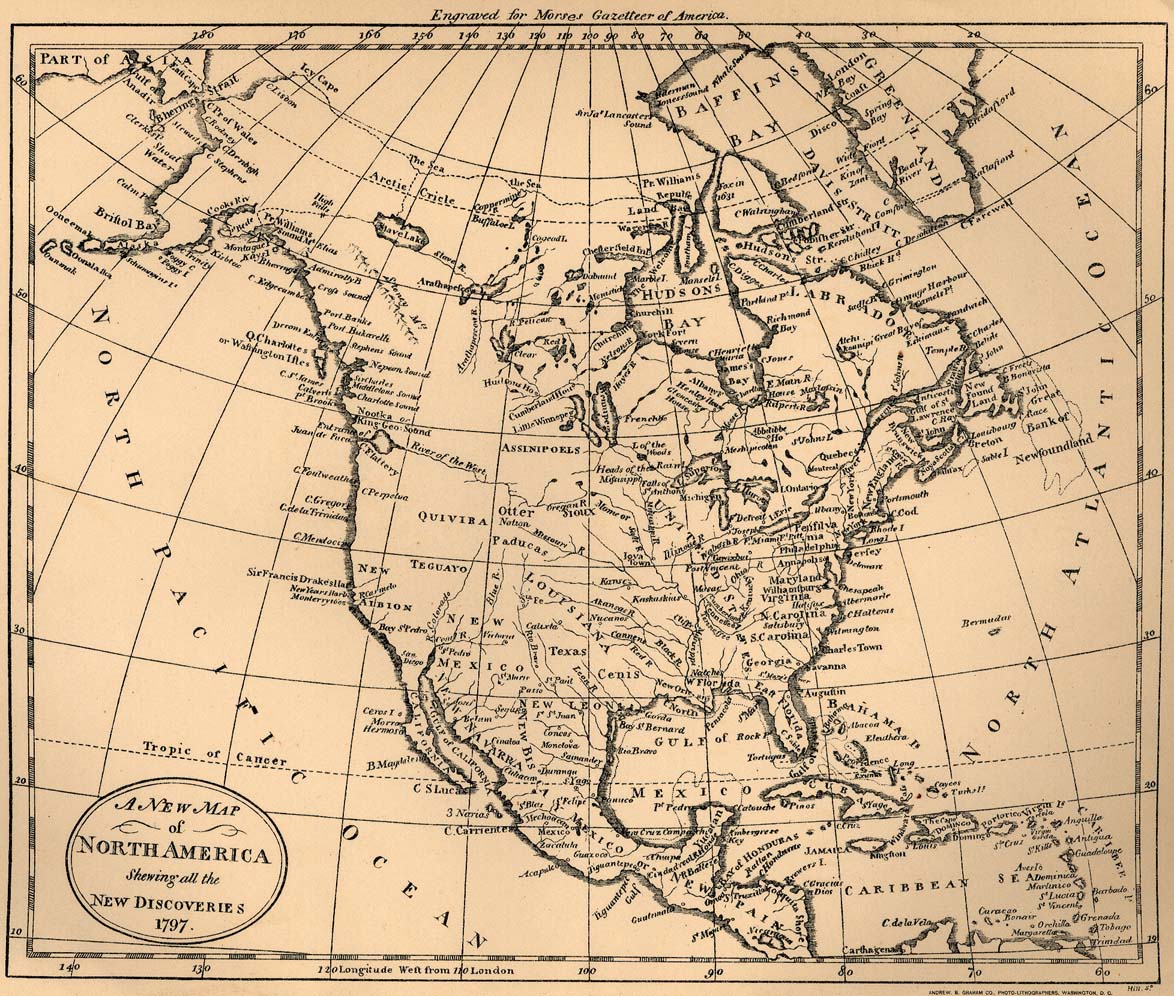
In 1803, for $15 million, American President Thomas Jefferson bought the Louisiana territory, all 828,000 square miles of it, from France, which had owned the territory from 1699 to 1762, then gave it to Spain, and then reclaimed it in 1800. Napoleon's hope was to build an American empire, but there were historical inconveniences that forced him to sell before he could build. Jefferson bought the land dirt cheap, though the price outstripped the entire U.S. budget and not everyone was sure he hadn't bought a pig in a poke.

In 1804, like anyone who has just made a new acquisition, Jefferson sent out Meriwether Lewis and William Clark to reconnoiter the new American backyard. Part of the reason for the expedition was to see if there existed a 'northwest passage' -- a water route from Atlantic to Pacific that would spell trading riches by lopping off the amount of time it took to sail all the way around South America on the way to the orient. And part of the reason was to assert ownership. But part of the expedition was intent on mapping this new backyard ... this land that was owned but not known. Maps of the time only reached so far ... and then dribbled off into terra incognita.

A couple of nights ago, I watched a TV documentary on Lewis and Clark. In their travels up the Missouri River and elsewhere, the expedition made contact with various Indian tribes. The Americans came prepared with medals and other gifts for the Indians who now lived on what Lewis and Clark and Jefferson asserted was their American land. The documentary did not go into how the Indians thought of the land on which they had probably lived for generations. The didn't seem to feel usurped, as you or I might if someone showed up on our front stoop saying, "Welcome to my property."

Besides all the political breast-beating and vast cruelties that would later be visited on the Indians, the TV show had a somewhat weird effect on me. It seems fair to conclude that the Indians did not have the same view of land ownership as their visitors did. If they had, wouldn't they have simply wiped out Lewis and Clark and their companions? True, there were tribal territories that were established, sometimes by violence, but how did this differ from the wolf that will piss-mark its home ground? No one owned the land -- that simply wasn't possible. Territories were established as a means of sustenance and propagation. But ownership?

The TV show made me sense, yes, the arrogance. But more interesting was the whole notion of ownership. Nothing wrong with enjoying what comes to hand ... but owning it? Does that really compute? Does it really make much sense? Little and large, within or without ... how much realistic sense does ownership make? Even in the flimsier realms of cause and effect, does ownership pan out as a happy thing or a sad thing?

Yes, yes ... I'm a little slower than the other kids on the block. What is obscure is easy, what is obvious is hard.

Isn't terra incognita more the rule than the exception?

improvements

Of all the practices employed on behalf of improving things -- the emotional, intellectual, spiritual, scientific, psychological, financial, botanical, artistic, architectural, musical, automotive, aquatic, molecular, political, tale-telling ... stuff -- maybe one more practice could be added without too much effort ...

Just some occasional practice and effort to stop improving things.

No one has to go cold turkey on this one. The habit is enormous and has more tendrils and configurations than a kaleidoscope has wonders. But maybe now and then ... literally, just for a second or two ... practice ... just for a nanosecond ... don't improve anything.

Of course it's tricky because not-making-improvements may be configured and imagined as an improvement. But that's just the hell-bent-for-leather improving mind, the one that has more explanations and meanings than the universe has molecules.

Practice just for a nanosecond.

Maybe as an improvement, but more likely not.

What's that like?

Thursday, July 11, 2013

the scientific nature of "a second"


Wait a second! What's a second ...?

Al Jazeera video offers an appreciation of what may be taken for granted.

more bobbing and weaving at the Vatican

Pope Francis on Thursday bolstered criminal legislation against child abuse in the Vatican in an overhaul of laws that apply to the clergy and lay people who work in the tiny city state.
The Vatican said in a statement that the pope's decree included "a broader definition of the category of crimes against minors" including child prostitution, sexual acts with children and child pornography.
It looks good.

It looks caring.

It looks just.

But by implication it still asserts that the Vatican will adjudicate sexual abuse cases that, in the countries where the Roman Catholic Church has a presence, might be treated directly as civil crimes and punished as such.

Sexual abuse of children is a crime within the statutes of most civilized countries. Those countries have judicial systems and laws and prisons with which to gauge guilt, innocence and penalties. Those countries did not develop a judicial system in order to hand over their authority to some other state, holy or otherwise. The citizens of those countries, Catholic or otherwise, deserve no less.

It looks good.

It looks caring.

It looks just.

And it is a self-serving sham.

dead man convicted in Russia

Sergei Magnitsky, a man who blew the whistle on fraud perpetrated by ranking Russian officials and
was subsequently accused of a similar siphoning of funds, has been convicted of tax fraud.

Magnitsky is dead. He was 37 when he died in 2009.

He died of ... uhhh ... pancreatitis, although the injuries he sustained while in his jail cell, like the lack of medical care provided, remain unexamined and unexplained.

The situation strikes me as par for the course in realms where big money is involved. Russia, U.S., China ... it's all pretty much the same I imagine. It's not the theft or cover-up that excites people. It's the crudeness with which the Russians executed this routine scam.

Perhaps a rule of thumb should be: Never expect the issue itself to eclipse the matter of whose ox gets gored.

right and wrong

Passing thought ...

How often does it occur that there is a great sense of injustice or cruelty or just plain wrong-ness?

Nothing necessarily wrong about that.

But wouldn't it be a further mistake to imagine that just because what is wrong is 'obvious,' that therefore the observer knows to a certainty what is right?

Consider: What is now wrong or unjust or cruel was once considered right by someone. Whatever the reasons, still it was right....

As right as the right-ness now assumed by the one who can point out something wrong.

Screwing up a wet dream is woven into the human DNA, I think. Improvements come and improvements go. Righteousness is extra.

A little humility never hurt the bright lights of imagination.

Wednesday, July 10, 2013

Ramadan

A child is seen near members of the Muslim community attending midday prayers at Strasbourg Grand Mosque in Strasbourg on the first day of Ramadan July 9, 2013. The Grand Mosque of Paris has fixed the first day of Ramadan as Wednesday, splitting with the French Council of Muslim Religion (Conseil Francais du Culte Musulman or CFCM), which determined it would begin on Tuesday.
REUTERS/Vincent Kessler

trickle-down screwing of soldiers

The [Defense D]epartment’s authorized 2013 budget, after sequester, totals $565.8 billion - by far the largest chunk of the annual federal budget approved by Congress. Yet the Pentagon is literally unable to account for itself. As proof, consider that a law in effect since 1992 requires annual audits of all federal agencies – and the Pentagon alone has never complied. It annually reports to Congress that its books are in such disarray that an audit is impossible.
This Reuter's series depicts not just mismanagement, but also the very personal and painful fallout experienced by those who are routinely schmoozed as "heroes" and then hung out to dry.

U.N. seeks Vatican documents

In the first request of its sort, the United Nations Committee on the Rights of the Child has asked the Vatican for thousands of documents related to priest sexual abuse of children:
The Geneva-based UNCRC, which governs the convention, sent a "list of issues" to the Vatican in view of obtaining "detailed information on all cases of child sexual abuse committed by members of the clergy, brothers and nuns or brought to the attention of the Holy See".
The information relates to all cases between November 1995 and January 2014, the UN said.
The questionnaire seeks to establish whether "perpetrators of sexual crimes" were allowed to remain in contact with children and what legal action was taken against them.
As in the past, the hope that the Vatican might make a clean and unequivocal breast of the systemic horrors that have haunted the church at least as far back as the 7th century rises up ....

With, as usual, a bolt hole provided:
But observers say that although the Convention on the Rights of the Child is legally-binding, the Vatican may be able to refuse this request from the committee.
Those who care about this long-running institutional travesty know enough to have seen opportunities rise up in the past only to disappear into a well-constructed fog of inaction and well-camouflaged self-preservation.

No need to imagine this instance will be much different. It is enough that the U.N. should shoulder and make the request.

in the arms of comfort

I don't know about anyone else, but when someone asks for comfort, I am inclined to give it to the best of my ability. True, I have learned over time to draw the line at those who are addicted -- broken-record fashion -- to asking for comfort, but in general ... well, I like to help if I can.

Is there anyone standing on two feet who does not ask for comfort? I doubt it. Never mind the glossy names like "compassion" or "altruism" or even "tough love" that are sometimes affixed. A little comforting now and then ... well, count me in.

The caring mother calls out to her injured child, "Come here and let me kiss it better." And the child rushes to its mother's arms ... and the mother kisses the wounded knee or elbow ... and, by God, it is better.

Comfort.

It really is worth keeping an eye on.