.
It may be obvious, but there is something gloomy about the confirmation asserted in a poll that finds that more and more people are relying on word-of-mouth for their news. I suppose it's as good an explanation as any for the cantankerousness that is bogging down the political system: I'm me, I'm important, I know the truth ... and if you don't agree with me, I'll call you a bigot and burn down your house.
There's the Internet, awash in personal opinion that is promulgated at geometric rates with less and less sourcing or fact-checking. The Internet, that pseudo-connector and social adhesive and quick-hit appreciation of any topic on earth.
When times are hard, people pull back and rely on themselves more than before. OK. And they rely on their neighbors and friends. OK. But if fewer and fewer look beyond their own confines, beyond their own nations, beyond their own opinions ... isn't life likely to come around and bite them on the ass? I think it will.
It is self-serving to acquaint this small world with the world around it. Such acquaintanceship is never perfect, but it does open out into more possibilities. Just because anyone loves something or despises it doesn't mean it's true or untrue.
Bit by bit, the world becomes flat ... loud, selfish, mediocre and flat.
.
Monday, September 26, 2011


more and more and more and more
.
Last night, I got an email from Keith, a guy with whom I went to college and a guy I haven't seen or had contact with in more than 50 years. He confirmed that he did indeed plan to visit on Oct. 7. Tongue-in-cheek (I hope), he suggested I might have forgotten. But I hadn't forgotten. In fact, I am looking forward to meeting someone I do not know ... whom I did know. There is something bizarre and delicious about it.
I like meeting people I don't know. It's like turning on the TV and discovering a channel I had previously been unaware of ... something brand new but not new at all ... like running into a thought that I thought I hadn't thought and yet there it was, proof of the fact that I had, in fact, thought it somewhere, somehow ... otherwise how could I possibly think it?
 In college, Keith and I played billiards, among other things. It was almost -- or perhaps entirely -- a spiritual experience. Both of us were serious. Both of us took pleasure in the formality of the ritual -- the care each took not to talk, not to stand in the line of sight of the other person when he was taking a shot, to remain still during that shot and, when there was a good shot, to tap the cue twice on the floor to indicate approval or praise. No talk, just two taps.
Naturally, each of us wanted to win, but that was not the prime objective. Winning was a facet on the gem we created, a gem that would have been muddied and dimmed if the other facets had been transgressed. This was not some elementary-school teacher's realm in which the thin-tea "good-joooob's" rained down indiscriminately and without much regard to accomplishment. This was not a time for the social praise that amounts to a poor man's blackmail or some ill-conceived compromise: "I'll praise you if you praise me and both of us can feel oh-so-wonderful."
Keith and I could play for hours. We once entered the college pool hall at 8 a.m. and didn't leave until midnight. It was a snow day -- no classes. No classes, but we had our classes to attend. Three balls -- two white, one red -- on a green-felt-topped, pocket-less table.
It was Keith who organized a college-wide billiards tournament, something to include the more-popular pool (with the pockets) and our three-ball game.
And when the finals rolled around, there we were, pitted against each other. Since we were, so to speak, that last men standing, we decided to up the ante -- to create a game that we had never played before: We decided to play 100 points of three-cushion billiards. In three-cushion billiards, the cue ball (the one struck by the player's cue) hits one object ball and then must strike three cushions (table railings) before hitting the second object ball. The game requires some knowledge of angles, the spin on the ball (English), how hard to hit and some defensive strategy about leaving your opponent with a hard shot, assuming you miss.
One hundred points, given our skill level, which was moderate, would take a long time to complete. A very long time. It would require physical energy to stand up for so long. But more, it would require mental energy ... the kind of attention that any athlete ultimately must bring to the game.
We played through the 'serious.' We played through the 'sad.' We played through the 'giggles.' We played through the 'energy' and we played through the 'fatigue.' We played through 'beauty' and we played through 'ugliness.' We played through 'anger' and we played through 'love.' We played through the 'delight' and we played through the 'relief.' We played through the 'focus' and the 'lack of focus.' And no matter how much we played through, still there was more to go. More and more and more.
Going into the game, we both had imagined a lot of ball-busting effort -- that's why we settled on 100 points -- but living through it was an entirely different matter. Wise or pussy-footing imagination was left in the dust. Praise and blame was for pussies. This, in the end, was this ... and there was more and more and more of this. Our rituals stayed with us throughout, but in the end there were no rituals. We were like blackboards that had been wiped clean of all supposition or elevation or success or failure.
And when, in the end, I happened to win, it was not the victory that sprang to mind. I have won very few trophies in my life and the ones I have won have never convinced me in ways that others seem to enjoy. Probably due to upbringing, I have never been very good at relying on the praises of others or very good at using the reliance that others put on victory to further my own cause.
What came to mind was something that happened years later when, after sesshin, or a Zen Buddhist intensive retreat, I was walking home with a young woman who had also attended the sesshin and she began to cry. I asked her why she was crying and she almost wailed, "There's no one to thank!" So I said, "Thank me." So she said, "Thank you." And I said, "You're welcome." And we just kept on walking.
More and more and more and more ... of this. I suppose there's nothing wrong about praise if you have nothing better to do. But really, walking together requires no trophies. It just requires a sure-footed, amen delight. Who would want to sully such a delight?
How could there possibly be more when there is this?
.
Sunday, September 25, 2011
end of an era
.
The end of an era ....
-- In Spain, Catalonia bids farewell to bullfighting today. Ernest Hemingway must be spinning in his Romantic, macho grave.
-- In Berlin, Patrick Makau took the marathon in a record time of two hours, three minutes and 38 seconds. A new record to replace the old one.
-- And in Saudi Arabia, women will at long last be given the right to vote and run in municipal elections. How casually we take our freedoms and riches.
.
getting down with my shit
.
Sometimes I think the whole business of spiritual endeavor boils down to this: No matter how much you shit, literally, there is always more where that came from. How many times does anyone have a bowel movement in their lives? Lots and lots seems like a fair guess. And the relief that comes with the completion of one particular bowel movement is satisfying. It suggests that something has ended ... "Whew! That really hits the spot!"
But, based on long-standing and concrete evidence, that's not the end at all. Satisfying? Yes. Finished? Never.
And if this metaphor rings any bells or has any usefulness, perhaps it encourages a mind upgrade -- some change of understanding about the shit that comes along in life. Good and bad seems pretty childish. Elevated and debased seems a bit puerile. Shit happens. It will happen again. So why do I have all these views about good shit and bad -- couldn't I find a better use for my time? It's not as if shit is going to stop an account of my elevated, religio-philosophical observations about it.
I know, I know ... we can all go off on smirky tangents about shit happening and being constipated and getting the runs and so forth. But seriously, isn't it a pretty good teacher. Over and over and over again, shit. Over and over and over again, I express my views or seek to escape life's shit or create arabesques of serenity and peace ... or some other shit.
Wouldn't it be better to put on a more realistic pair of glasses or maybe get rid of the glasses altogether?
If you can't run and you can't hide and you can't make a silk purse out of a sow's ear ... then what's the point in trying? Well, the point is ... ME. But since the shit keeps coming, ME doesn't appear to be a very effective tool, does it? Me and my shit ... time for an attitude adjustment, n'est-ce pas?
Saturday, September 24, 2011
Kyudo Nakagawa Roshi ... web page additions
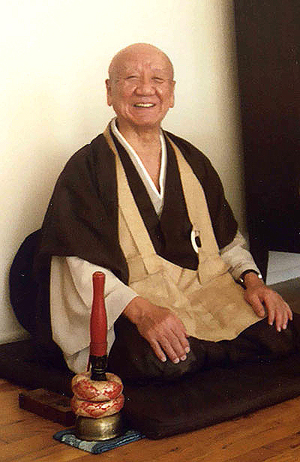
With the addition of material from Chris Hamacher and the diligent efforts of web master, The Rev. Kobutsu Malone, the Internet page devoted to Kyudo Nakagawa Roshi has grown.
Thanks to both.
And if anyone reading this has any old talks, photos, calligraphy or other memorabilia relating to Kyudo, I hope you will consider passing them along for possible inclusion.
.
"failure is not acceptable"
.
The older I get, the more I dislike the phrase, "failure is not an option." That's the kind of gung-ho nonsense-encouragement offered by second-rate military commanders, over-zealous and under-trained business executives, and others enthusiasts attempting to achieve some goal. The trouble with the line is that the more you assert it, the more the possibility gains force. What's the matter with the truth? Failure is an option, whatever the aspirations of the one making an effort.
On the other hand, having acknowledged the truth, determination can be brought to bear and, in point of fact, even when failure is an option, still there is no failure in the effort.
After her initial 29-hour effort, sixty-two-year-old Diana Nyad gave up her attempt to swim 103 miles from Cuba to the United States. An asthma attack did her in. Yesterday, she began a repeat performance.
Is there any denying that she failed the first time? Is there any denying she might fail again? Failure is part of any mix, from swimming 103 miles to attaining enlightenment. But just as failure is part of the mix, so is determination. Will that determination be rewarded with success? Will it be crowned with failure? No one can know the future, but they can make the effort and in that effort, be rewarded. Lying about it diminishes the effort. Lying does not elevate it. Lying weighs down the scene with something extra, a distraction. Determination is a good thing, win, lose or draw.
The Fairfax County (Virginia) elementary schools have given up using A's, B's and F's as a means of marking their students. Now there will be longer, more nuanced, more meandering assessments that will reflect ... oh, you know, all the nooks and crannies of personal ability. But does saying more really say more? It puts teachers in a position of having to come up with some palatable way of saying Little Johnnie or Little Suzy screwed the pooch or exceeded all expectations. Teachers have enough to do without this touchy-feely bullshitting.
When my kids were in grade school and the school would offer some kind of parent-teacher one-on-ones, I always tried to save the teachers from searching out all the polite ways of saying whatever it was they had to say. I pitied them trying to balance the parental prejudice with the plain facts. So I would tell the teacher I was sitting with that I was grateful for their effort with my child, but I wasn't there to hear accolades. I wanted to know where my child was weak or uncertain -- where the 'F'-word would have been used if these feel-good meetings hadn't been mandated. Usually, the teachers seemed relieved to be talking turkey and they could point out areas of weakness or failure. What better basis for determination, for a nourishing improvement?
If you can't swim 103 miles, let the twits talk about "failure." Now is the time to don the determination and go into the water again. Setting aside the common-enough habit of complaining and doubting, just suit up and, as the Japanese say, "fall down seven times, get up eight." Determination is acceptable; "failure" and "success" alike are unacceptable.
Or anyway, not terribly useful.
.
of pores and flea penises
.
Yesterday, Chris, an internet friend and fellow student of Zen teacher Kyudo Nakagawa, sent along a teisho (Dharma talk) Chris had recorded and transcribed. He also sent an ink painting of a horse -- something Kyudo made and handed out as a New Year's gift -- and a picture of Kyudo himself. All of it was sent as an addition to the internet site offering a very limited compilation of Kyudo stuff. The site aims to give some flavor of the man, most of whose words are held at Ryutaku-ji Monastery and are unlikely to see the light of day.
The teisho, which I read quickly once yesterday and will read more closely today, really does remind me of the comedy "Blazing Saddles" in which passing reference is made to "authentic frontier gibberish." It is quite higglety-pigglety and associative, but, as anyone who has been to a sesshin, or intensive Zen retreat, can attest, it carries with it encouragements and observations that don't need to make sense because they make so much sense. Of course what makes so much sense may just be eye wash and self-deluding rat poison, but ... well, it's up to the listener or reader to make the call. So I think it should be added.
What stood out in my quick-read mind was the suggestion of keeping all your pores open ... everything wide open and free ... all your pores open.
That, and the completely Kyudo-esque punch line ... a flea penis.
Yes, I miss him.
.
places I'll never see
.
Watching a TV show last night, I realized that there are several places in the world I would like to visit and never will.
-- The Orkney Islands, the focus of the TV show. Partly because it is a neat name. Partly because the pagan ruins there tell the tale of a people who existed 5,000 years ago, never lived much beyond 25, and whose habit may have been to leave corpses out to be picked clean by the resident sea eagles before immuring them in burial mounds ... mounds to be (possibly) visited by descendants who would fondle the bones as a means of asserting a past and also as a means of touching the future. The guessed-at rituals reminded me of the Buddhist monks who, in the high mountains, sometimes chop up the remains of deceased fellow monks and leave the result as fodder for the vultures.
-- Tierra del Fuego, also because it is a neat name for a place where the Pacific and Atlantic oceans collide and, although there might be nothing of note to see -- no actual demarcation line between one ocean and another -- still, standing the place of the thunderously invisible is inviting in my mind. I assume, but don't know, that there must be volcanoes in the neighborhood ... where else would the "fire" of "Tierra del fuego" come from?
-- Afghanistan, terminus of the old Silk Route ... a real cultural melting pot, however decimated it may have become under the insistence of latter-day Muslims intent on their own branding irons. As Hollywood airheads might croon that a particular club or restaurant was "the place to be," Afghanistan stands in my mind as a place where everyone met and mingled and enriched each other like the waters off Tierra del Fuego.
.
Friday, September 23, 2011
the middle way
.
In every in-your-face tragedy, there comes a point where anyone simply has to step back, ignore the searing realities of the moment, and decide what to do. Perhaps they decide to do something that makes the situation worse. Perhaps they decide to do something that promises to make things better. Either way, you have to do something... this clawing, searing sandstorm is too much. Death, disease, drugs, divorce ... just to cite a few d's ... what's your next move?
But where is the balance? Step too far back and the very particular barbs of the situation are grossly ignored, buried under a feel-good fluff. Fail to step back and the storm consumes you with its on-going, self-fulfilling anguish.
I guess I am thinking about this because spiritual invitations can so often be used not to solve problems but to bury them. Sweet-talkin' Jesus has the answer; sage observations in Buddhism turn into more sage observations and more sage observations and ... well, shit, the problem is secretly and unwittingly enhanced because it is not addressed.
Where's the balance between acknowledging and addressing a problem directly and laying the groundwork for a nourishing resolution without getting drowned in sweet talk?
Someone once asked a Zen teacher the meaning of "the middle way." He replied, "It means the extremes." And that, as far as I can see, hits the nail on the head. There is no bullshitting sorrow and yet the bullshit is everywhere available. You can't 'seek' the middle way. You can only be it.
How? I haven't got a clue. "Live and learn" is about as good a reminder as I can think of.
.
politics
.
Someone once described American President George W. Bush as someone who "was born on third base imagining he hit a triple." It was a small arrow shot by someone who was not a fan and wanted to sum up his distaste in terms of class. It was a description I found hard to dislike.
But as the desperation of the country (and perhaps world) mounts, bon mots seem to be all anyone has time for. The stock market took a 391-point nose dive yesterday; joblessness squeezes people who can remember a time when they complained about going to work in the morning; disaster relief is held hostage in a country that once assumed that natural disasters anywhere in the country were the nation's business; and everywhere angry and helpless people seek simple answers, which, when given, are obviously not going to work in any concrete, I-need-a-job-now way.
Helplessness, anger and last night the Republican candidates took to the debate stage in Florida looking, among other things, so goddamned white. "White," meaning well-heeled, well-positioned, self-serving, unaware, and unwilling to give up an inch of what they have attained in order to minister to the body politic. And no one for a minute imagines that a black man or woman would be much different. Watching those candidates merely enhances the anger: It's no longer what might improve the country's lot that is worthy of belief: The sense of in-your-face malaise and despair demands to hear what will improve that lot.
From 1966 to 1969, Chinese chairman Mao Zedong instituted 'The Cultural Revolution' and thousands of bourgeois natives were sent off to labor camps for re-education. People read his "Little Red Book" which pointed to a more pure form of communism in which the egg-heads (and others with "incorrect thoughts") would not hold sway. A new generation made a profession out of attacking the previous one. The cultural revolution was a disaster, but the idea of shipping out anything that resembled thinking outside the box was attractive to the have-nots and those who insisted on thinking inside some lock-step box. And it is hard not to imagine sweeping up the current lot of politicians and shipping them, en masse, to some rice paddy in Zanzibar or someplace else that was sufficiently remote so that their sound-bite nostrums could not be heard fouling the airwaves. It wouldn't work, but the temptation sure as hell has its appeal. But would that put food on the table or protect the families that long to protect themselves?
I don't know anything about politics. But, like a lot of others, I know something about trust and distrust, about the difference between can-do and can-talk, and about the desire for a little decency and safety that is concrete. How to attain it? I haven't got a clue, but I can't imagine that telling more self-serving, pseudo-patriotic lies will help much.
.
Thursday, September 22, 2011
lights out
.
This morning from about 8 to about 9:30, the electricity went off. How discombobulating. There I was in the middle of a blog post and ... poof! There I was trying to cook oatmeal using a flashlight. There I was, forced to take the toothbrush to the window in order to see how much toothpaste I applied. There I was, unable to turn on the dishwasher or see very well into the refrigerator. There I was with my entire schedule upended or revised. By the time I finished zazen, somehow, unnoticed, the lights had come back on.
Interesting when assumptions are challenged.
.
Frankenstein
.
Anyone who has managed to read "Frankenstein" by Mary Shelley will know that the monster is not the monster in the story. The monster is the monster's creator.
"Frankenstein" is the tale of a scientist who fashions a body from various corpses and then brings it to life through the application of lightning bolts. True, Dr. Frankenstein is horrified by what he has wrought but the monster himself, all simple and untutored and largely unloved, comes naked into a world that finds no place for him.
Sometimes I wonder how many corpses of the past have been stitched together and brought to life in the lightning of the present only to be left to fend, naked, for itself. A tall and boundlessly powerful infant is born.
Who will care for that infant?
.
Troy Davis executed
.
At 11:08 last night, the state of Georgia carried out the execution of Troy Davis, a man found guilty of killing an off-duty police officer in 1989. A worldwide hue and cry seeking clemency arose after witnesses recanted and other evidence in the trial was found faulty. Appeal after appeal was rejected and the sense of injustice mounted. And now Troy Davis is dead.
I thought the most compelling part of the reaction that welled up after the execution came from the mother of slain police officer Mark MacPhail. Anneliese MacPhail was quoted as saying:
Killing -- whether of off-duty police officers or convicted felons -- simply doesn't work as a mechanism of peace. It is better to acknowledge this and dwell in an uncertain limbo that seeks certainty than it is to weave tales that may please the mind but let the heart go begging.
.
At 11:08 last night, the state of Georgia carried out the execution of Troy Davis, a man found guilty of killing an off-duty police officer in 1989. A worldwide hue and cry seeking clemency arose after witnesses recanted and other evidence in the trial was found faulty. Appeal after appeal was rejected and the sense of injustice mounted. And now Troy Davis is dead.
I thought the most compelling part of the reaction that welled up after the execution came from the mother of slain police officer Mark MacPhail. Anneliese MacPhail was quoted as saying:
I'm kind of numb. I can't believe that it's really happened. All the feelings of relief and peace I've been waiting for all these years, they will come later. I certainly do want some peace.When is the end ever the end? And what sort of peace is it that twinkles on the horizon of "later?" Which of us has not felt the same only to find peace trickling through our fingers like water lifted from a stream?
Killing -- whether of off-duty police officers or convicted felons -- simply doesn't work as a mechanism of peace. It is better to acknowledge this and dwell in an uncertain limbo that seeks certainty than it is to weave tales that may please the mind but let the heart go begging.
.
not that serious
.
Is there any spiritual endeavor that is not awash in plotting charts and pointers -- sextants and calipers and telescopes and maps depicting the place where "there be dragons" or "uncharted shoals?" There are richly and heavily-laden mule trains worth of explanation and meaning. This is serious adventure for the serious and yet Shunryu Suzuki once observed of our adventures: "It's serious, but it is not that serious."
My interpretation of that observation is that the seriousness of spiritual endeavor boils down to one serious-but-not-too-serious matter: Spiritual endeavor is serious because "I" am serious. That's the beginning and end of it. It's not better or worse, more or less elevated or debased, more or less profound or superficial. It's just a fact: "I" am serious.
But not that serious.
An old refrigerator magnet suggests, "Angels can fly because they take themselves lightly." Who would not want to fly if s/he could? Woo-hoo ... I know I would. Swooping, zooming, alighting and re-arising at will ... free on the free, free air! Who would not gather sextants and charts and maps and provisions of all sorts in order to reach out and touch what is so untouchable?
But not that serious.
Did it ever occur to you that with all those wise and supportive provisions gathered around you in a warming pile that you were already flying? No big deal. Just a fact. Already doing what is longed for with an aching, pleading heart?
Already.
Another refrigerator magnet suggests: Life is what is happening while you were busy making other plans.
It's serious.
But it's not that serious.
.
Wednesday, September 21, 2011
philosophical adventures in kissing
.
Received in email:
Received in email:
Dear Doctor Rude,
I think I understand what a "platonic kiss" is, but could you explain to me the difference between the following kisses?
Aristotelian kiss
Hegelian kiss
Wittgensteinian kiss
Godelian kiss
Signed,
Flummoxed in Florida
--------
Dear Flummoxed,
That's a very good question; nowadays most sex education courses focus on secondary and tertiary sources, so much so that few people really get exposed to the classics in this field any more. I'll try to make a brief but clear summary of some of these important types of kisses:
Aristotelian kiss
a kiss performed using techniques gained solely from theoretical speculation untainted by any experiential data by one who feels that the latter is irrelevant anyway.
a kiss performed using techniques gained solely from theoretical speculation untainted by any experiential data by one who feels that the latter is irrelevant anyway.
Hegelian kiss
dialiptical technique in which the kiss incorporates its own antithikiss, forming a synthekiss.
dialiptical technique in which the kiss incorporates its own antithikiss, forming a synthekiss.
Wittgensteinian kiss
the important thing about this type of kiss is that it refers only to the symbol (our internal mental representation we associate with the experience of the kiss--which must necessarily also be differentiated from the act itself for obvious reasons and which need not be by any means the same or even similar for the different people experiencing the act) rather than the act itself and, as such, one must be careful not to make unwarranted generalizations about the act itself or the experience thereof based merely on our manipulation of the symbology therefor.
the important thing about this type of kiss is that it refers only to the symbol (our internal mental representation we associate with the experience of the kiss--which must necessarily also be differentiated from the act itself for obvious reasons and which need not be by any means the same or even similar for the different people experiencing the act) rather than the act itself and, as such, one must be careful not to make unwarranted generalizations about the act itself or the experience thereof based merely on our manipulation of the symbology therefor.
Godelian kiss
a kiss that takes an extraordinarily long time, yet leaves you unable to decide whether you've been kissed or not.
a kiss that takes an extraordinarily long time, yet leaves you unable to decide whether you've been kissed or not.
Socratic kiss
really a Platonic kiss, but it's claimed to be the Socratic technique so it'll sound more authoritative; however, compared to most strictly Platonic kisses, Socratic kisses wander around a lot more and cover more ground.
really a Platonic kiss, but it's claimed to be the Socratic technique so it'll sound more authoritative; however, compared to most strictly Platonic kisses, Socratic kisses wander around a lot more and cover more ground.
Kantian kiss
a kiss that, eschewing inferior "phenomenal" contact, is performed entirely on the superior "noumenal" plane; though you don't actually feel it at all, you are, nonetheless, free to declare it the best kiss you've ever given or received.
a kiss that, eschewing inferior "phenomenal" contact, is performed entirely on the superior "noumenal" plane; though you don't actually feel it at all, you are, nonetheless, free to declare it the best kiss you've ever given or received.
Kafkaesque kiss
a kiss that starts out feeling like it's about to transform you but ends up just bugging you.
a kiss that starts out feeling like it's about to transform you but ends up just bugging you.
Sartrean kiss
a kiss that you worry yourself to death about even though it really doesn't matter anyway.
a kiss that you worry yourself to death about even though it really doesn't matter anyway.
Russell-Whiteheadian kiss
a formal kiss in which each lip and tongue movement is rigorously and completely defined, even though it ends up seeming incomplete somehow.
a formal kiss in which each lip and tongue movement is rigorously and completely defined, even though it ends up seeming incomplete somehow.
Pythagorean kiss
a kiss given by someone who has developed some new and wonderful techniques but refuses to use them on anyone for fear that others would find out about them and copy them.
a kiss given by someone who has developed some new and wonderful techniques but refuses to use them on anyone for fear that others would find out about them and copy them.
Cartesian kiss
a particularly well-planned and coordinated movement: "I think, therefore, I aim." In general, a kiss does not count as Cartesian unless it is applied with enough force to remove all doubt that one has been kissed. (cf. Polar kiss, a more well-rounded movement involving greater nose-to-nose contact, but colder overall.)
a particularly well-planned and coordinated movement: "I think, therefore, I aim." In general, a kiss does not count as Cartesian unless it is applied with enough force to remove all doubt that one has been kissed. (cf. Polar kiss, a more well-rounded movement involving greater nose-to-nose contact, but colder overall.)
Heisenbergian kiss
a hard-to-define kiss--the more it moves you, the less sure you are of where the kiss was; the more energy it has, the more trouble you have figuring out how long it lasted. Extreme versions of this type of kiss are known as "virtual kisses" because the level of uncertainty is so high that you're not quite sure if you were kissed or not. Virtual kisses have the advantage, however, that you need not have anyone else in the room with you to enjoy them.
a hard-to-define kiss--the more it moves you, the less sure you are of where the kiss was; the more energy it has, the more trouble you have figuring out how long it lasted. Extreme versions of this type of kiss are known as "virtual kisses" because the level of uncertainty is so high that you're not quite sure if you were kissed or not. Virtual kisses have the advantage, however, that you need not have anyone else in the room with you to enjoy them.
Nietzscheian kiss
"she/he who does not kiss you, makes your lust stronger."
"she/he who does not kiss you, makes your lust stronger."
Zenoian kiss
your lips approach, closer and closer, but never actually touch.
- Doctor Rude
.
your lips approach, closer and closer, but never actually touch.
- Doctor Rude
.
there really is weeping
.
I don't know if it is a true memory or a fabricated one, but I seem to remember a tale in which Gautama (the one generally referred to as the Buddha) looked into the future, saw the war and discord of the times and wept. Weeping is such a popular pastime these days -- politicians and others expressing their versions of regret seem capable of turning on the spigot at will for TV cameras -- that I hesitate to mention the function at all. And yet there really is weeping and there are things worth weeping for.
I don't much care if the story of Gautama is true or not. I don't put much stock in seeing into the future, but I wouldn't discount it either. In my Swiss-cheesy memory an enlightened Gautama saw war and discord and wept. A weeping circle jerk is still a circle jerk ... and still there is weeping.
In the video posted following this post, a psychological counselor is shown talking with a former soldier who is wracked by is war experience and his inability to find a peaceful way in a peace-time society. And the counselor points out to this young man who might well be my son or yours, my brother or yours, that his country has asked him to set aside his deepest values, his sense of right and wrong, and to kill others. And the young man -- my son and your brother -- did it as a matter of survival. It was the only way he could survive. And he did survive ... but the price he paid, the shredding of his own deepest values, finds no forgiveness or perspective in a world where his survival is no longer so directly threatened. The counselor tries to comfort the young man ... it was not he who was wrong, it was not he who made a mistake. It was the war that was mistaken -- the assumption that setting aside our deepest values is worth the price ... as a matter of manufactured survival.
It is one thing to set aside those values as a matter of survival. Which one of us would not do that? But the placing of one man by another into survival-mode conditions is ... is to weep. The shredding of what is decent and nourishing in any human being ... is unconscionable ... and ... to weep. To force another to forsake enlightenment for delusion ... is to weep. Why would anyone in a position of leadership and power do that? Because s/he believes in power too much and peace too little. To do this to yourself is one thing. To do it to another ... is to weep. To tear out a man's deepest heart and tell him to go forward with heart ... is to weep. To take advantage of a man's love for and understandable desire to nourish family and friends and even country ... it is beyond despicable ... it is to weep. The underlying revulsion and despair can be seen in the U.S. creation of drone bases -- weapons that will not subject as many men and women to the shredding of their own deepest understanding.
There is no cool distance that can be brought to bear. No religious smarm. No philosophical dissection. All that can be suggested is ...
Don't you do that.
 In Georgia, Troy Davis is scheduled to be executed today for killing a police officer in 1989. He has exhausted the appeals that rested on witness recantations and lack of evidence and excited worldwide appeals. A picture of one protest showed a woman bearing a placard that said, "Not in my name."
Not in my name.
Don't you do that.
Save your tears.
Don't you do that.
.
Tuesday, September 20, 2011
"The Wounded Platoon"
.
This "Frontline" report, "The Wounded Platoon," is worth the patience and courage it takes to watch. It tells the careful story of what it means to set aside human values of right and wrong in pursuit of a fabricated and sometimes lethal "enemy."
This "Frontline" report, "The Wounded Platoon," is worth the patience and courage it takes to watch. It tells the careful story of what it means to set aside human values of right and wrong in pursuit of a fabricated and sometimes lethal "enemy."
Watch the full episode. See more FRONTLINE.
.
what others say
.
Like other parents -- or anyway what I assume other parents do -- I am concerned for my children. It can't be helped. I try to balance a listening ear with an intervening necessity and be of some loving use. I ache when they ache. I ache to protect them from those aches ... and of course I can't do it. I long to build up the callouses or adult mindset that will allow me to allow them ... and I fail, over and over again.
My younger son is going through the confusing and somewhat frightening stage of realizing he will graduate from high school this year. And after that? Well, when you don't know or can't see, it's confusing and frightening and ... well ... eek!
Many, if not most, of my son's acquaintances and friends are doing the next expected thing -- gearing up for a life at college. It's an uncertain world, but it has the consolation of being what 'everybody' else is doing. My son does not want to go to college. He has had it with books. He fears the debt. He doesn't want to do what 'everybody' is doing and yet can find no sure place to put his hand. For this reason (and probably a lot of other reasons he has not expressed to me) he considers the military option. I can see where he is coming from to some extent -- a life settled and directed towards a clear mission. Close camaraderie. Excitement. Manly men. Experience. No-fucking-around certainty.
I can see his point of view and ... I quail at the prospect. I cannot possibly explain to him that it takes more balls and more courageous effort to live a quiet and peaceful and uneventful life than it does to take up arms and create lethal adventures in the Hemingway fashion ... how the hell do you know you are alive if you are not confronting death. What a high! What a high until the drug wears off.
I have expressed myself as best I can to my son. What I really wish for him is that he make choices that he will be able to live with ... not choices I will be able to live with.
And I have tried in various ways to tell him -- it's not important what others think about what you believe; it is only important what you think about what you believe... deeply important. Will you make your choices and accept the responsibility for them, win, lose or draw? Will you do your best to correct whatever mistakes you make without being asked by others? Will you find peace within both your failures and successes? What others say is not so important. What you say is vitally important.
.
the apex of electronic gadgetry
.
Not for those offended by dirty words, but I believe the Internet shorthand for this offering from The Onion is ROFLMAO!!!!!
.
Not for those offended by dirty words, but I believe the Internet shorthand for this offering from The Onion is ROFLMAO!!!!!
.
killing whom?
.
There is a heinousness to killing others that, I would argue, every human being knows. That heinousness lies not so much in the ueber-altrusitic protestations of church or state as it does in the heart of the perpetrator. There is nothing smarmy about it. It is the simple knowledge within ... I KNOW THAT THIS WOUNDS AND REDUCES ... ME.
The extent and impact of this knowing can be seen in the gyrations and rationalizations brought to bear when it comes to making killing socially acceptable. "An eye for an eye" is portrayed as somehow fitting and just. Or keeping a sanitized distance from killing may seem to make it somehow more acceptable ... as pointed out in the U.S. military's increasing reliance on drones to seek out and destroy the enemy du jour. Drones mean less danger and less responsibility and less wounding of the good guys ... namely us. It is hard to rationalize the delight and profit that comes with a war in which sons and daughters are not only killed and maimed but also forced to endure the instinctive despair that comes with killing others ... a despair buried beneath patriotism, failed diplomacies, and other self-serving maneuvers. Let's make war cheaper while not surrendering the satisfactions and profits ... drones ... as pointed out between the lines in The Washington Post this morning.
But the heinousness of killing becomes harder to avoid when the excuses and explanations fray. Troy Davis is scheduled to be executed in Georgia tomorrow. He was accused and convicted of killing an off-duty police officer in 1989. But since that time, witnesses have recanted, flawed evidence has become more apparent and the execution takes on a truly grisly mantle ... the idea that a man who didn't do (or probably didn't do) something would be killed for having done it. What sort of society do we live in when the preponderance of evidence is overlooked because, well, someone's got to pay? In the face of such a situation, I cannot think of any reaction outside a scream.
And so there are drones -- the agents that will keep the killing of innocent and guilty alike at a distance and cloaked in a mantle of legitimacy. Every fiber may rebel and wretch at a personal level, but well... at least it wasn't me.
Only of course it was me. Me the executioner. Me the executed. And for what ... for a better opinion of myself? For an opinion that is shattered in the very act I maintain will enhance my decency and humanity and sense of justice? For at heart at ease where the heart purely rebels and vomits?
And of course it is easy to bemoan the taking of life when each of us values his own so dearly. But there are lesser executions to be considered as well. As for example a poll that finds young people unconcerned at the insults and slanders they may offer up on Internet venues like Facebook and Twitter. It's just a joke, the perpetrators tell themselves in disregard of the harm they may have caused with the careless insults ("slut" "fag" "nigger" etc.) they may have typed without a backward glance.
It is such a hard, hard lesson: No one can truly correct another. The best anyone can do is to vow within ... don't YOU do that! Why? Because to do so diminishes the very thing anyone might seek to enhance -- their own deepest, most decent and peaceful self.
.
Monday, September 19, 2011
"the better angels of our nature"
.
After China's 1959 assertion of power in Tibet, a Tibetan Buddhist monk was asked what his greatest fear had been during the upheaval. He replied, "I was afraid I might lose my compassion."
Hard times often put what Abraham Lincoln called "the better angels of our nature" to the test. It's easy to be kind and decent when times are tranquil, but when times grow dire, sometimes it takes all of whatever energy anyone has just to survive this day, this hour, this moment. This is far from some cozy philosophical theory or some polite religious straw man. When times get hard, things really are hard.
Now, in economic hard times, there is a report that the incidence of child abuse rose among the poor during the bubble-popping recession years.
Reading "among the poor" may allow some to secretly expel a sigh of relief. "Well, I'm not that badly off, thank God." And from this, there may be some quiet inference that the heinousness of child abuse has not yet crossed our own threshold.
But I think the economic recession is probably taking a toll on "the better angels of our nature," our very own children that deserve love and protection...and receive it when times are not hard. Bit by bit our care and concern and kindness are set to the side ... when times get hard, things really are hard. And if not abusers in any active sense, we become abusers by neglect.
Anyone who has had children, whether in good times or bad, will sympathize with the parent who has "had it up to here" with his or her kids. The longing to do bodily (or psychological) harm, so often kept in check, simply requires too much energy to keep in check when times are hard and pressures mount.
And the better angels of our nature -- those attentively nourished children -- are no different. Decency and caring and love can be whittled away when the stress mounts.
I can't say that I have any succulent, boiler-plate answer for any of this. But I would note that the children we have nourished when times were good are the very thing we honor about ourselves or others. They are important not simply in some altruistic, goody-two-shoes sense, but in a very personal sense. This is our intimate wealth, and the question is whether it is worth selling for "thirty pieces of silver."
I wouldn't say yes and I wouldn't say no. Hard times really are hard.
But I would say that if there were something literally worth dying for, "the better angels of our nature" might be a damned good choice.
.
luxury items
.
Because I wasn't entirely sure and because I woke this morning wanting to know, I looked up where, precisely, the Balkans, the Caucasus and the Ural mountains were and where they stood in relation to each other.
Geography has never been a strong point (probably part of the male gene marked "real men never look at maps"), but my mind's insistence on finding out would not be denied in this one small instance. As a footnote, but with less insistence, I looked up the Mountains of the Moon, whose location was a bit more firmly fixed but whose upside-down map was too deliciously artful not to include here.
And all of this led me to marvel idly at the luxury anyone might enjoy: The lifestyle of the human being is to learn information and apply it; some know what they know and know no more; and some are so wealthy that what they know is attended (to a greater or lesser extent) by some sense of what they don't know.
In order to eat and get along, what is known is kept on the front burner -- sometimes rising beyond the mere subsistence level to a level of arrogance ... I know what I know and what I know is right and the rest of you can piss up a rope. Know-it-all's are a dime a dozen.
But more often, among the wealthy, I imagine, what is known is carefully balanced against the understanding that what is not known is positively vast and possibly not just "unknown" but also "unknowable." It's a wealthy man's possession but its implications can cut the the jagged edge of a rusty knife: If knowing is the way anyone was brought up, then not-knowing can appear to be an abject failure.
I don't want to get off into the "don't know mind" of some Korean Buddhists here, but rather would prefer to remain among those who may never have heard of Buddhism and its arabesques. Just the ordinary, walking-around experience anyone might have.
I once asked the scientist and prolific writer Isaac Asimov what he thought the single greatest scientific unknown was. With the speed of a sequined lady shot out of a circus cannon, he replied, "the mind." And if any answer deserved an "amen," perhaps his was most on target.
In quite ordinary terms, it's kind of interesting: Whether someone is an insufferable know-it-all or has the luxury of recognizing that so much is unknown and perhaps wallows in its uncertainties, still, what is unknown claims the high seat. No one can know what will happen in the next moment or the next week or the next year. We may have our hopes and dreams and plans and fears and expectations and longing to be in control, but life has its own ideas and wonderments and unexpected turns to the left or right. Anyone who has lived beyond the age of two or three can attest to this.
No amount of knowing can outflank the unknown and yet our training and sometimes desperate longing is to do precisely that. Crystal balls, a place in heaven, hexes and rabbits' feet all have a place in the world of what is known. There's a pretty good living to be made in the realms of those who claim they have outflanked the unknown. But their claims are just their claims ... caveat emptor.
 No matter what virtue or what gyration is applied, still the unknown seems to titter like some Japanese girl behind a cupped hand. If you can't know the unknown and yet knowing is your longing and habit, how can anyone find some peace? Strenuous efforts don't work and a lassez-faire laziness is a masquerade ... so where's the balance, where's the peace, where's the certainty, where's the relief, where's the exhalation that goes "ahhhh?" Where is the answer that seems to be right on the tip of my tongue and yet, strangely, is always out of reach?
I haven't got any snake-oil answer. But there seems to be an imperative for each to do his or her own addition and subtraction, to reflect with an investigative care ... and keep on investigating. Is there any other choice? Sure, there are tons of choices, but the question is, do they work?
No one wants to be a wuss in their own lives and no one likes a know-it-all.
So.....
.
Because I wasn't entirely sure and because I woke this morning wanting to know, I looked up where, precisely, the Balkans, the Caucasus and the Ural mountains were and where they stood in relation to each other.
Geography has never been a strong point (probably part of the male gene marked "real men never look at maps"), but my mind's insistence on finding out would not be denied in this one small instance. As a footnote, but with less insistence, I looked up the Mountains of the Moon, whose location was a bit more firmly fixed but whose upside-down map was too deliciously artful not to include here.
And all of this led me to marvel idly at the luxury anyone might enjoy: The lifestyle of the human being is to learn information and apply it; some know what they know and know no more; and some are so wealthy that what they know is attended (to a greater or lesser extent) by some sense of what they don't know.
In order to eat and get along, what is known is kept on the front burner -- sometimes rising beyond the mere subsistence level to a level of arrogance ... I know what I know and what I know is right and the rest of you can piss up a rope. Know-it-all's are a dime a dozen.
But more often, among the wealthy, I imagine, what is known is carefully balanced against the understanding that what is not known is positively vast and possibly not just "unknown" but also "unknowable." It's a wealthy man's possession but its implications can cut the the jagged edge of a rusty knife: If knowing is the way anyone was brought up, then not-knowing can appear to be an abject failure.
I don't want to get off into the "don't know mind" of some Korean Buddhists here, but rather would prefer to remain among those who may never have heard of Buddhism and its arabesques. Just the ordinary, walking-around experience anyone might have.
I once asked the scientist and prolific writer Isaac Asimov what he thought the single greatest scientific unknown was. With the speed of a sequined lady shot out of a circus cannon, he replied, "the mind." And if any answer deserved an "amen," perhaps his was most on target.
In quite ordinary terms, it's kind of interesting: Whether someone is an insufferable know-it-all or has the luxury of recognizing that so much is unknown and perhaps wallows in its uncertainties, still, what is unknown claims the high seat. No one can know what will happen in the next moment or the next week or the next year. We may have our hopes and dreams and plans and fears and expectations and longing to be in control, but life has its own ideas and wonderments and unexpected turns to the left or right. Anyone who has lived beyond the age of two or three can attest to this.
No amount of knowing can outflank the unknown and yet our training and sometimes desperate longing is to do precisely that. Crystal balls, a place in heaven, hexes and rabbits' feet all have a place in the world of what is known. There's a pretty good living to be made in the realms of those who claim they have outflanked the unknown. But their claims are just their claims ... caveat emptor.

I haven't got any snake-oil answer. But there seems to be an imperative for each to do his or her own addition and subtraction, to reflect with an investigative care ... and keep on investigating. Is there any other choice? Sure, there are tons of choices, but the question is, do they work?
No one wants to be a wuss in their own lives and no one likes a know-it-all.
So.....
.
Sunday, September 18, 2011
the healing
.
A good story is like the sweetened or flavorless outer coating pharmaceutical companies put around a healing medicine. The coating makes what may be a bitter truth more palatable, whether literally or metaphorically, and the patient is more likely to stick to a prescribed regimen. It is, in one sense, a lie surrounding a quite good truth.
And so, occasionally, I forgive my own love of stories.
 But then the curiousness evolves -- what would it be like without the lie? And in trying to depict the unvarnished and perhaps bitter truth, I am led into what amounts to a bitter lie. That is the nature of words -- tantalizing (whether bitter or sweet) but always at one or more removes from the truth.
Stories entice and suggest like some undulating belly dancer. Flowing, swaying, and delighting in their expression of the music ... but never quite the music itself.
It might be nice to get it straight -- no experience can ever be depicted by words. Experience is the healer, the music, the limitless. Words are OK and might as well be sweet, because, whether bitter or sweet, they can never capture the benevolent, swaying, limitless healing.
There, there ... take your medicine, dear.
.
reliance on others
.
If you assert it, does that make it true?
If you deny it, does that make it false?
As much as anything, I think that assertions of truth and falsehood relate to the willingness to rely on others. And that reliance is probably much more important than any truth or falsehood, much more worthy of investigation as regards anyone's honest peace and clarity.
OK, we are social creatures and crave the comforts of security, some of which are found among our fellow men and women. Agreement brings warmth, nourishment, safety much of the time. Like herds in the wild, we huddle together where the storm rages. We are warmed and thankful.
But truth and falsehood are limited and limiting and the strictures of agreement can cloy and nag and constrain. The agreements are agreeable right up until the moment when they are not -- right up until the moment where the heart longs to soar in some open, limitless sky. We may wax glib and refer to some as "non-conformists," but the truth is probably more like this: We are all non-conformists, through and through and our own non-conformity can scare the shit out of us, threatening as it does to cut us off from the warmth and safety of the truths and falsehoods we cling to. We may long to be "free" but fear the limitlessness of the "freedom" we claim to aspire to.
The only way I know to be both warmed and free is to investigate our reliance on others -- other people, other views, other truths, other falsehoods. Disavowing our reliance on others is just more of the same -- relying on those we may hope to disavow. And we get stuck -- seeking out reliable truths and falsehoods just as we have in the past. Same shit, different day.
Gently but firmly, there needs to be reflection on the one seeking security and the one seeking freedom. Are they the same or different? Naturally there will be those who agree, whether the answer is "the same" or "different." But this is not enough. It's more of the same truth and falsehood game.
Gently, but firmly ... gently but firmly ... gently but firmly ... reflect.
Until the bubble bursts.
.
the colors of puke
.
-- In the lately-approved world of "green energy" (harnessing wind, light and water instead of fossil fuel), a three-day protest has erupted at a Chinese solar panel plant. China very much dislikes protests of any sort, but there it is -- villagers gathering because the fish in their water ways have been killed and their children sickened. Police seem to have been dispatched ... not to clean up the pollution, but to cope with disruptive villagers.
-- In Pakistan, troops have been dispatched into the deep hills to battle with Taliban insurgents over the remains of a U.S. drone the Taliban claims to have shot down. Drones are unmanned planes that can rain down death on the other guy without ever dispatching troops who may later be sent home in politically-inconvenient body bags. And yet the troops have been dispatched ... to battle over the remote-controlled remains. Oh well, at least it's not American troops going into harm's way.
-- And a contract document to go on the auction block next week depicts the unwillingness of rock-'n'-roll giants, The Beatles, to play at U.S. venues that were segregated, black from white. The contract dates from 1965, a time when civil rights were more popular in the media and public perception.
.
Saturday, September 17, 2011
Buddhism as religion
.
A lot of people may view Buddhism as one of the world's great -- or anyway major -- religions. I am not one of them. After 40 years of galumphing through the halls of Buddhism, I will say no, I am not one of them.
For anyone seriously interested in spiritual endeavor, my view is that religion is too divisive to be fruitful over the long haul. In the short run, it may provide some encouragement, but in the long run, its divisiveness injects spiritual life with a corrosive and doubt-prone venom. There may be excuses aplenty, but the divisiveness remains both undeniable and sad.
Better to heed the Dalai Lama's oft-quoted nudge, "My religion is kindness."
When the time is right, I hope that anyone might just leave religion to the temples and classrooms.
Sing, laugh, cry, dance, die, breathe ... isn't that enough?
.
mystery of the forest boy
.
The boy lived in the woods with his father for five years. When his father died, he left the woods, walked for two weeks and became a mystery to German authorities who are trying to piece together the past of the teenager who says his name is Ray.
This is miles more interesting than Oprah. What inspired his father? Was it the mother's death? How did the pair subsist through heat and cold? Was the old man crazy? What did the boy think or feel? What did they eat? What did they do when they were injured or sick? Why did the boy walk for two weeks to Berlin when surely there were other communities where he might equally well have stopped? Since he speaks English and a little German, where does he come from?
Not knowing is so delicious that knowing pales beside it. Limitlessness is more interesting than the limits that individuals try to place around it.
.
when the chips are down
.
For the life of me, I cannot locate the man's name or bio, but I remember him with fondness and, as I look around me, a certain awe. I came across his exploits in an article about him I read a long time ago -- a master of metal work who created such things as the bronze (?) doors on St. Patrick's Cathedral in New York City.
As I recall, badly, he came from central Europe and worked in the United States both before and after the Depression.
But what really struck me, aside from the beauty of his works, was that during the Depression, a time when there was less and less demand for his ornate and expensive creations, he spent much of his fortune supporting those who wished to learn the art of metal working. He loved the art enough and believed in the art enough to maintain the art when those around him were unwilling to pay for or perhaps pay attention to the art. He placed his art above personal gain ... though I admit I don't recall his dying destitute.
How many are there who have such a willingness and determination to keep the vision alive ... win, lose or draw ... keep the vision alive?
Not everyone has a dream whose expressions are as grand as that metal-maestro. But everyone does have a dream of one sort or another, dreams that are often remembered only later, after those dreams have been whittled away or compromised by the exigencies of life. Something that was, in one way or another, bigger or other than mere self, a go-for-broke, try-and-fail-no-matter-what something-or-other. And I suspect that such a vision and such a willingness is nourishing to the human spirit and deserves encouragement.
Where failure is not an option and success is irrelevant ... this, I suspect, may be the Miracle-Gro of a human life. It has nothing to do with megalomania and quite a lot to do with honest living. Praise and blame are out of the question ... it's the living that counts.
.
Friday, September 16, 2011
eye candy impact
.
Although I have been wedded to words through much of my life, sometimes I think it is photographs and other eye candy that have a greater impact. Speaking without language, as photos and music do, changes the eyes and changes the heart ... even if the changes are invisible and defy all language:


... but of course the music varies in every ear.
.
Subscribe to:
Posts (Atom)