Indonesian police have confiscated a sex toy from a remote village after its inhabitants and some on social media mistook it for an "angel".The doll was found in March floating in the sea by a fisherman in the Banggai islands in Sulawesi province.
His family took care of the doll, and pictures soon spread online along with claims it was an angel.
Wednesday, May 4, 2016
sex toy angel
Jesus, Joseph and Mary have all been discovered in everything from grilled-cheese sandwiches to chocolate bars. Statues weep. Relics heal. There is religious magic afoot. Now Indonesia has entered the fray:
connect the ecumenical dots
At first, when hound-dogging the groves and hollows of religion or spiritual life or whatever you want to call it, I think there is a period when it is important that the beliefs and longings in one time or place be strikingly similar -- or perhaps exactly similar -- to the beliefs and longings in another.
That touchstone of similarity brings encouragement where there may be some secret and not so secret doubts. If men and women in India or China harbored ideas and revelations similar to those of men and women in Europe or Africa, well then, my quest takes on a wider agreement. I am supported in what is, in part, a quite wobbly adventure: I may be crazy, but at least I have company and one of my ways of judging validity and certainty is to check out and find comfort in what others think or believe.
Ecumenism: If everyone agrees, then it must be so ... or anyway the truth takes on a more concrete validity. Says the Vedas, "Truth is one. Wise men call it by many names." Sometimes I think spiritual life amounts to little more than overcoming the recognition that following a spiritual path is a crapshoot: There simply is no way to know if it's true without practicing and finding out if it's true.
OK, it's nice to have people to hug and be hugged by. Were Jesus' "lost years" spent soaking up the spiritual understandings in India? Did Buddhist monks travel to the Middle East and leave their imprint behind? Was Idea XYZ-271 that rose up in Australia replicated in Tierra del Fuego? Connecting the dots is something that supports and encourages and, when the truth be told, is what individuals know how to do and do it because, as yet, there is no better proof in the pudding. A nice intellectual or emotional snuggle may not be exactly the kind of overarching comfort and ease that spiritual life can seem to promise, but it's better than nothing.
Ecumenism.
What saves the day in this world of connecting the dots and imaging that connecting dots is what religion offers is practice. Bit by wobbly bit ... just practice. In the middle of your prayer or meditation or disciplined focus, where is India or Tierra del Fuego or even the most delicious hug festival? This is not a critique. Just take a look.
And a bit at a time, I think the need to connect dots falls away. When you stop and think about it, what man or woman is not perfectly capable of reaching understandings that have nothing to do with group-huggery and everything to do with paying attention and simply being human? Instead of marveling that individuals in India or Europe should reach similar understandings, wouldn't it be more astounding if they didn't? People are people. The longing for surcease and peace knows no geographical or cultural boundary. It also knows no time lines: There is nothing saying that what the Chinese discovered and enunciated in 237 BC won't be discovered in Europe in 1521: And the time lapse does not prove that the discovery is any less profound or that Europeans are somehow more backward or the Chinese more advanced.
The connect-the-dots efforts of ecumenism do not deserve to be derided or snarked. It's entirely understandable in the early going. Very human. But what practice shows is that what is understandable is not entirely effective over the long term. And if it doesn't work, why use it?
A little at a time, practice takes hold, even as connecting the dots loses its allure. Do the dots connect? Sure, if you like. Do they not connect? Sure, if you like. But the hug festival of ecumenism deserves a closer look, a look that sets aside the doubts implicit in ecumenism. Practice: See what happens. Try not to be too assured or too doubtful. Whether the dots connect or don't -- well, if spiritual life rested on intellectual and emotional cornerstones, how satisfying could that possibly be?
On the one hand it may sound a bit silly -- learning what you already know.
On the other, what other choice is there?
Oh well ... just noodling.
That touchstone of similarity brings encouragement where there may be some secret and not so secret doubts. If men and women in India or China harbored ideas and revelations similar to those of men and women in Europe or Africa, well then, my quest takes on a wider agreement. I am supported in what is, in part, a quite wobbly adventure: I may be crazy, but at least I have company and one of my ways of judging validity and certainty is to check out and find comfort in what others think or believe.
Ecumenism: If everyone agrees, then it must be so ... or anyway the truth takes on a more concrete validity. Says the Vedas, "Truth is one. Wise men call it by many names." Sometimes I think spiritual life amounts to little more than overcoming the recognition that following a spiritual path is a crapshoot: There simply is no way to know if it's true without practicing and finding out if it's true.
OK, it's nice to have people to hug and be hugged by. Were Jesus' "lost years" spent soaking up the spiritual understandings in India? Did Buddhist monks travel to the Middle East and leave their imprint behind? Was Idea XYZ-271 that rose up in Australia replicated in Tierra del Fuego? Connecting the dots is something that supports and encourages and, when the truth be told, is what individuals know how to do and do it because, as yet, there is no better proof in the pudding. A nice intellectual or emotional snuggle may not be exactly the kind of overarching comfort and ease that spiritual life can seem to promise, but it's better than nothing.
Ecumenism.
What saves the day in this world of connecting the dots and imaging that connecting dots is what religion offers is practice. Bit by wobbly bit ... just practice. In the middle of your prayer or meditation or disciplined focus, where is India or Tierra del Fuego or even the most delicious hug festival? This is not a critique. Just take a look.
And a bit at a time, I think the need to connect dots falls away. When you stop and think about it, what man or woman is not perfectly capable of reaching understandings that have nothing to do with group-huggery and everything to do with paying attention and simply being human? Instead of marveling that individuals in India or Europe should reach similar understandings, wouldn't it be more astounding if they didn't? People are people. The longing for surcease and peace knows no geographical or cultural boundary. It also knows no time lines: There is nothing saying that what the Chinese discovered and enunciated in 237 BC won't be discovered in Europe in 1521: And the time lapse does not prove that the discovery is any less profound or that Europeans are somehow more backward or the Chinese more advanced.
The connect-the-dots efforts of ecumenism do not deserve to be derided or snarked. It's entirely understandable in the early going. Very human. But what practice shows is that what is understandable is not entirely effective over the long term. And if it doesn't work, why use it?
A little at a time, practice takes hold, even as connecting the dots loses its allure. Do the dots connect? Sure, if you like. Do they not connect? Sure, if you like. But the hug festival of ecumenism deserves a closer look, a look that sets aside the doubts implicit in ecumenism. Practice: See what happens. Try not to be too assured or too doubtful. Whether the dots connect or don't -- well, if spiritual life rested on intellectual and emotional cornerstones, how satisfying could that possibly be?
On the one hand it may sound a bit silly -- learning what you already know.
On the other, what other choice is there?
Oh well ... just noodling.
Tuesday, May 3, 2016
David Hume's effect on a midlife crisis
Today seems to be a day of reading good articles.
Under the unprepossessing title, "How an 18th Century Philosopher Helped Solve My Midlife Crisis," this is the second of two that crossed my bow today.
Let the Twitter-minded pass on. This is not short.
Under the unprepossessing title, "How an 18th Century Philosopher Helped Solve My Midlife Crisis," this is the second of two that crossed my bow today.
Let the Twitter-minded pass on. This is not short.
the "penny dreadful"
What a well-written and informative piece, Hephzibah Anderson's BBC article on the "penny dreadful" of Victorian times. Struck the perfect balance between frolic and social commentary, I thought.
Echoing into these times so many years later was this paragraph:
Eventually, the debate evolved to question the extent to which literature can shape character. When 13-year-old Robert Coombes, the subject of Kate Summerscale’s new book, The Wicked Boy, was arrested for murdering his mother in London in 1895, the prosecution naturally sought to scapegoat penny dreadfuls. But this time most of the media agreed that they played little part in his matricidal actions. As the Pall Mall Gazette noted: “The truth is that in respect to the effect of reading in boys of the poorer class the world has got into one of those queer illogical stupidities that so easily beset it. In every other age and class man is held responsible for his reading, and not reading responsible for man. The books a man or woman reads are less the making of character than the expression of it”. [Italics added]
Kill! Kill! Kill!
Chinese, American, Russian, Turkish, Israeli, Chilean ... was there ever a time and ever a country that didn't do what it could to promote the patriotic and glorious potential of joining a military tribe?
With fast cuts and a rap-style sing-along tune, the Chinese military is reaching out to the young people it needs to fill its enormous ranks.Like prison, there's an upside in down times: Three hots and a cot. That and, armed with glistening fire power, a sense that perhaps helplessness can be kept in check. Don't fuck with me!
The lyrics appear on screen so there's no mistaking the message: "Always think about the mission; the enemy forever in your eyes."
And there's the question: "Wars can break out at any time. Are you ready?"
when theft is not a crime
Stealing small amounts of food to stave off hunger is not a crime, Italy's highest court of appeal has ruled.Judges overturned a theft conviction against Roman Ostriakov after he stole cheese and sausages worth €4.07 (£3; $4.50) from a supermarket.
Mr Ostriakov, a homeless man of Ukrainian background, had taken the food "in the face of the immediate and essential need for nourishment", the court of cassation decided.
Therefore it was not a crime, it said....
In times of economic hardship, the court of cassation's judgement "reminds everyone that in a civilised country not even the worst of men should starve".
life without signs
On most days, I drive my wife to her workplace so that then I can have use of the car. The distance is perhaps three or four miles through our smallish community, a generally-well-heeled place in which some people paint their houses with colors like mauve.
Between home and work, there is a route to follow. And along that route are signs to indicate one thing and another: "Stop," "crosswalk," "haircuts for $12," "no parking," and various directional indicators and routes to destinations that lie elsewhere. Today it occurred to me that there really are quite a lot of signs. What would life be like without the signs? What would it be like if they simply were not there? Would what they indicated be any less there? No signs ... one less bit of mind clutter ... one more sense of helplessness ... open space in which there were no directions given. Life without signs: Is there such a thing?
The signs of here point to a life that is there. But having arrived there, are there any fewer signs, even when the signs are uprooted and gone? A life without signs -- what might that be like?
On a Saturday night a lot of years ago, I was reading the Associated Press wire when I came across a brief that sketched out a small town in Kentucky where the governing body had voted against appropriating funds to upgrade the local library. One man explained why he had voted against the funding by saying, more or less, "I have one book on the table beside my bed. That's enough."
An ignorant man is a dangerous commodity, but is an intelligent one significantly different? In one sense, there is a chasm's worth of difference because an intelligent man sees a wider range of possibilities and from among those possibilities, there is the possibility -- but just a possibility -- to choose one that will nourish and advance his surroundings. But in another sense, don't the ignorant and the intelligent sip from a similar trough and find some contentment in discovering a resting place, a nesting place, a place on which to place his bets ... and stop ragging on one situation or another? A conclusion or an answer is so magnetic ... damn near juicier and more comforting than sex ... and the signs are everywhere, for the ignorant and intelligent alike.
But of course no-answer is pretty shoddy as well as far as answers are concerned.
Take away the signs. Is such a thing possible? And if it were, would it suffice?
Between home and work, there is a route to follow. And along that route are signs to indicate one thing and another: "Stop," "crosswalk," "haircuts for $12," "no parking," and various directional indicators and routes to destinations that lie elsewhere. Today it occurred to me that there really are quite a lot of signs. What would life be like without the signs? What would it be like if they simply were not there? Would what they indicated be any less there? No signs ... one less bit of mind clutter ... one more sense of helplessness ... open space in which there were no directions given. Life without signs: Is there such a thing?
The signs of here point to a life that is there. But having arrived there, are there any fewer signs, even when the signs are uprooted and gone? A life without signs -- what might that be like?
On a Saturday night a lot of years ago, I was reading the Associated Press wire when I came across a brief that sketched out a small town in Kentucky where the governing body had voted against appropriating funds to upgrade the local library. One man explained why he had voted against the funding by saying, more or less, "I have one book on the table beside my bed. That's enough."
An ignorant man is a dangerous commodity, but is an intelligent one significantly different? In one sense, there is a chasm's worth of difference because an intelligent man sees a wider range of possibilities and from among those possibilities, there is the possibility -- but just a possibility -- to choose one that will nourish and advance his surroundings. But in another sense, don't the ignorant and the intelligent sip from a similar trough and find some contentment in discovering a resting place, a nesting place, a place on which to place his bets ... and stop ragging on one situation or another? A conclusion or an answer is so magnetic ... damn near juicier and more comforting than sex ... and the signs are everywhere, for the ignorant and intelligent alike.
But of course no-answer is pretty shoddy as well as far as answers are concerned.
Take away the signs. Is such a thing possible? And if it were, would it suffice?
Monday, May 2, 2016
freedom
Those who are free are free to accord with circumstances.
Those who are not free are likewise free to accord with circumstances.
freediver breaks [his own] record
A freediver has set a new world record - plunging 122m into a blue hole in the Bahamas on one breath.
New Zealander William Trubridge set his 16th world mark, beating his own record of 121 metres.
The latest dive saw him hold his breath for four minutes and 24 seconds....
On his website Trubridge wrote that free diving was like being in an endless dream.
“I have a relationship with the depths,” he wrote.
“They beckon me beyond my means, cold, dark, vacant pressure, forever night, endless dreams.”
recommendations
I was afraid the conceit would overwhelm the tale and it did to some extent. Nevertheless, I watched all of "Look Who's Back," a German comedy/commentary movie in which Adolf Hitler comes back to life in 2014. A friend sent along the recommendation and I followed it. The humor took the edge off the didactic caterwauling that might have arisen from recreating a Hitler, but the template, without being too insistent, was interesting, given the rise of Donald Trump et al... the Hitler in all of us.
Likewise, I followed a recommendation from another friend who touted a novel called "Beatlebone" by Kevin Barry. Like the movie, the recommendation came a couple of years after its extolled popularity. It seems that I am always behind the cultural curve, a fact that allows some of the confetti of popularity to dissipate or find a less excited context. "Beatlebone" is an imagining of Beatle John Lennon's travels while trying to get his head screwed on straight. Reviews crowed about the writing and concept and ... well, I always liked John Lennon's quirky writing style, but this author-in-between remove from the man and his vision, leaves me satisfied with the authors whose approach to magic I prefer: early Thornton Wilder; Willa Cather; Isak Dinesen; and even Tolstoy all come to mind ... in which the magic grows out of the mundane -- natural as a dandelion. The self-referential focus of "Beatlebone" presumes I might be interested in the voice that speaks from the page. And I am ... but only vaguely. Tres sixties. I doubt if I can or will finish the book.
Recommendations seem to hold out the promise of being or becoming better friends -- the recommend-er and the recommended-to drawing nearer based on something for which both feel affection. I sometimes feel somehow guilty that I cannot hold up my end of the bargain. It reminds me of a time when I was wildly enthusiastic about Zen Buddhist practice and a woman's asking me what it was like to chant as part of the ritual. This came to that and I ended up chanting the whole of The Heart Sutra for her as we sat in a car. She listened to the whole thing and then said, "It sounds like you're reading from a Chinese restaurant menu ... you know, column A and column B."
Which makes me think that recommendations are more about thinking what already exists through and reshaping it a bit. "Beatlebone" doesn't make me think so much of "Beatlebone" as it does, perhaps, "A Spaniard in the Works" or some other inventive, fictional jolt. The idea that my recommendation could or would be swallowed wholesale and create two people more kindred in spirit ... what sort of reality is that?
I don't believe I'd recommend it ... though I wish I could. Kinship is an odd commodity. Trying to convince anyone else is pretty odd as well, whatever the social imperative and longing might be.
Likewise, I followed a recommendation from another friend who touted a novel called "Beatlebone" by Kevin Barry. Like the movie, the recommendation came a couple of years after its extolled popularity. It seems that I am always behind the cultural curve, a fact that allows some of the confetti of popularity to dissipate or find a less excited context. "Beatlebone" is an imagining of Beatle John Lennon's travels while trying to get his head screwed on straight. Reviews crowed about the writing and concept and ... well, I always liked John Lennon's quirky writing style, but this author-in-between remove from the man and his vision, leaves me satisfied with the authors whose approach to magic I prefer: early Thornton Wilder; Willa Cather; Isak Dinesen; and even Tolstoy all come to mind ... in which the magic grows out of the mundane -- natural as a dandelion. The self-referential focus of "Beatlebone" presumes I might be interested in the voice that speaks from the page. And I am ... but only vaguely. Tres sixties. I doubt if I can or will finish the book.
Recommendations seem to hold out the promise of being or becoming better friends -- the recommend-er and the recommended-to drawing nearer based on something for which both feel affection. I sometimes feel somehow guilty that I cannot hold up my end of the bargain. It reminds me of a time when I was wildly enthusiastic about Zen Buddhist practice and a woman's asking me what it was like to chant as part of the ritual. This came to that and I ended up chanting the whole of The Heart Sutra for her as we sat in a car. She listened to the whole thing and then said, "It sounds like you're reading from a Chinese restaurant menu ... you know, column A and column B."
Which makes me think that recommendations are more about thinking what already exists through and reshaping it a bit. "Beatlebone" doesn't make me think so much of "Beatlebone" as it does, perhaps, "A Spaniard in the Works" or some other inventive, fictional jolt. The idea that my recommendation could or would be swallowed wholesale and create two people more kindred in spirit ... what sort of reality is that?
I don't believe I'd recommend it ... though I wish I could. Kinship is an odd commodity. Trying to convince anyone else is pretty odd as well, whatever the social imperative and longing might be.
Sunday, May 1, 2016
RIP Daniel J. Berrigan
The Rev. Daniel J. Berrigan, a writer, teacher and longtime peace activist whose repeated acts of civil disobedience put him at odds with his government and the Roman Catholic Church but made him a major figure in the radical left of the 1960s and 1970s, died April 30 at a Jesuit residence at Fordham University in the Bronx. He was 94.
Passed along in email, this story took yet another thread from my ever-diminishing tapestry.
Saturday, April 30, 2016
a "World Championship"
![]() |
| Marco Fu |
As far as I can see, here is a story about a "World Championship" that manages not to mention the sport involved within the story text... a very odd omission from where I sit.
Still ... snooker ... how about them apples?
148 discarded diaries
148 discarded diaries...
Whose are they?
Is there anyone without such a collection, whether there are diaries or not?
What can anyone learn from the diaries of another?
A lot, it seems
But then, "a lot" of anyone's life is never complete, is it?
Whose are they?
Is there anyone without such a collection, whether there are diaries or not?
What can anyone learn from the diaries of another?
A lot, it seems
But then, "a lot" of anyone's life is never complete, is it?
Friday, April 29, 2016
moving Israel to Texas
In a BBC article that differentiates "Zionism" and "anti-Semitism," the following detail was tacked onto a British Member of Parliament who had been suspended for a variety of otherwise unspecified reasons:
It tickles the mind ... move to where in the United States, precisely? Texas? Wyoming? Maine? New York? What would the effect be on the frictions of the Middle East? What would the effect be on, for example, Texas? If it happened, would Israel be allowed to keep its nuclear weapons? How well would Benjamin Netanyahu fare? In order for Israel to maintain its righteousness, would a certain number of Arabs need to be relocated as well?
A useless train of thought, perhaps, but sometimes useless thoughts are worth the thinking.
"It follows the suspension of Bradford West MP Naz Shah after it emerged she had once suggested, among other things, that Israel should be moved to the United States."I don't suppose even entertaining the idea is allowed within certain circles -- too implicitly "anti-Semitic" dontcha know -- but it does suggest one rivulet of thought in a Europe which is often less sanguine about Israel than the United States can be.
It tickles the mind ... move to where in the United States, precisely? Texas? Wyoming? Maine? New York? What would the effect be on the frictions of the Middle East? What would the effect be on, for example, Texas? If it happened, would Israel be allowed to keep its nuclear weapons? How well would Benjamin Netanyahu fare? In order for Israel to maintain its righteousness, would a certain number of Arabs need to be relocated as well?
A useless train of thought, perhaps, but sometimes useless thoughts are worth the thinking.
"what do you want?"
| "I want my loved ones and myself to be happy" |
There are times when it is best to keep things simple, and that's just what Les Monaghan has done for The Desire Project.Based in Doncaster, he simply asked a bunch of strangers: "What do you want?"
With support from the Arts Council England, the results have been put on display in the Frenchgate Centre, Doncaster.
"The project became led by the answers that subjects gave," says Monaghan....
Monaghan also points out that, of the 150 on show, only one wanted a commodity.
Plus ça change, plus c'est la même chose. The current
exhibit may be quite good and fairly provocative, but when it comes to
the full impact of asking people simple questions they might think they
could answer adequately, nothing beats "Thought Moments" from my point
of view:
Thursday, April 28, 2016
Brave New World redux
And, in the ever-encroaching strangle hold of a real-life Brave New World:
Talk about Kafka-esque.
Unspeakably corrupt.
Welcome to the Third World country of America.
If I've got this right, authorities expect the man to hand over the evidence they suspect would warrant a jail term while all the time holding him in jail for not handing it over.A man has been held in prison for seven months after failing to decrypt two hard drives that investigators suspect contain indecent images of children.A court order says the man will remain jailed "until such time that he fully complies" with an order to unlock the password-protected devices.
The US man, who has not been charged with possessing illegal images, is appealing against his detention.
Talk about Kafka-esque.
Unspeakably corrupt.
Welcome to the Third World country of America.
genealogy munchie
Puttering around with "genealogy" this morning, it occurred to me that genealogy tends to underscore the truth that the deeper you dig, the less you know.
Or, more precisely, the more you become aware of what you don't know.
Genealogy -- to pick on that topic for a moment -- pretends to tell the tale of one person or another. Born, died, kids, where they lived, what they did by way of profession, etc. But the fact is that no man or woman would agree to be summed up by any of those markers. There is always so much more.
Having a one-legged pederast as a forbear may be interesting, but it doesn't tell you whether this person was any good with a yo-yo.
Contrary to what is taught in classrooms, there is nothing wrong with not-knowing. But it is important to know and perhaps acknowledge that you don't. The alternative is a kind of smug arrogance that hardly matches with any sort of 'truth' that genealogy might pretend to deliver.
The smarter you get, in one sense, the dumber you become.
Or, more precisely, the more you become aware of what you don't know.
Genealogy -- to pick on that topic for a moment -- pretends to tell the tale of one person or another. Born, died, kids, where they lived, what they did by way of profession, etc. But the fact is that no man or woman would agree to be summed up by any of those markers. There is always so much more.
Having a one-legged pederast as a forbear may be interesting, but it doesn't tell you whether this person was any good with a yo-yo.
Contrary to what is taught in classrooms, there is nothing wrong with not-knowing. But it is important to know and perhaps acknowledge that you don't. The alternative is a kind of smug arrogance that hardly matches with any sort of 'truth' that genealogy might pretend to deliver.
The smarter you get, in one sense, the dumber you become.
forgery, witches and a curse
![]() |
How does a tiny Spanish village of just 62 souls come to be excommunicated in its entirety and cursed with a spell so strong that only the Pope can lift it?
Wednesday, April 27, 2016
something to be said for concentration
![]() |
| A lady sits engrossed in her puzzle magazines in a cafe, oblivious to the length of her cigarette ash |
the screw turns ... some more
The screw turns ... who's getting screwed these days:
Now if only the issues weren't treated to a back-burner status, perhaps the electorate would be a little less screwed.
-- And, in a story now as familiar (damn near word-for-goddamned word) as the police shooting of unarmed black people in the U.S.:
-- Tehran police chief Gen. Hossein Sajedinia recently announced his department had deployed 7,000 male and female officers for a new plainclothes division - the largest such undercover assignment in memory. Authorities say the division, which started work last week, will patrol major Tehran streets and intersections, policing transgressions including harassment against women and excessive car honking and engine noise.Critics fear the unit's main focus, however, will be enforcing the government-mandated Islamic dress code, which requires women be modestly covered from head to toe.
-- And, in the feckless and endless and substance-shy U.S. presidential primaries that, like the government's promotion of "terrorism," threaten never to end ....-- Venezuela's government has imposed a two-day working week for public sector workers as a temporary measure to help it overcome a serious energy crisis.Vice-President Aristobulo Isturiz announced that civil servants should turn up for work only on Mondays and Tuesdays until the crisis was over.
Venezuela is facing a major drought, which has dramatically reduced water levels at its main hydroelectric dam.
Republican Donald Trump and Democrat Hillary Clinton rolled up wins in Northeastern states on Tuesday in a major show of strength and immediately turned their fire on each other in a possible preview of a general election matchup.To the extent that the popular presidential-wannabe Bernie Sanders represents another step in the amorphous discontent of 2011's "Occupy Wall Street" demonstration ... it strikes me as interesting that the fervor excited by Sanders banner, much like the fervor of the 'occupy' movement, still lacks a specific agenda. But the fervor is not to be denied or discounted. And to the extent that this is true, I think Bernie Sanders and Donald Trump are drinking from the same undeniable trough.
Now if only the issues weren't treated to a back-burner status, perhaps the electorate would be a little less screwed.
-- And, in a story now as familiar (damn near word-for-goddamned word) as the police shooting of unarmed black people in the U.S.:
Israeli police shot dead a Palestinian woman and a man on Wednesday, saying they had tried to stab security forces at a checkpoint in the occupied West Bank.
In the last half year, Palestinian attacks have killed 28 Israelis and two visiting U.S. citizens. Israeli forces have killed at least 193 Palestinians, 130 of whom Israel says were assailants. Many others were shot dead in clashes and protests.
Police said the woman, holding a knife, and the man walked rapidly towards police and other Israeli security guards in a vehicles-only lane at the Qalandia checkpoint outside Jerusalem.
"Police called on them several times to stop. When they kept advancing ... the officers neutralized the terrorists," a police statement said.
relying on the unreliable
Humming in the morning fog....
If all things change, then all things are unreliable. It's not a threat and it's no cause for snarkiness, it's just the way things are, isn't it?
But just because all things are unreliable is no excuse for being unreliable. Make a promise, keep a promise ... or anyway, do what you can. Why? Because things look better/feel better in the bathroom mirror.
"All things are unreliable" just means I am unreliable. It may be a difficult pill to swallow, but maybe that's what life is about -- swallowing that pill without recourse to threats or snarkiness. Life is more interesting than I thought: Read 'em and weep.
And yet weeping is out of line. It's too self-serving and unreliable. There is some gay-ness to the "interesting" that life provides. Sort of like skipping. Use it, enjoy it ... life is more interesting than I thought.
What other option is there than to rely on the unreliable without falling into that trap.
I think Pete Seeger was pretty close....
If all things change, then all things are unreliable. It's not a threat and it's no cause for snarkiness, it's just the way things are, isn't it?
But just because all things are unreliable is no excuse for being unreliable. Make a promise, keep a promise ... or anyway, do what you can. Why? Because things look better/feel better in the bathroom mirror.
"All things are unreliable" just means I am unreliable. It may be a difficult pill to swallow, but maybe that's what life is about -- swallowing that pill without recourse to threats or snarkiness. Life is more interesting than I thought: Read 'em and weep.
And yet weeping is out of line. It's too self-serving and unreliable. There is some gay-ness to the "interesting" that life provides. Sort of like skipping. Use it, enjoy it ... life is more interesting than I thought.
What other option is there than to rely on the unreliable without falling into that trap.
I think Pete Seeger was pretty close....
Tuesday, April 26, 2016
Suzanne Vega
Got a request today to use a photo my mother took of author Carson McCullers. I think the idea was to stick it on a Suzanne Vega album cover. I was not familiar with Vega's music, so I looked her up and ran across the above -- a song I liked quite a lot.
dwindling of the gods
![]() |
| Voltaire |
What if there were a church and nobody came?
In a local story about a Congregational church that planned to close up shop, there was the following today:
Daly, the church’s pastor, said the situation the church has found itself in has become more common in recent years, as interest in churchgoing or worship among the younger generation wanes. Daly said much of his professional career since he was ordained in the 1970s has been consisted of going to struggling churches and trying to find ways to help them survive or figure out the proper course of action.It's not as if the atheists had won. Rather, there seems to be a diminution in the credibility reservoir... sort of like relinquishing cap pistols or dolls in favor of some more brightly-polished penny. There is nothing especially mean-spirited in it. It's just old hat and old news and, well, it doesn't ring the church bells it once did.
“It’s sort of difficult to quantify, but for me, one of the most compelling and powerful reasons (behind the trend) is the culture,” Daly said. “That source of solace or support and encouragement is not, in any cultural way, to be found in the church — it’s elsewhere now. There’s lots of goodness, but it’s not being associated with the church like it was in the ’50s and ’60s."
Having given so much time over to the life of the spirit, I find this diminution of interest simultaneously mildly unsettling (old age will do that for you) and perfectly understandable in the sense that beliefs have a limited shelf life, no matter how ornate they may be or what foundation they are based in.
I do have a sense that a life without "God" does not mean the search for "God" has gone inert. The unsatisfactoriness that Buddhists speak of may not have a lot of spiritual tassels, but that doesn't mean the edgy and sometimes etched uncertainties have been laid to rest.
Voltaire was not mistaken: "If God did not exist, it would be necessary to invent him."
If you doubt this, check out the atheists.
No God? Thank God!
teaching moments
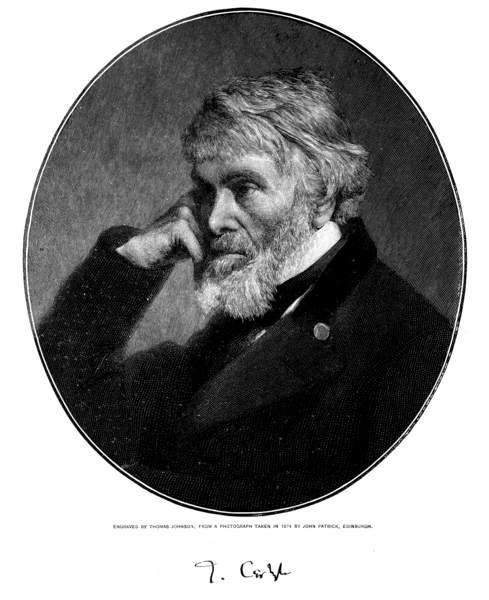
In college, I once took a course in 19th century literature. The course included some -- or maybe just one -- of the works of Thomas Carlyle. The title I remember was "Sartor Resartus," but what I remember more than that was how much I hated the book. It was far too much artifice and far too little art as far as I was concerned. Boy, did I hate that book.
The teacher of the course I had signed on for, a kind woman with greying hair, took to meeting with me informally ahead of class on any given class day. We'd both arrive five or six minutes ahead of time.
"So, Adam," she might say as we stood outside the classroom waiting for it to empty so that her class could enter, "did you do the homework assignment (read some pages of "Sartor Resartus")?
And invariably I would have. Education isn't about ingesting the pleasant alone and, more than that, I knew she would be waiting for me outside the classroom, inviting me to toot my enraged horn.
"Yes," I would say.
"And what did you think?" she might ask.
And that was my cue to sound off -- to spew as much vitriol as I might care to.
It did not occur to me at the time that in order for me to hate the book as much as I did, I would have to read it first ... which was the object of the teacher's effort. So, coming in a sneaky back door, she was teaching me about Thomas Carlyle, an author I sincerely hoped would rot in hell. (Don't ask me to remember what I hated. All I can remember is that I did hate it.)
Looking back, I think she was a pretty savvy teacher. It was OK with her if I hated it as long as I could bring compelling evidence to my diatribe. In those days, you had to be able to prove your point, not just emote about it. Opinion was fine, but emotion alone was for feather merchants.
And still is.
On the one end of the spectrum, emotion. On the other, intellect....
My mother once took several faltering steps towards getting a Ph.D. in Shakespeare, possibly because it was the topic of my father's academic career. My mother took those several courses and then quit because there was no room she could find for the love she felt for Shakespeare. A Ph.D. was all about commas and semi-colons and parsing and intellect ... and there was a piece of her that simply said "no!" She loved Shakespeare and hoped with an advanced degree to love him more.
Oooops!
Once upon a time, I used to love going to the Guggenheim Museum in New York. The art works are displayed against walls that rise up or sink down in a spiral. I loved the Guggenheim because whatever the exhibit, still I flat-out loved the building and so could never be short-changed.
But one day, on entering, I paid the admission and, just beyond the admission booth, found myself in front of a counter where some bright-eyed-and-bushy-tailed twenty-something was offering to rent me a hand-held tape recorder that she promised would "explain" the art works currently on display.
My jaw dropped. "Explain" art????? What sort of bullshit was that? Either the artist could and did communicate with the onlooker or s/he did not. It was an intimacy that no Dr. Phil could co-opt or explain or improve. What sort of cowardice did that tape recorder exemplify ... JEESUS!
The twenty-something told me with a straight face that the aural add-on would enrich the experience of the paintings, that it would bring substance and content and ... I walked away from her. Her chatter simultaneously enraged and shamed me. I did not want to be caught around anyone who might believe the claptrap she was spewing.
"Improved" art ... bite me!
"Explained" art ... get a fucking job!
Only of course there are millions of good-hearted people who believe this tapioca approach ... all slippery-slide-y and sounding so caring and....
And it still makes me want to hide under the bed. Give me art that loves me and invites me to love it back. Even when it fails, at least that is a success. Take the dulcet tones and stick 'em up your ass: This is my heart you're talking about.
The teacher of the course I had signed on for, a kind woman with greying hair, took to meeting with me informally ahead of class on any given class day. We'd both arrive five or six minutes ahead of time.
"So, Adam," she might say as we stood outside the classroom waiting for it to empty so that her class could enter, "did you do the homework assignment (read some pages of "Sartor Resartus")?
And invariably I would have. Education isn't about ingesting the pleasant alone and, more than that, I knew she would be waiting for me outside the classroom, inviting me to toot my enraged horn.
"Yes," I would say.
"And what did you think?" she might ask.
And that was my cue to sound off -- to spew as much vitriol as I might care to.
It did not occur to me at the time that in order for me to hate the book as much as I did, I would have to read it first ... which was the object of the teacher's effort. So, coming in a sneaky back door, she was teaching me about Thomas Carlyle, an author I sincerely hoped would rot in hell. (Don't ask me to remember what I hated. All I can remember is that I did hate it.)
Looking back, I think she was a pretty savvy teacher. It was OK with her if I hated it as long as I could bring compelling evidence to my diatribe. In those days, you had to be able to prove your point, not just emote about it. Opinion was fine, but emotion alone was for feather merchants.
And still is.
On the one end of the spectrum, emotion. On the other, intellect....
My mother once took several faltering steps towards getting a Ph.D. in Shakespeare, possibly because it was the topic of my father's academic career. My mother took those several courses and then quit because there was no room she could find for the love she felt for Shakespeare. A Ph.D. was all about commas and semi-colons and parsing and intellect ... and there was a piece of her that simply said "no!" She loved Shakespeare and hoped with an advanced degree to love him more.
Oooops!
Once upon a time, I used to love going to the Guggenheim Museum in New York. The art works are displayed against walls that rise up or sink down in a spiral. I loved the Guggenheim because whatever the exhibit, still I flat-out loved the building and so could never be short-changed.
But one day, on entering, I paid the admission and, just beyond the admission booth, found myself in front of a counter where some bright-eyed-and-bushy-tailed twenty-something was offering to rent me a hand-held tape recorder that she promised would "explain" the art works currently on display.
My jaw dropped. "Explain" art????? What sort of bullshit was that? Either the artist could and did communicate with the onlooker or s/he did not. It was an intimacy that no Dr. Phil could co-opt or explain or improve. What sort of cowardice did that tape recorder exemplify ... JEESUS!
The twenty-something told me with a straight face that the aural add-on would enrich the experience of the paintings, that it would bring substance and content and ... I walked away from her. Her chatter simultaneously enraged and shamed me. I did not want to be caught around anyone who might believe the claptrap she was spewing.
"Improved" art ... bite me!
"Explained" art ... get a fucking job!
Only of course there are millions of good-hearted people who believe this tapioca approach ... all slippery-slide-y and sounding so caring and....
And it still makes me want to hide under the bed. Give me art that loves me and invites me to love it back. Even when it fails, at least that is a success. Take the dulcet tones and stick 'em up your ass: This is my heart you're talking about.
Monday, April 25, 2016
charities
Given the scallywags who seem to turn up regularly in the organizational ranks of various charities, perhaps my visceral skepticism and subsequent unwillingness to reach for my checkbook can be ... well ... if not exactly forgiven, at least softened a bit. If donations to a 'good cause' underwrite a 10-day vacation in Barbados and swath the adventure in excuses about how it will help the organization, I bridle: How many in actual need might have been helped by the price of a plane ticket and a suite and whatever other add-ons?
But then the evidence of people in need starts to mount up, my doubt dwindles and I can no longer refrain from lending some small hand.
But I do so with skeptical banners flying. I want to know what percentage of the donated buck goes directly to the person or people who make my heart ache. Some charities really do bust their chops trying to pass along the good will. Others seem careless and carefree about booking a vacation-land ticket for one executive or another.
In the past, I have been convinced enough by the Heifer Project that puts the practical means (goats, cows, pigs, chickens) into needy hands. Mind you, I didn't have much to give, but the philosophy appealed to me enough to oil up my check-writing arm.
And the same wash of conviction overcame me this morning when reading the local paper about a three-times a week free-meal program hosted by something called MANNA. The umbrella organization seems to bring Christian bells and whistles with it, but I can overlook the spiritual add-ons when the local dining experience is right up my alley: No one should go hungry in the world's richest nation; people are encouraged to come back for seconds and even take home a doggy bag. Food ... directly ... to the hungry.
No one is stupid enough to ask a hungry person why s/he is hungry. It's enough to know that s/he is. And further, it is enough to know that for those who have enough, it is never quite enough if that "enough" cannot be shared with others. To me -- Donald Trump notwithstanding -- feeding those who are hungry is as obvious an American quality as mom and apple pie... and never more so than in a political season rife with candidates talking about and defining an American way of life.
I'm not the most charitable person in the world and I certainly wouldn't bask in some spiritual limelight based on what little I did give, but if someone says they're hungry, my first reaction is, "Let me check the fridge."
I'm off to find the checkbook.
But then the evidence of people in need starts to mount up, my doubt dwindles and I can no longer refrain from lending some small hand.
But I do so with skeptical banners flying. I want to know what percentage of the donated buck goes directly to the person or people who make my heart ache. Some charities really do bust their chops trying to pass along the good will. Others seem careless and carefree about booking a vacation-land ticket for one executive or another.
In the past, I have been convinced enough by the Heifer Project that puts the practical means (goats, cows, pigs, chickens) into needy hands. Mind you, I didn't have much to give, but the philosophy appealed to me enough to oil up my check-writing arm.
And the same wash of conviction overcame me this morning when reading the local paper about a three-times a week free-meal program hosted by something called MANNA. The umbrella organization seems to bring Christian bells and whistles with it, but I can overlook the spiritual add-ons when the local dining experience is right up my alley: No one should go hungry in the world's richest nation; people are encouraged to come back for seconds and even take home a doggy bag. Food ... directly ... to the hungry.
No one is stupid enough to ask a hungry person why s/he is hungry. It's enough to know that s/he is. And further, it is enough to know that for those who have enough, it is never quite enough if that "enough" cannot be shared with others. To me -- Donald Trump notwithstanding -- feeding those who are hungry is as obvious an American quality as mom and apple pie... and never more so than in a political season rife with candidates talking about and defining an American way of life.
I'm not the most charitable person in the world and I certainly wouldn't bask in some spiritual limelight based on what little I did give, but if someone says they're hungry, my first reaction is, "Let me check the fridge."
I'm off to find the checkbook.
Sunday, April 24, 2016
naked as ....
Caught between my mental teeth like a stringy bit of asparagus is a quote attributed to Cicero in an article about Mary Beard, a current-day British classics teacher who reminds me that the word "rapscallion" cannot be applied solely to men.
Cicero's line: If we are not ashamed to think it, we should not be ashamed to say it.
What a challenge. What a -- perhaps -- truth. What man or woman would not feel the resonance of such an encouragement? The secret and sometimes not so secret longing to pass unencumbered and undressed through life. How wonderful might that be? And, simultaneously, eeeek!
How tiring secrets and camouflage become. What might it be like to lay ALL your cards on the table?
The "eek" quotient, at first blush, relates to how much weakness, how much vulnerability, others might find in the flaws so carefully camouflaged.
But I think there is a greater fear still than the tender vulnerabilities that might arise in saying what anyone might prefer to hold back in silence. And that fear is huge. It is, quite simply, that there is a sneaking suspicion that if I were to tell the damnable truth, if I were to expose my vulnerabilities and mistakes ... no one would give a shit and that would be worse than damnation. Who would I be if life simply yawned and said, "so what?" Isn't that worse than the death anyone might pretend to fear? How could I be someone if I were merely a bit player? It is not a pleasant prospect: Rather a damnable sinner and camouflage weaver than a ... a ... a ... what?
Yes, to go naked would be lighter and less constrained by quite a lot. The layers of camouflage and artifice can weigh mightily. I may beg to be free ... right up to the moment when freedom is offered on a silver platter.
Sorta like Plato's cave dwellers who claim to want the light but cling like fury to the shadows.
Cicero's line: If we are not ashamed to think it, we should not be ashamed to say it.
What a challenge. What a -- perhaps -- truth. What man or woman would not feel the resonance of such an encouragement? The secret and sometimes not so secret longing to pass unencumbered and undressed through life. How wonderful might that be? And, simultaneously, eeeek!
How tiring secrets and camouflage become. What might it be like to lay ALL your cards on the table?
The "eek" quotient, at first blush, relates to how much weakness, how much vulnerability, others might find in the flaws so carefully camouflaged.
But I think there is a greater fear still than the tender vulnerabilities that might arise in saying what anyone might prefer to hold back in silence. And that fear is huge. It is, quite simply, that there is a sneaking suspicion that if I were to tell the damnable truth, if I were to expose my vulnerabilities and mistakes ... no one would give a shit and that would be worse than damnation. Who would I be if life simply yawned and said, "so what?" Isn't that worse than the death anyone might pretend to fear? How could I be someone if I were merely a bit player? It is not a pleasant prospect: Rather a damnable sinner and camouflage weaver than a ... a ... a ... what?
Yes, to go naked would be lighter and less constrained by quite a lot. The layers of camouflage and artifice can weigh mightily. I may beg to be free ... right up to the moment when freedom is offered on a silver platter.
Sorta like Plato's cave dwellers who claim to want the light but cling like fury to the shadows.
JEE-SUS!
Passed along in email:
Victorville, CA – A Barstow, California woman is claiming that an accident she caused on the highway was related to an image she saw of Jesus in her Kit Kat candy bar. Marlo Thomas, 33, says she was traveling south on the I-15 when she suddenly began craving sweets. “It was like a feeling out of nowhere, I felt like I needed some sugar,” said Thomas. “I unwrapped the package, took a bite, and couldn’t believe what I saw. It was Jesus! I mean, right there, Jesus in my candy bar! It was like he was telling me I am chosen. So I closed my eyes and started praying, thanking Jesus for His revelation.”
Saturday, April 23, 2016
Mary Beard interview
Every now and then I see a story about someone I would like to know ... not often ... and Mary Beard is one such person. A shit-kickin' woman.
armed fashion
As if the thin-lipped and thin-limbed austerities of runway models were not enough to dispel a warming heart, Kazakhstan appears to have upped the ante and then, with the trigger fingers, re-upped it:
![]() |
| Models present creations by Kazakhstan's design house ABZAL during Kazakhstan Fashion Week in Almaty, Kazakhstan, April 20, 2016. REUTERS/Shamil Zhumatov |
Friday, April 22, 2016
people talk too fast
Is it just because I'm an old fart or is it actually true?
People these days talk too fast.
I notice it on the TV business and other news shows where limited amounts of time/space are clearly in play. But I notice it elsewhere as well -- people talking fast as if, were they not to do so, the import and impact of what they had to say might somehow be dissipated.
This Twitter-approach to speaking has the opposite of its intended effect on me: I can't hear anything because there's too much of everything else standing in the way.
Oh well, it's probably an old-fart thing.
People these days talk too fast.
I notice it on the TV business and other news shows where limited amounts of time/space are clearly in play. But I notice it elsewhere as well -- people talking fast as if, were they not to do so, the import and impact of what they had to say might somehow be dissipated.
This Twitter-approach to speaking has the opposite of its intended effect on me: I can't hear anything because there's too much of everything else standing in the way.
Oh well, it's probably an old-fart thing.
Subscribe to:
Posts (Atom)